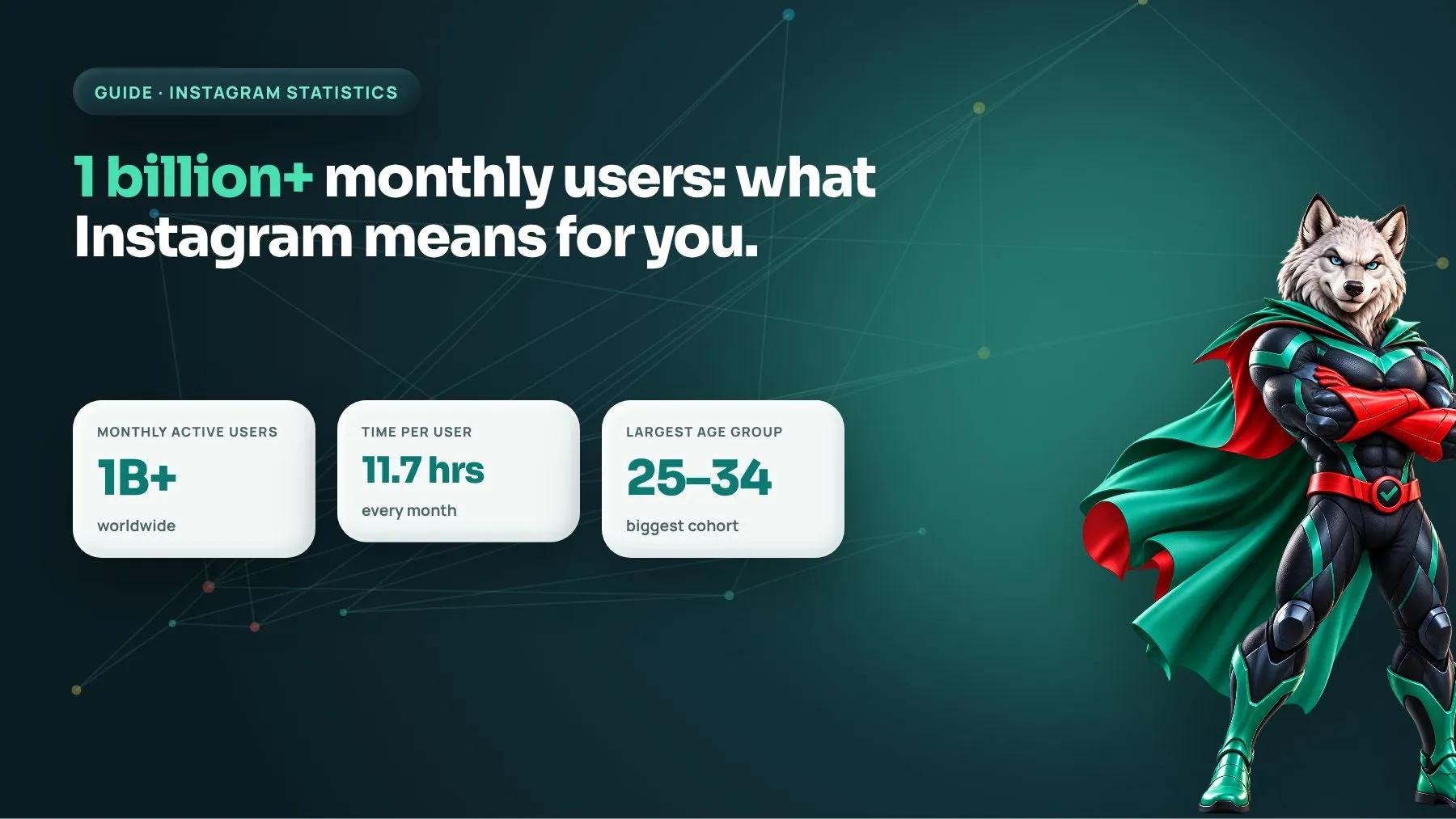
Instagram has passed 1 billion monthly active users, and that one number explains why almost every business owner eventually asks us the same question: should we be there, and if so, how do we make it pay? This piece takes the headline Instagram statistics we track and translates each one into a commercial decision. The short answer: Instagram is one of the largest attention markets in the world, but attention only turns into revenue when the strategy behind it is deliberate.
At a glance
- Topic: Instagram audience statistics and what they mean for business
- Service: Social media marketing and paid social
- Key figures: over 1 billion monthly active users; ads reach nearly 30% of internet users; fourth most popular social network worldwide; 11.7 hours per user per month; 25–34 is the largest age group; Gen Z’s favorite platform globally
Why these Instagram numbers matter to a business owner
Statistics on their own do not sell anything. What they do is help you judge whether a channel deserves budget and management time, and what kind of approach it rewards. When we review a client’s marketing mix, we look at three things on any platform: how many of their buyers are there, how much attention those buyers give it, and how cheaply we can reach them compared with alternatives. Instagram scores well on all three for a wide range of businesses, which is why the figures below matter.
The figures in this article are as originally reported when we first published it. Platform numbers move every year, so treat them as direction rather than precision. The direction has been consistent: a very large, highly engaged audience that skews toward people in their working and spending prime.
The headline Instagram statistics, explained
Over 1 billion monthly active users
Scale is the first filter. A platform with a billion monthly users contains almost every consumer segment and a large share of business decision-makers too. For a business owner, the practical meaning is simple: your customers are very likely already on Instagram, whether or not you are. The question is not whether the audience exists but whether you can reach the right slice of it efficiently.
Instagram ads reach nearly 30% of internet users
This is the number that matters most to anyone with a growth target. Organic reach on any social platform is limited, and it tends to shrink as platforms mature. Paid reach is what makes Instagram predictable. Because Instagram advertising runs through Meta’s ad system, you can target by location, age, interests, behaviors and your own customer lists, and you can build lookalike audiences that resemble your best buyers. For a business in Dubai, London or Sydney, that means you can show an offer only to people in the right postcode, age band and interest group.
The fourth most popular social network in the world
Ranking fourth globally places Instagram among a small group of platforms that every serious marketing plan should at least consider. It does not mean Instagram is right for every business. A B2B software company may get better returns from LinkedIn, and a business whose buyers search with clear intent may get more from Google. Popularity tells you the platform is mainstream and stable enough to invest in, not that it should take the whole budget.
11.7 hours per user per month
Time spent is a proxy for attention, and attention is what advertising buys. Hours of monthly use means your brand has many chances to appear in front of the same person: in the feed, in Stories, in Reels and in Explore. That repetition is valuable for considered purchases, where people need to see a brand several times before trusting it enough to enquire or buy.
Users aged 25–34 are the biggest cohort
This is often the most commercially important statistic. People aged 25–34 are building careers, setting up homes, starting families and, increasingly, starting businesses. They spend on property, interiors, fitness, travel, education, professional services and premium consumer goods. If your ideal customer sits in this age group, Instagram deserves a serious test.
Instagram is Gen Z’s favorite platform globally
Gen Z is the next wave of spending power. Brands that earn their attention now will have an advantage as their incomes grow. This audience responds to authenticity, short-form video and creators, and it is quick to ignore anything that looks like a traditional advert.
What we do with these numbers for clients
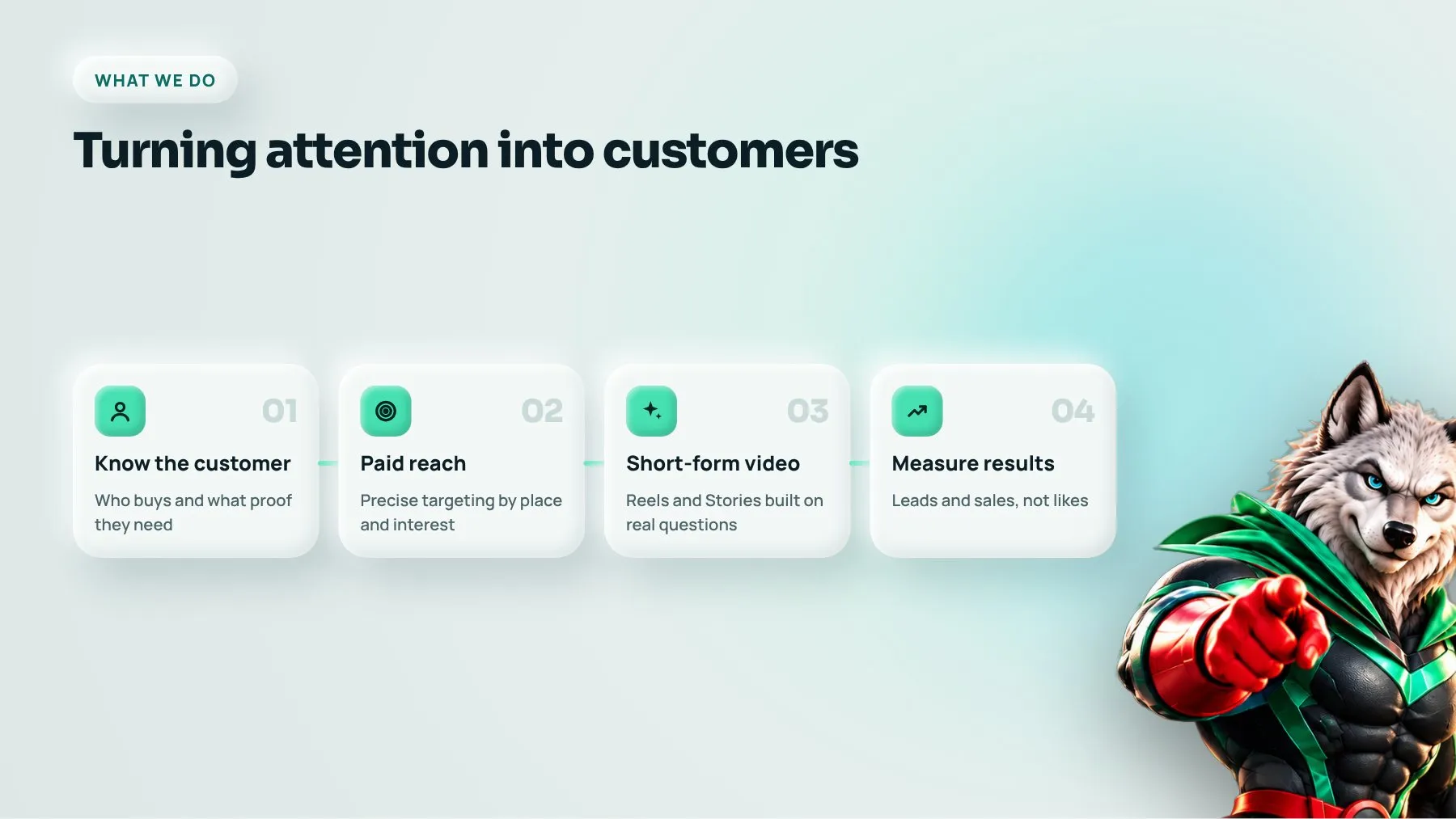
Knowing the audience is there is step one. Turning it into enquiries and sales is the work. Our social media marketing process usually runs in this order.
Start with the customer, not the platform
We define who buys, what they care about, and what proof they need before they act. A premium home goods brand and a law firm can both use Instagram, but their content, offers and targeting should look nothing alike.
Separate brand content from performance campaigns
Organic posts build credibility: anyone who checks your profile before buying should find a consistent, professional presence. Paid campaigns do the heavy lifting on reach and conversion. Mixing the two goals in the same post usually means neither works well.
Lead with short-form video
Reels and Stories are where much of the attention now sits, particularly for younger users. We plan video around real questions customers ask, behind-the-scenes proof of quality, and clear before-and-after outcomes.
Build audiences you own
Website visitors, past customers and engaged followers become retargeting and lookalike audiences. These are usually the most cost-efficient audiences in any account, so we set up tracking with the Meta pixel and conversions API before spending at scale.
Measure business results, not likes
Follower counts and likes are easy to inflate and hard to bank. We report on leads, cost per lead, sales and return on ad spend, and we connect Instagram activity to the rest of the funnel, including lead generation pages and CRM follow-up.
What makes the difference: lessons for business owners
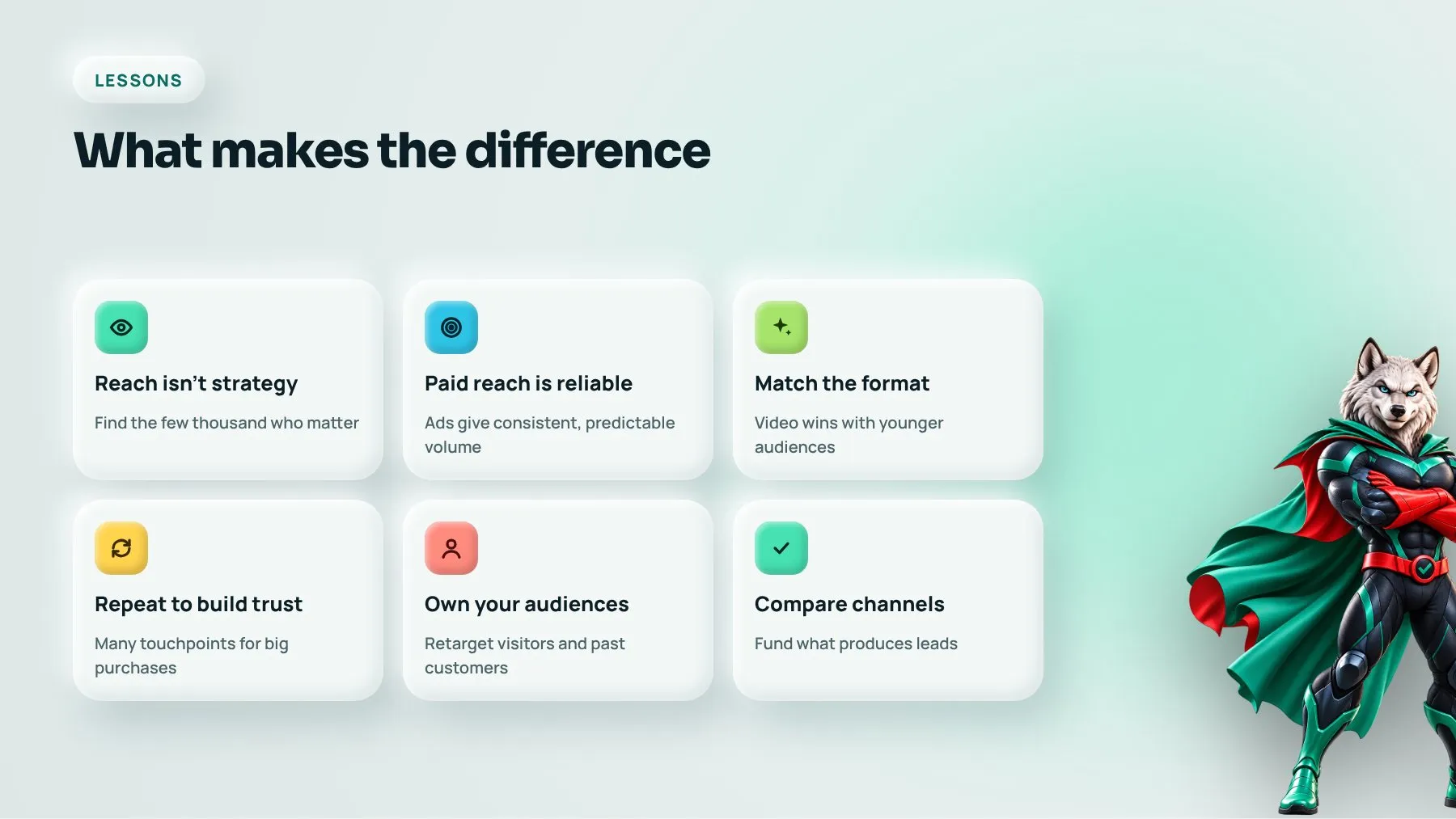
- A large audience is an opportunity, not a strategy. A billion users does not help you unless you can find and persuade the few thousand who matter to your business.
- Paid reach is what makes Instagram predictable. Organic content supports trust; advertising produces consistent volume.
- Match the format to the audience. If you sell to 25–34s or Gen Z, short-form video and creator-style content usually outperform polished brochure images.
- Repetition builds trust for high-value purchases. The time people spend on the platform gives you room to tell a story over several touchpoints.
- Judge Instagram against your other channels. Compare cost per lead and lead quality with Google, LinkedIn and email, then fund what works.
How to apply this to your business
- Confirm your buyers are active on Instagram by checking audience insights and asking existing customers.
- Clean up your profile: clear bio, link to a relevant landing page, highlights that answer common questions.
- Install the Meta pixel and conversions API and define what counts as a lead or sale.
- Plan a month of short-form video built around customer questions and proof.
- Run a small, tightly targeted paid test with one clear offer and one landing page.
- Review results by cost per lead and lead quality after enough data has built up, then scale or adjust.
FAQ
Is Instagram worth it for a B2B or professional services business?
Often, yes, but rarely as the main channel. Decision-makers use Instagram personally, so it works well for building familiarity and retargeting people who already know you. For direct lead generation, it usually sits alongside search and LinkedIn rather than replacing them.
How much should a business spend on Instagram ads?
There is no universal figure. Start with a budget large enough to gather meaningful data on one offer and one audience, measure the cost per lead, and compare it with what a customer is worth to you. Scale only when the numbers make commercial sense.
How long before Instagram marketing shows results?
Paid campaigns can produce leads within the first few weeks once tracking and creative are in place. Organic growth and brand recognition take longer, typically several months of consistent posting. The two work best together.
Want Instagram to produce customers, not just followers? See our social media marketing service or book a strategy call.