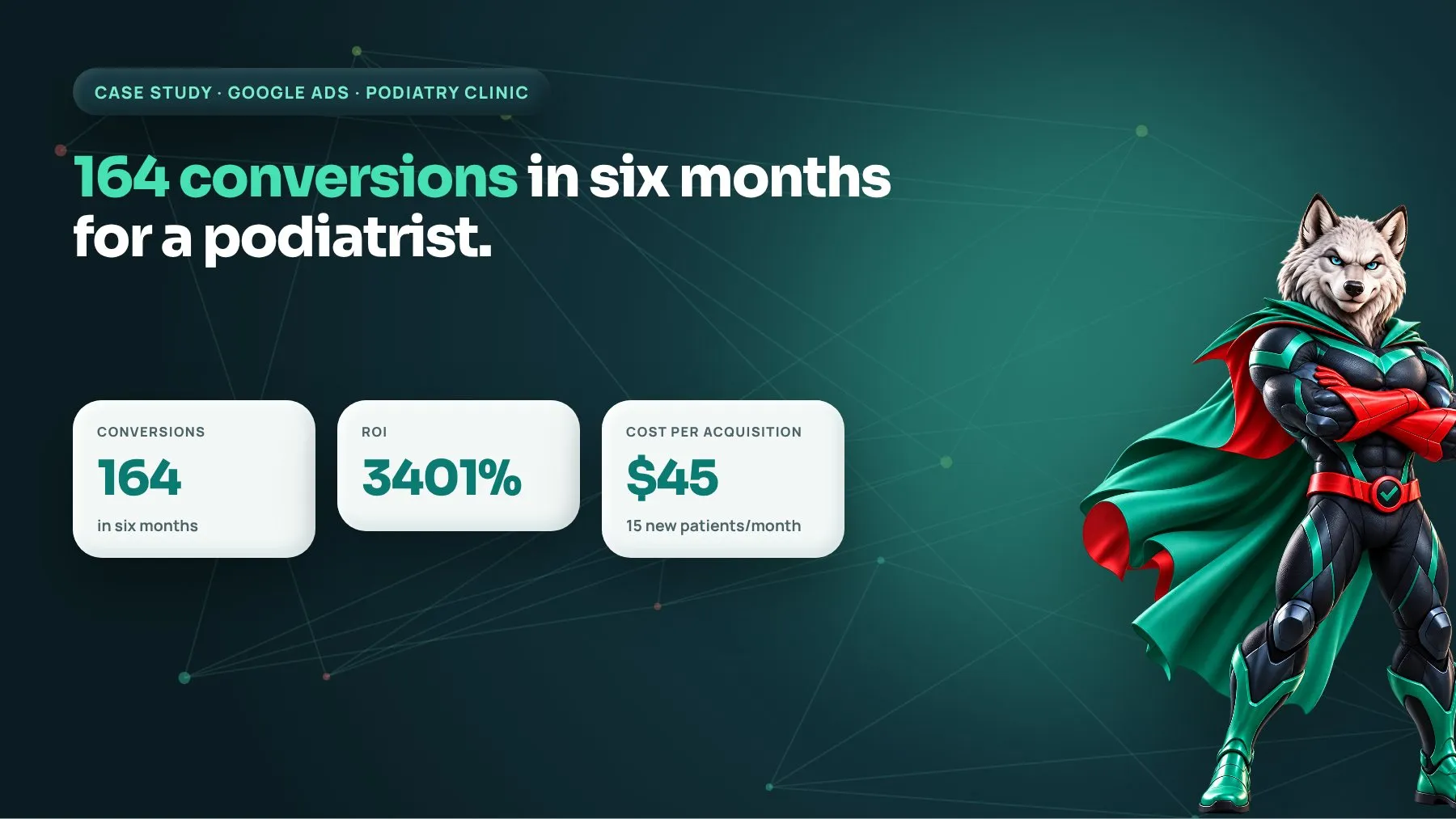
A podiatrist had a well-designed website, but it was not built for paid search, and the monthly ad budget of about $600 was small for the results they wanted. We built dedicated landing pages, switched to manual bidding and focused the budget on mobile users. Over six months, the campaign produced 164 conversions and a 3401% ROI, and appointment volume rose 25% within the first three weeks.
At a glance
- Client: Podiatry clinic
- Services: Google Ads management, landing page design
- Budget: About $600 per month
- Timeframe: Six months
- Key results: 164 conversions; $196,800 total sale value from $5.62K spend; 3401% ROI; +25% appointment volume in the first three weeks; an average of 15 new patients per month at a $45 cost per acquisition
The challenge: a good-looking site that was not built to convert ad traffic
The clinic’s website looked professional, but there is a big difference between a site that represents a practice and a page that converts paid clicks into booked appointments. Someone clicking an ad for foot pain or a specific procedure wants to see, immediately, that they are in the right place and how to book. A general homepage makes them search for that.
Three things were missing:
- Dedicated landing pages focused on what the searcher was looking for.
- Clear calls to action, including clickable phone numbers and a simple way to schedule.
- A budget plan that matched the money available. At about $600 a month, there was no room to spread spend across every device, audience and keyword. Small budgets have to be concentrated to work.
For a specialist clinic, this matters a great deal. Each new patient can lead to a course of treatment, follow-up visits and referrals. Wasting a small budget on clicks that never book is a real lost opportunity.
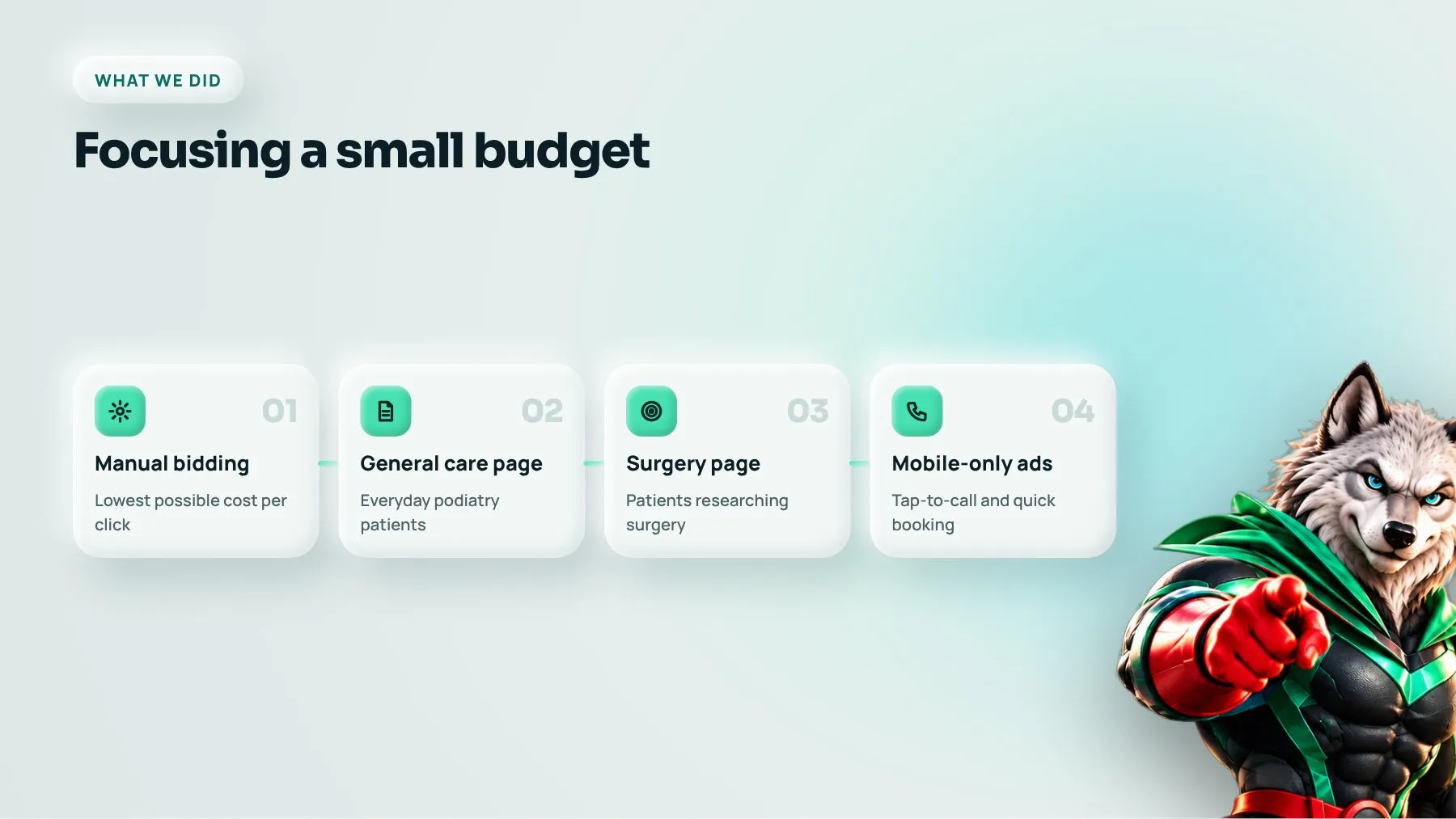
Our strategy: concentrate a small budget where it converts
Manual bidding to control cost per click
Automated bidding strategies work best when they have plenty of conversion data to learn from. With a small budget, conversions arrive slowly, and automated systems can overspend while they learn. We used manual bidding to keep cost per click as low as possible and to control exactly which keywords received budget.
Manual bidding takes more work: regular bid reviews, close attention to search terms and quick action when a keyword overspends. On a small account, that attention is what keeps the budget productive. Once an account has a strong history of conversions, it can make sense to test automated bidding against it.
Two landing pages, matched to two kinds of patient
We created two dedicated landing pages:
- General care, for patients looking for everyday podiatry help.
- Surgery, for patients researching surgical treatment.
These are different audiences with different questions and different levels of commitment. A patient with general foot pain wants reassurance and an easy appointment. A patient considering surgery wants to understand the procedure, the specialist’s expertise and what recovery involves. Sending both to one page would have served neither well.
Each landing page included:
- A headline matching the ads that sent visitors there.
- Clickable phone numbers, so mobile visitors could call with one tap.
- A pop-up form to schedule appointments, so visitors who preferred not to call could still book.
- Clear calls to action throughout the page.
Matching keywords and ads to the right page also tends to improve ad relevance and landing page experience, which helps keep click costs down.
Mobile-only ads
Because of the limited budget, we chose to show ads only to mobile users rather than to both mobile and desktop users. Local healthcare searches often happen on phones, and mobile visitors can tap to call straight from the ad or the landing page. Concentrating spend on one device let the budget go further and kept the experience focused on the action that mattered: calling or booking.
This is a judgment call that depends on the data. With a bigger budget, desktop can be tested separately with its own bids.
The results
Over six months:
- Amount spent: $5.62K
- Visitors: 5.43K
- Total conversions: 164
- Average sale value: $1,200
- Total sale value: $196,800
- ROI: 3401%
And in practice for the clinic:
- Appointment volume rose 25% within the first three weeks.
- An average of 15 new patients per month at a cost per acquisition of $45.
For a clinic, a $45 cost to acquire a patient whose care is valued at an average of $1,200 is an excellent return. The campaign brought more patients through the door and built awareness of the clinic in its area at the same time.
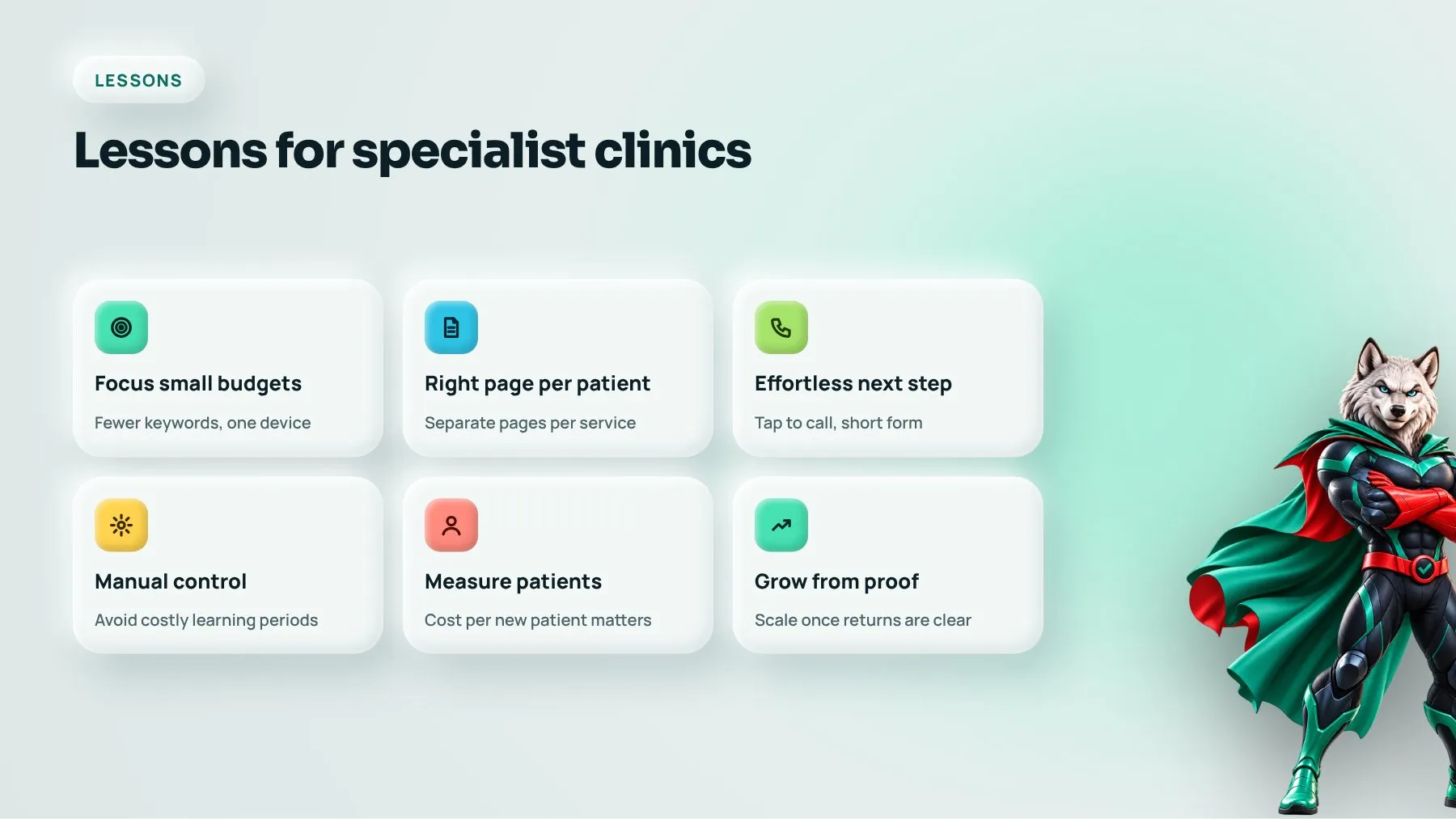
Lessons for podiatrists and specialist clinics
A small budget needs focus
Concentrate on fewer keywords, one device or a tighter area, and grow from there.
Send each patient to the right page
Separate pages for different services or patient types convert better than a single general page.
Make the next step effortless
Clickable phone numbers and a simple booking form turn interest into appointments.
Manual control suits small accounts
When conversion data is limited, manual bidding avoids expensive learning periods.
Measure patients, not clicks
Cost per acquisition and patient value tell you whether ads are working.
How to apply this to your clinic
- Create a dedicated landing page for each main service you advertise.
- Add tap-to-call phone numbers and a short booking form to every landing page.
- If your budget is small, focus it on mobile or your most important area.
- Review search terms weekly and add negative keywords.
- Track calls and form bookings as conversions, not just page visits.
- Calculate your cost per new patient and compare it with patient value.
FAQ
Is $600 a month enough for Google Ads for a clinic?
It can work if the budget is focused, as this case shows. A small budget leaves no room for waste, so landing pages, keyword selection and device targeting need to be tight.
Should my clinic’s ads go to my homepage?
Usually not. A dedicated landing page that matches the ad and makes booking easy will normally convert better than a general homepage.
How soon will I see more appointments from Google Ads?
Paid search can bring enquiries within days. Here, appointment volume rose 25% within three weeks. Results then improve as the account is refined.
Want more patients for your clinic? See our Google Ads management, explore our lead generation services, or book a strategy call.