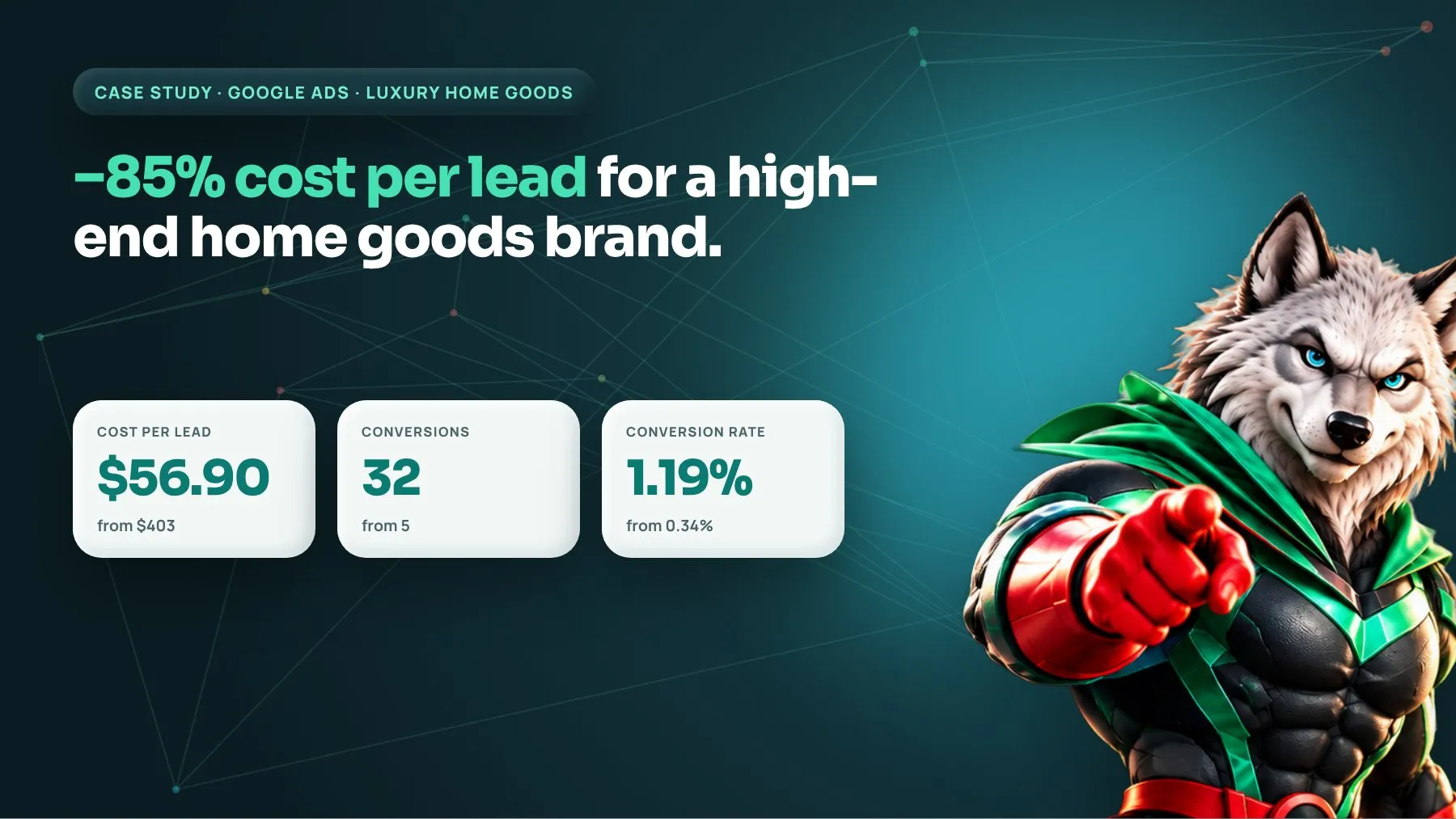
This client sells high-end home goods with prices starting from $5,000. When the Google Ads account was handed to us, it was spending $2,020 to generate just 5 conversions, at $403 each. By fixing tracking, rebuilding ad groups and ad copy, and adding a dedicated landing page, we cut the cost per lead by over 85%, to $56.90, while producing 32 conversions on a similar budget.
At a glance
- Client: Retailer of high-end home goods priced from $5,000
- Service: Google Ads management, conversion tracking and landing page design
- Key results: cost per conversion from $403 to $56.90 (over 85% lower); conversions from 5 to 32; conversion rate from 0.34% to 1.19%
The challenge: an expensive account producing very few leads
Here is how the account looked when it was handed to us:
- Cost: $2,020
- Conversion rate: 0.34%
- Conversions: 5
- Cost per conversion: $403
For a business selling products from $5,000 upwards, a lead can be valuable, so a high cost per lead is not automatically a problem. The problem was volume and confidence. Five conversions is too few to learn from, and with a 0.34% conversion rate, almost every click was being wasted. Worse, without reliable tracking, nobody could say which campaigns or keywords were producing the leads that did come in, so there was no basis for deciding what to keep, cut or scale.
Why it matters commercially: high-ticket buyers research carefully and compare several brands. If the ads attract the wrong searches or the landing experience does not reassure them, the budget disappears into clicks that never become conversations.
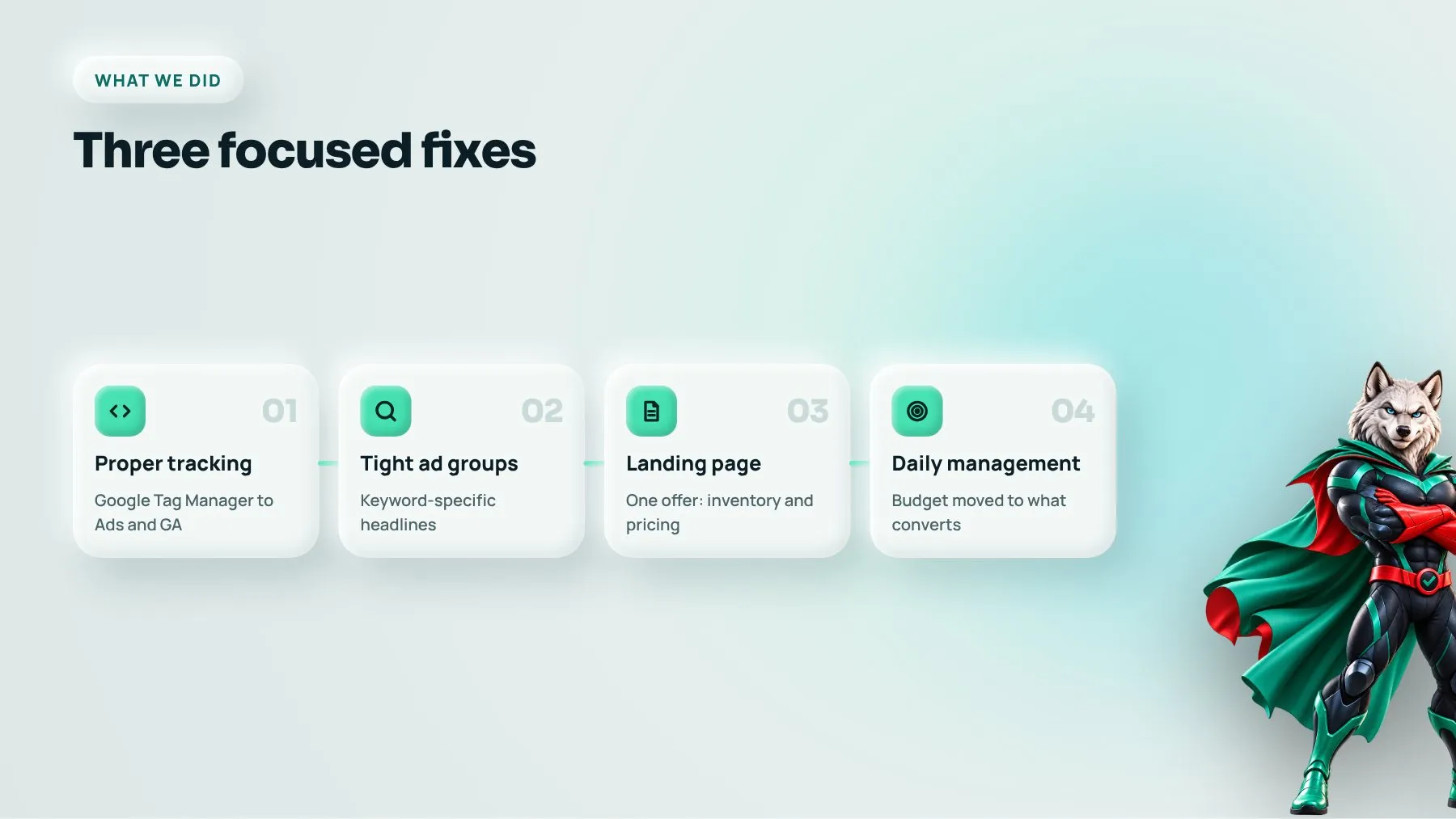
What we did: three focused fixes
1. Proper tracking so every dollar is accounted for
Tracking comes first, because every later decision depends on it. Without it, you cannot find out which campaigns are actually working.
We set up new triggers and tags in Google Tag Manager, sending conversion data to both Google Analytics and Google Ads. We use Google Tag Manager in every account for good reasons:
- All tracking runs through one container, so data goes to one place and is sorted properly.
- Only one code snippet needs to sit on the website; new tags are added in Tag Manager without touching the site code.
- Problems are much easier to trace and fix, because every tag and trigger is visible and testable in preview mode.
In practice, this means defining what counts as a conversion (here, a lead opting in to see inventory and pricing), firing the tag only when that action is completed, and checking that Google Ads receives each conversion so its bidding has accurate data to work with.
2. Streamlined ad groups and ad copy to lift click-through rate
In Google Ads, an ad group contains the keywords you bid on and the ads shown when people search for them. When one generic ad covers many different keywords, it rarely matches exactly what the searcher typed. That lowers click-through rate (CTR) and ad relevance, which raises costs.
We rebuilt the structure into tighter ad groups, each focused on a close set of keywords, and wrote new ads with headlines and descriptions that included the specific keyword for that group. For a luxury product, the copy also needs to signal quality and exclusivity, so the right buyers click and bargain hunters do not. This is one of the most important steps toward a high-converting campaign: it raised ad relevance and made the experience seamless from search to ad.
Together with daily management, these first two changes produced the following by the end of June 2019:
- Cost: $1,690
- Conversion rate: 0.42%
- Conversions: 7
- Cost per conversion: $241
Cost per conversion had already dropped by over 40% from the starting point.
3. A dedicated landing page to lift conversions
A common problem we see is businesses driving paid traffic to a website that is not built for the conversion they want. This account was sending traffic directly to the main website, which left a lot of room for conversion rate optimization.
A landing page has one primary call to action, copy written around the customer and the keywords being bid on, and no links to other destinations. We built one of our signature landing pages that invites visitors to opt in to view the client’s current inventory and pricing. That offer suits a high-end product well: serious buyers want to see what is available and what it costs, and they are willing to share their details to get it. The page combined a simple, direct headline, a carefully written benefits section and a clear call to action, in a well-designed page that matched the quality of the products.
The results
By setting up proper tracking, optimizing the campaign with our process and launching a focused landing page, we reduced the cost per lead by over 85%:
- Cost: $1,820
- Conversion rate: 1.19%
- Conversions: 32
- Cost per conversion: $56.90
What this means for the business: on a budget slightly below the original spend, the account went from 5 leads to 32. For a brand whose products start at $5,000, that is a far larger pipeline of qualified buyers for the sales team. And because tracking is now reliable, the client knows exactly which campaigns produce those leads, so future budget increases can go where they will earn the most.
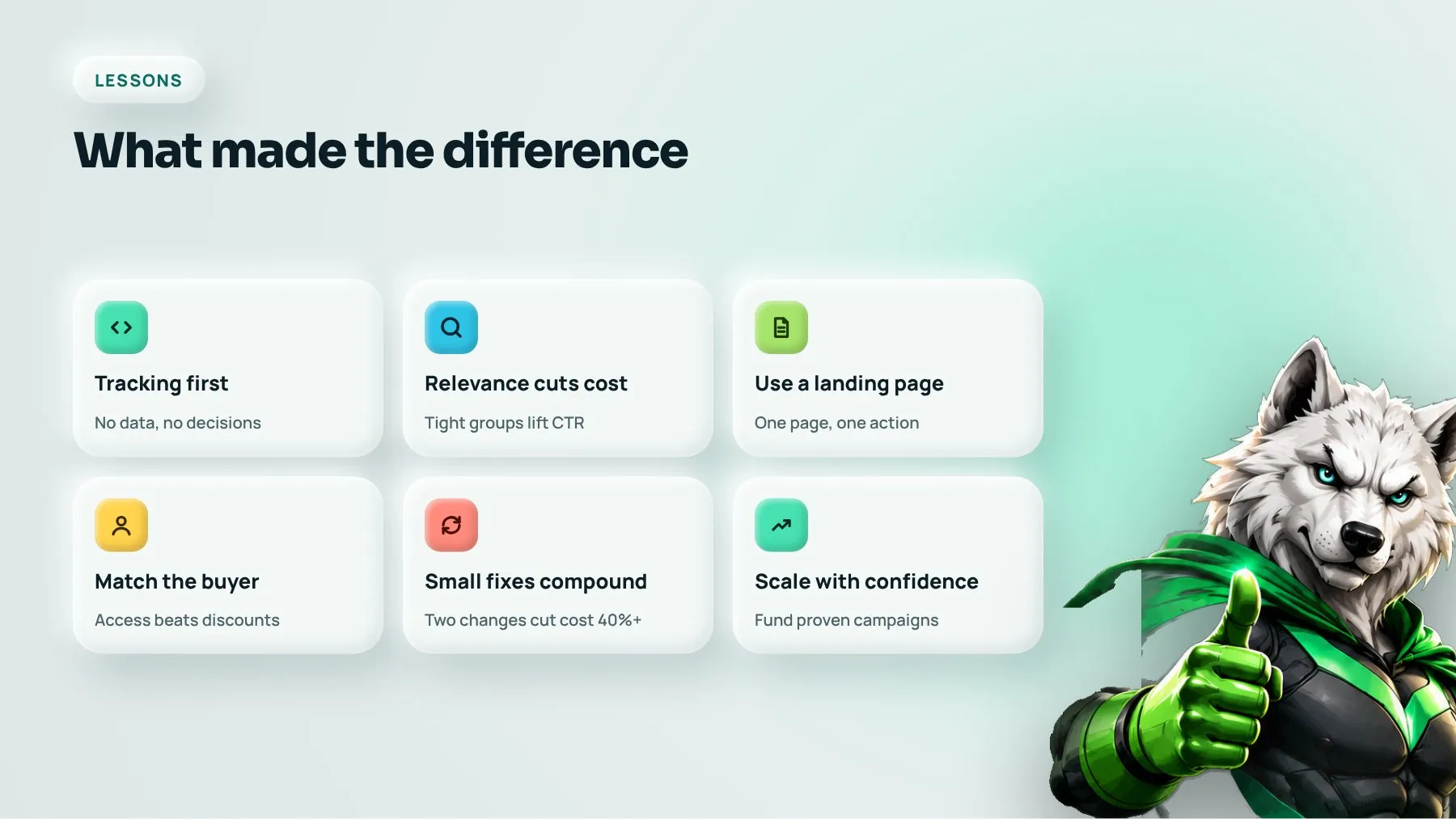
What made the difference: lessons for high-ticket businesses
- Fix tracking before anything else. Optimization without accurate conversion data is guesswork.
- Relevance lowers costs. Tight ad groups with keyword-specific ads improve CTR and ad relevance.
- Send ad traffic to a landing page, not your homepage. One page, one offer, one action.
- Match the offer to the buyer. High-ticket buyers respond to access to inventory and pricing, not discounts.
- Small, compounding changes add up. Two fixes cut costs by over 40%; the landing page completed the job.
How to apply this to your business
- Confirm every conversion action is tracked through Google Tag Manager and recorded in Google Ads.
- Review your ad groups: does each ad mention the keywords it serves?
- Check where your ads send people. If it is your homepage, build a dedicated landing page.
- Choose one clear call to action that suits how your customers buy.
- Track cost per lead weekly and compare it with what a customer is worth to you.
FAQ
What is a good cost per lead for a luxury product?
It depends on your average order value, close rate and margin. A higher cost per lead can be very profitable for products starting at several thousand dollars, as long as leads are qualified and the sales team converts them.
Do I really need a separate landing page?
For most lead generation campaigns, yes. A page built for one offer and one action almost always converts better than a general website page, because there are no distractions and the message matches the ad.
How quickly can Google Ads performance improve?
Tracking and structural fixes can show results within weeks, as they did here. Landing page and bidding improvements usually build over the following months as more conversion data comes in.
Want more leads for less? See our Google Ads management, explore our lead generation services, or book a strategy call.