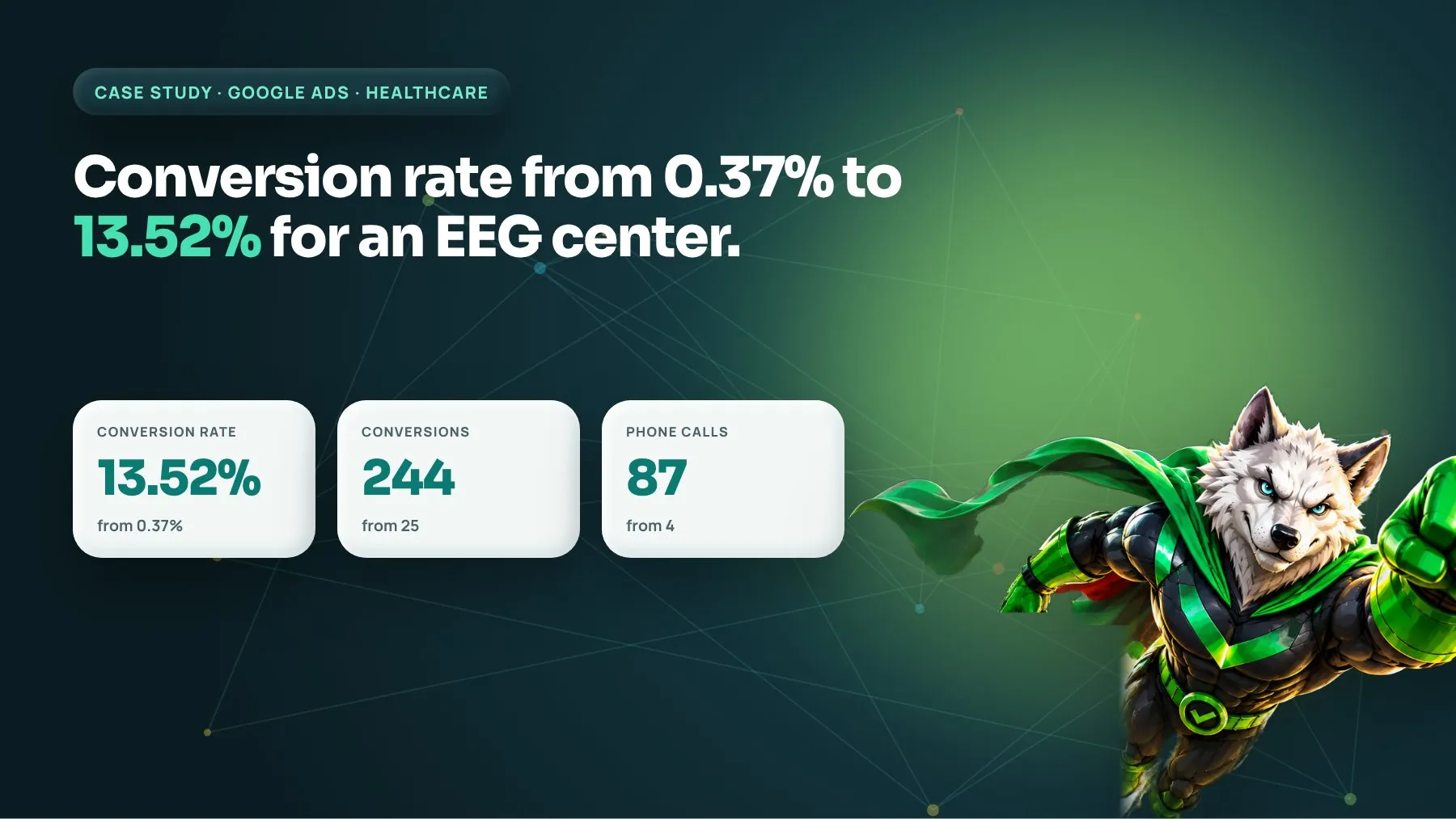
A neurological and EEG diagnostic center in the USA was spending on Google Ads but getting very few leads, and the ones it did get were often the wrong ones. We rebuilt the account around the center’s local area, the right keywords and a dedicated landing page. Its overall conversion rate went from 0.37% to 13.52%, and conversions rose from 25 to 244.
At a glance
- Client: Neurological and EEG diagnostic center, USA (managed through a partner digital marketing agency based in Australia)
- Service: Google Ads management, landing page creation
- Timeframe: Work started October 20, 2021; results measured to January 28, 2022
- Key results: Overall conversion rate from 0.37% to 13.52%; conversions from 25 to 244; phone calls from 4 to 87; cost per conversion from $30.15 to $25.82
The challenge: cheap clicks, almost no patients
We were introduced to this project through an online marketing channel. A digital marketing agency based in Australia, which hires specialists from around the world, was managing the account for the diagnostic center. Someone was already working on it, without success. The account was spending a good amount but producing very few leads, and even those were not the right ones.
For a diagnostic center, every lead matters. Patients searching for an EEG or neurological testing usually need a nearby provider, often on referral, and they want to book with confidence. Advertising that attracts people outside the service area, or people searching for something unrelated, does not just waste money. It buries the real patient inquiries the center needs.
What our audit found
When we analyzed the account, six problems stood out:
- The campaigns targeted the whole USA, when the business served a local area only.
- Landing pages were poorly selected.
- Keywords were poorly selected.
- Keyword match types were poorly selected.
- Audience age targeting was wrong.
- The Display Network was switched on.
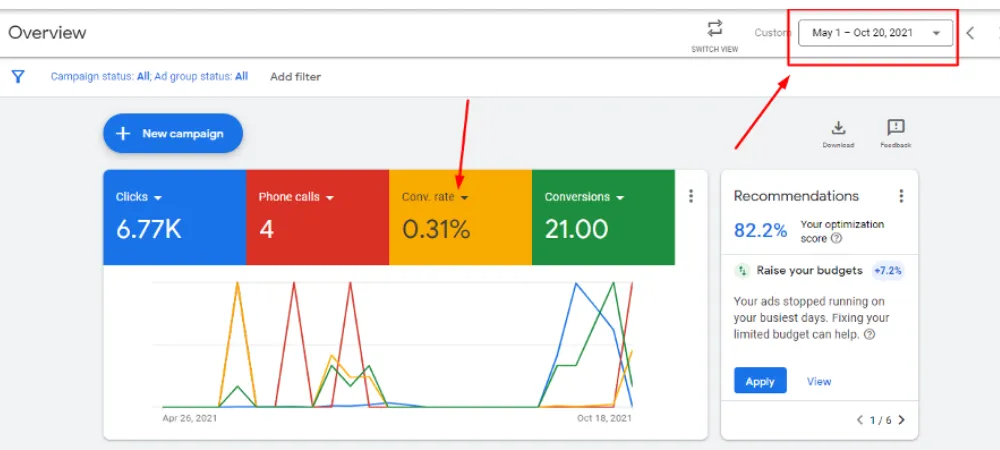
Where the account stood: May to October 2021
- Clicks: 6,769
- Spend: $633.06
- Impressions: 237,255
- CTR: 2.85%
- Average CPC: $0.09
- Conversions: 21
- Cost per conversion: $30.15
- Conversion rate: 0.31%
- Phone calls: 4
- Overall conversions: 25
- Overall conversion rate: 0.37%
At first glance, a $0.09 average cost per click looks like a bargain. In reality it was a warning sign. Clicks that cheap in healthcare usually mean the ads are showing in the wrong places, to the wrong people, for the wrong searches, which is exactly what the audit confirmed. Thousands of clicks produced just 25 conversions.
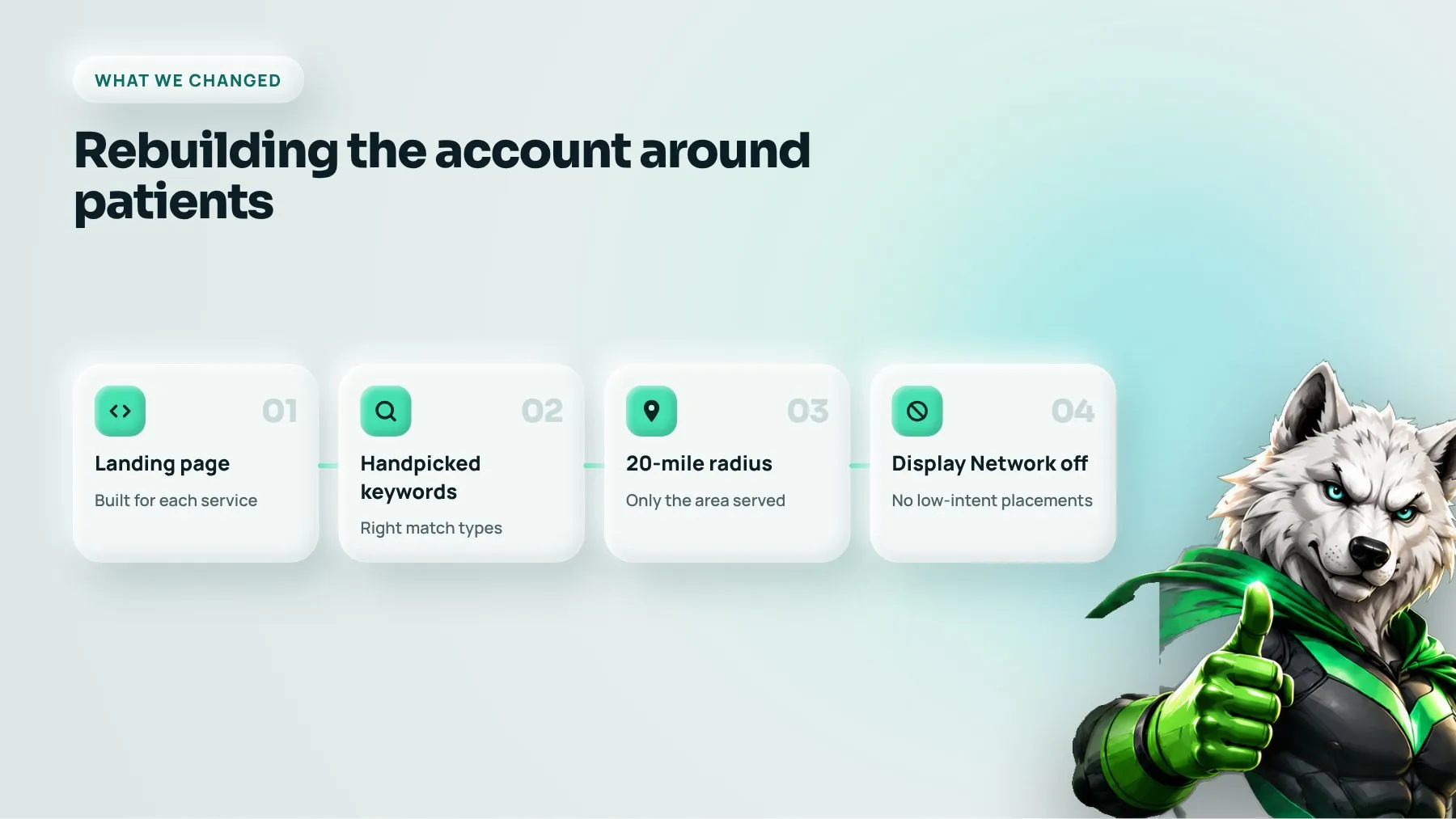
What we changed: October 20, 2021 to January 28, 2022
After the analysis, we rebuilt the account step by step.
A dedicated landing page for services
We created a landing page for the center’s services, so people searching for a specific test landed on a page that matched what they searched for. A good healthcare landing page explains the service clearly, reassures the patient, and makes it easy to call or request an appointment. Sending paid traffic to a generic page forces patients to hunt for information, and many give up.
Handpicked keywords and match types
We researched keywords again and handpicked the most profitable ones for the services and location. We also corrected match types, so ads showed for searches closely related to the services rather than loosely related ones. In healthcare this matters a great deal: broad matching can show ads for research, symptom or job searches that will never become a booked test. A tight keyword list, supported by negative keywords, keeps budget on real patient intent.
Ad copy aligned with keywords and landing page
We improved the ad copy based on the keywords, the landing page and user behavior. When the ad, the search and the landing page all say the same thing, more of the right people click, and more of them convert when they arrive.
Local targeting: a 20-mile radius only
We restricted location targeting to the area the business actually serves, a 20-mile radius only. This one change removed a large amount of wasted spend from people who could never realistically visit the center.
The right age group, and no Display Network
We selected the relevant age group and switched off the Display Network. Display placements can generate large numbers of cheap, low-intent clicks from websites and apps. For a local diagnostic service, search intent is far more valuable.
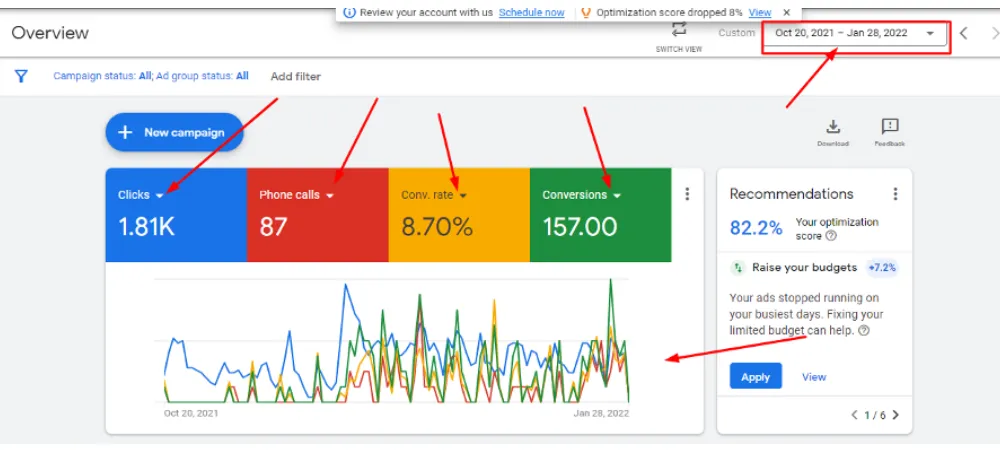
The results: from 25 conversions to 244
Stats from October 21, 2021 to January 28, 2022
- Clicks: 1,805
- Spend: $4,053
- Impressions: 54,032
- CTR: 3.34%
- Average CPC: $2.25
- Conversions: 157
- Cost per conversion: $25.82
- Conversion rate: 8.70%
- Phone calls: 87
- Overall conversions: 244
- Overall conversion rate: 13.52%
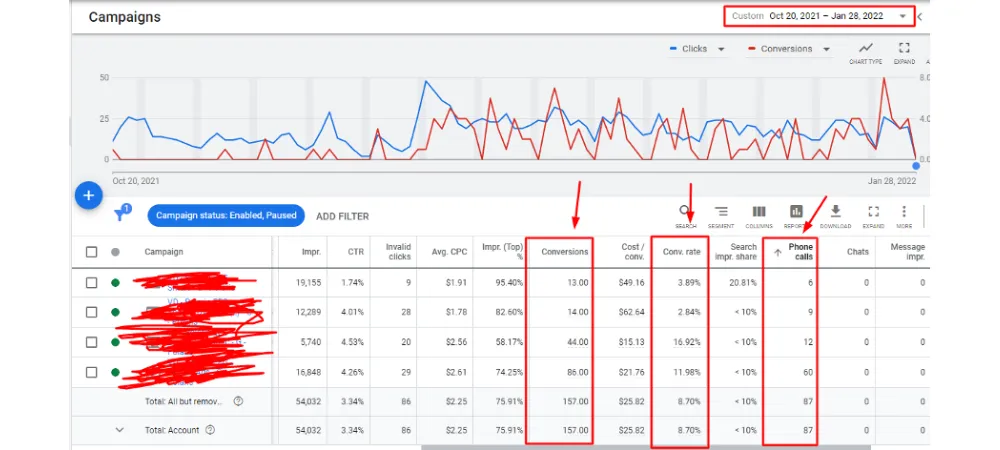
The account received far fewer clicks after the rebuild, and each click cost more. Yet conversions rose from 25 to 244, phone calls from 4 to 87, and the overall conversion rate from 0.37% to 13.52%. Cost per conversion also fell, from $30.15 to $25.82. The center was paying for fewer, better visitors and getting many more patient inquiries in return.
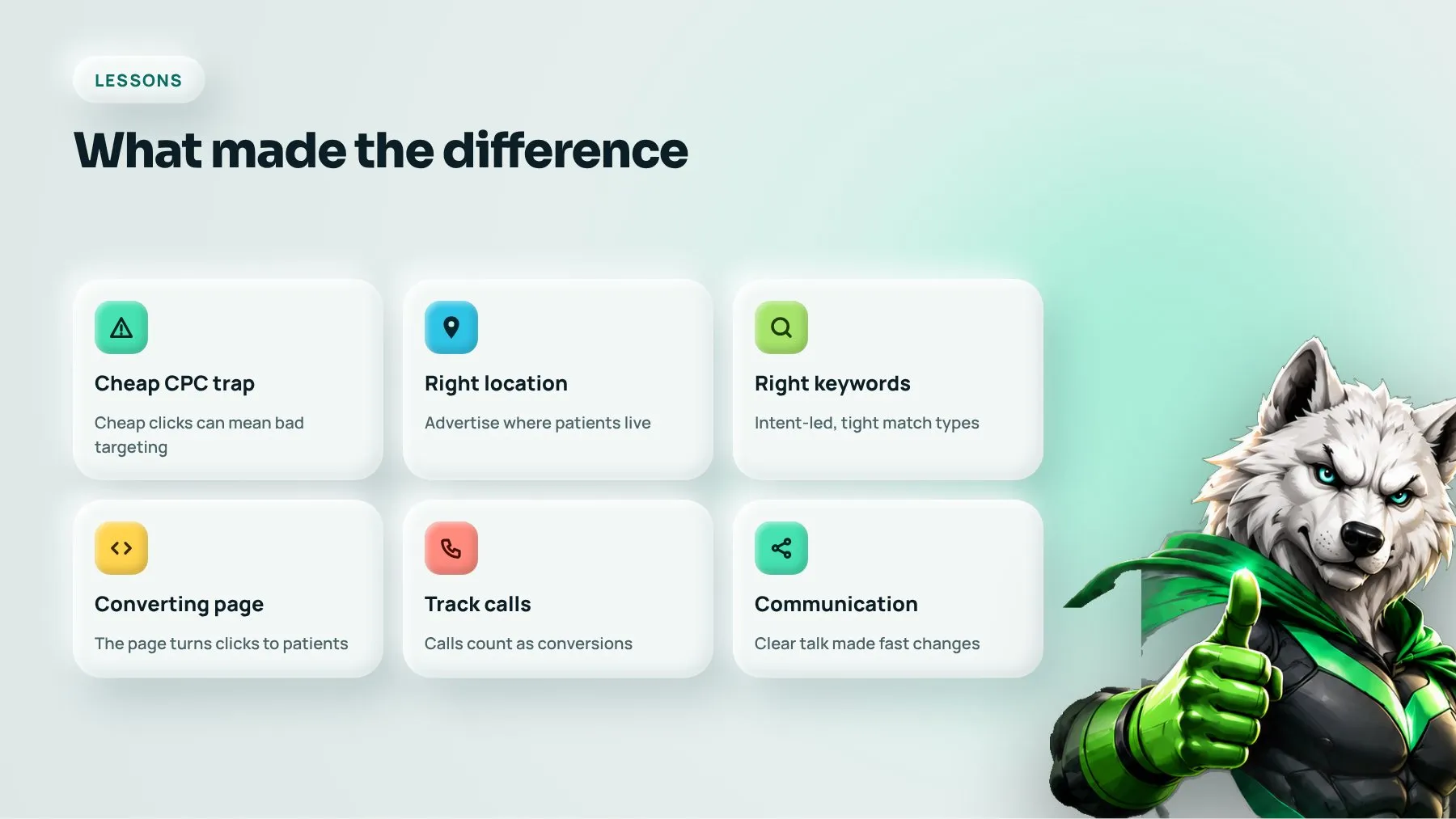
Lessons for healthcare and diagnostic providers
- A cheaper CPC does not mean you are doing well. Very cheap clicks often signal poor targeting, not efficiency.
- Target the right location. If patients must visit in person, advertise only where they can realistically come from.
- Select the right keywords. Handpicked, intent-led keywords and correct match types protect your budget.
- Create a converting landing page. This is very important: the page decides whether a click becomes a patient.
- Communication is key. Clear communication with the client and partner agency made fast changes possible.
How to apply this to your business
- Check your location settings: are you targeting only the area you serve?
- Review your search terms report for irrelevant searches and add negatives.
- Turn off the Display Network in Search campaigns unless you have a specific reason.
- Send each service’s ads to a page about that service.
- Track phone calls as conversions, not just form submissions.
- Judge performance on cost per conversion, not cost per click.
FAQ
Why are my Google Ads clicks cheap but leads poor?
Cheap clicks usually come from broad targeting, loose match types or the Display Network. They bring volume but little intent. Tightening location, keywords and networks typically raises the cost per click but lowers the cost per lead.
How quickly can a Google Ads account be fixed?
Structural fixes such as location targeting, network settings and keyword cleanup take effect almost immediately. Most accounts then need several weeks of data to fine-tune bids, ads and landing pages.
Can healthcare providers advertise on Google Ads?
Yes, though some healthcare topics have restrictions and require careful ad wording. An experienced manager will keep ads compliant with Google’s policies while still focusing on the services and areas that bring patients.
Want more patient inquiries from your ad spend? See our Google Ads management, explore our lead generation service or book a strategy call.