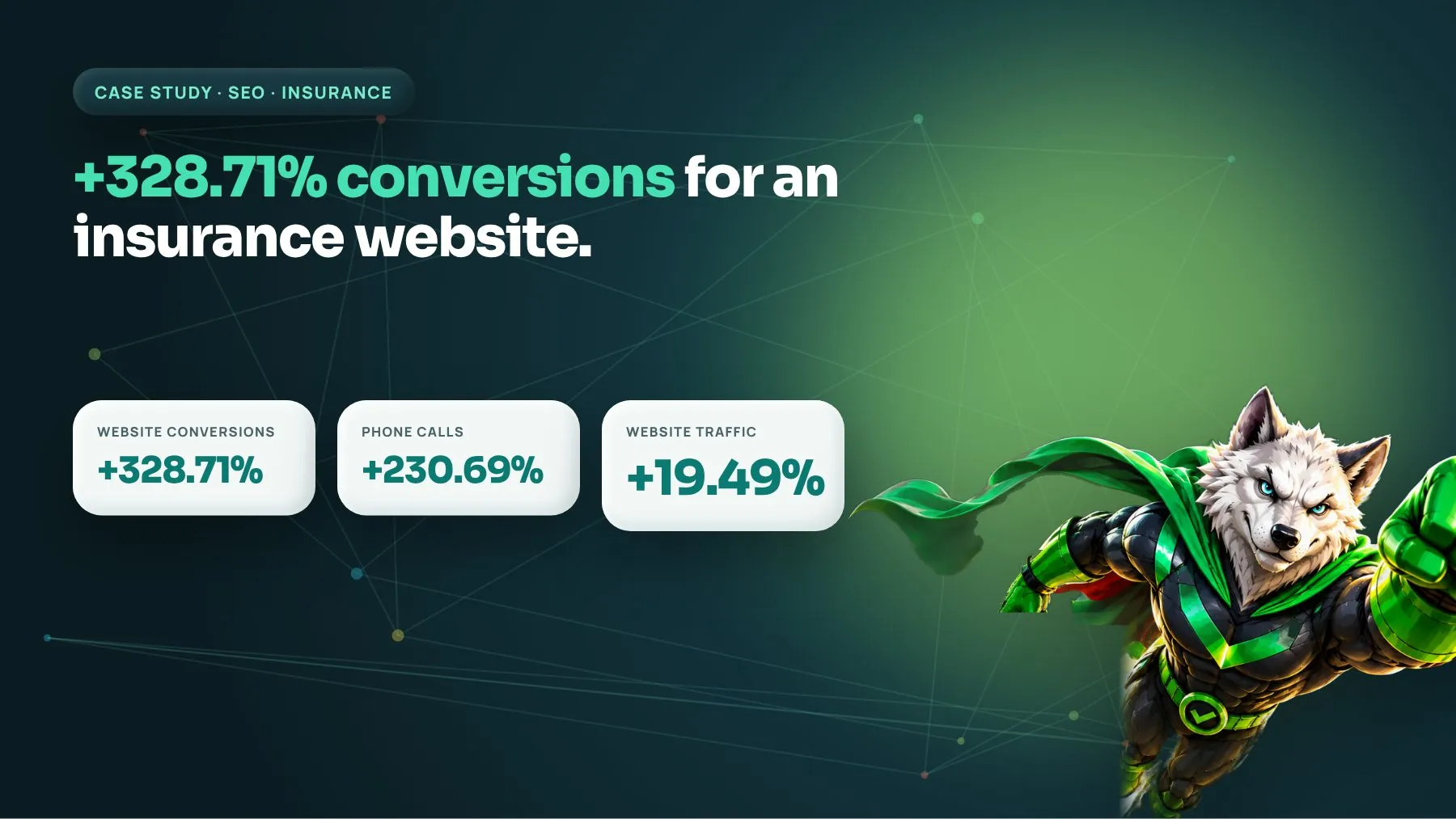
Fuller Insurance began life as the Comprehensive Apartment Program (CAP), created by Matt Fuller. The business had a website, but it was not producing the traffic or leads it should. After a full SEO audit and a programme of on-site, UX, conversion and content work, website conversions rose 328.71% and phone calls rose 230.69%.
At a glance
- Client: Fuller Insurance (originally the Comprehensive Apartment Program)
- Services: SEO audit, on-site SEO, UX/UI improvements, conversion optimization, content marketing
- Key results: conversions +328.71%; total calls +230.69%; website traffic +19.49%; new users +16.41%
The challenge: a website that was not earning its keep
Fuller Insurance came to us to drive consistent organic traffic and, more importantly, quality leads. Their site existed, but it was not doing the job a website should do for an insurance business: bringing in people who need cover and turning them into enquiries.
Insurance is a trust purchase. Prospects compare options carefully, often over several visits, and they need to feel confident before they pick up the phone. A site that attracts the wrong visitors, buries its key information or makes contact awkward loses those prospects to competitors who make it easy.
Our comprehensive SEO audit uncovered four connected problems:
- Low-quality traffic. The visitors who did arrive were often not the people Fuller Insurance could help.
- Keyword optimization issues. Pages were not clearly targeting the searches that real buyers of this cover use.
- Unclear goals and objectives. The site was not set up around defined conversion goals, so there was no clear path to an enquiry and no reliable way to measure one.
- Poor user experience. Navigation, layout and page structure made it harder than it should be to understand the offer and get in touch.
Each problem made the others worse. Weak targeting brought the wrong traffic; poor UX meant even the right visitors left; and without defined goals, nobody could see where leads were being lost.
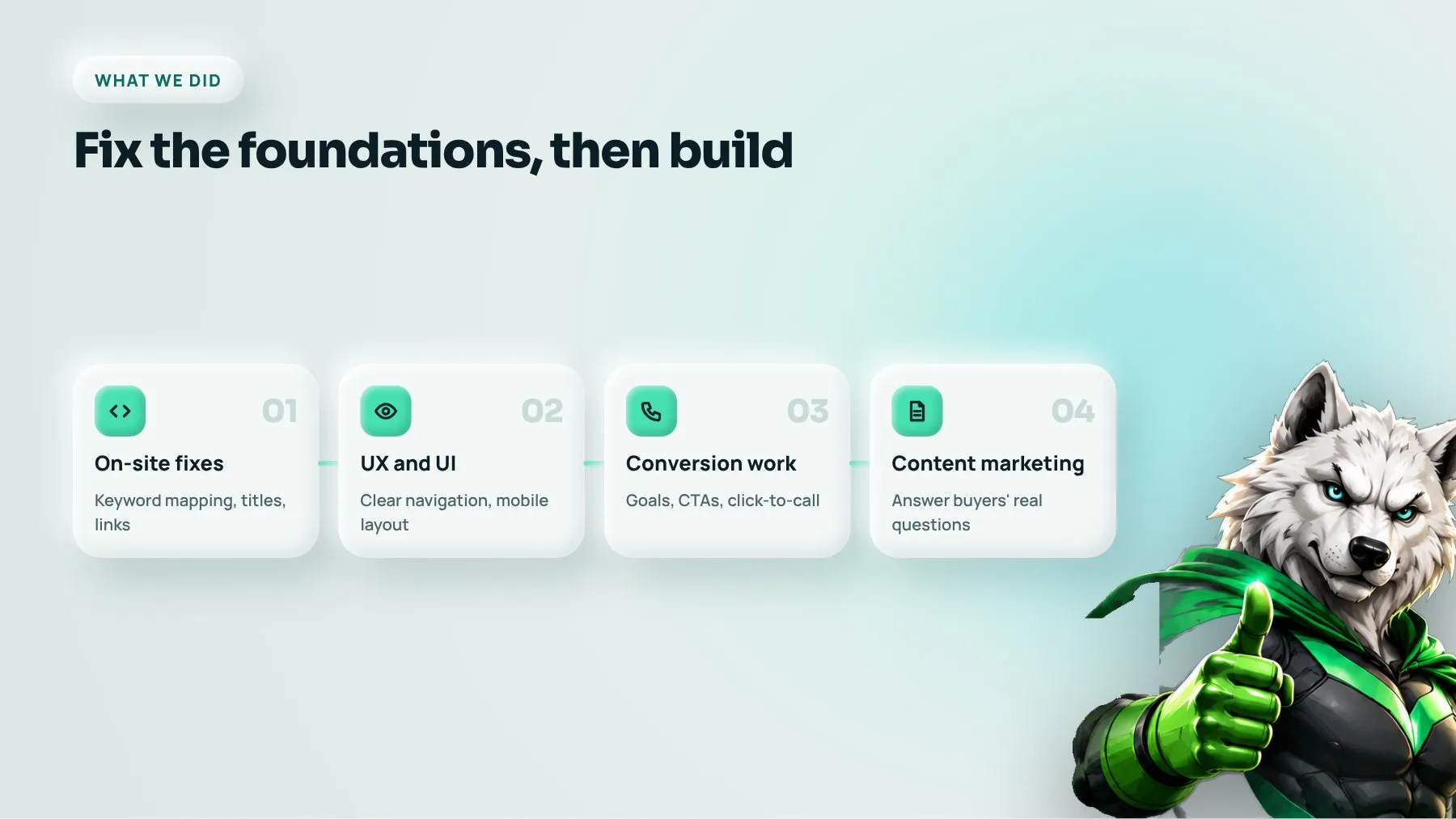
What we did: fix the foundations, then build
On-site fixes
We started with the technical and on-page foundations, because content and promotion cannot perform on a site search engines struggle to understand.
- Keyword mapping. We assigned each important page a clear primary topic and set of related terms, so pages stopped competing with each other and each one had a job.
- Titles, meta descriptions and headings rewritten to match how prospects search for insurance cover, and to earn clicks from the results page.
- Internal linking to connect related pages and help both users and search engines find the most important content.
- Technical clean-up of crawl and indexing issues found in the audit, so the right pages could be found and ranked.
UX and UI fixes
For an insurance business, clarity is conversion. We worked on how the site looked and behaved:
- Clearer navigation so prospects could find the cover relevant to them in a few clicks.
- Better page structure, breaking dense information into scannable sections with clear headings.
- Mobile experience, since many people research cover on their phones.
- Visual hierarchy that puts the offer and the next step where the eye lands first.
Conversion optimization
This is where the biggest commercial gains usually come from, and it was central here.
- Defined goals. We set up clear conversion goals, such as form submissions and calls, so every lead could be measured.
- Prominent calls to action on key pages, including click-to-call for mobile visitors, which matters for a business where many prospects prefer to talk.
- Simpler forms that ask only what is needed to start the conversation.
- Trust signals placed near decision points, because insurance buyers need reassurance before they enquire.
Content marketing
Finally, we used content to attract better-qualified visitors and answer the questions prospects ask before they buy. Helpful, specific content about the cover Fuller Insurance provides does two jobs: it ranks for the searches buyers use, and it builds the confidence that turns a visitor into a caller. Content was linked into the relevant service pages so readers had a clear route to an enquiry.
The results: leads grew far faster than traffic
- Conversions from the website: +328.71%
- Total calls: +230.69%
- Website traffic: +19.49%
- New users: +16.41%
The pattern in these numbers is the real story. Traffic grew by just under a fifth, but conversions more than quadrupled. That gap shows the work was not about pulling in more visitors for the sake of it. It was about attracting the right visitors and making it far easier for them to act.
For an insurance business, the 230.69% increase in calls is especially valuable. A phone call is often the warmest kind of lead: someone who wants to speak to a person about their cover now.
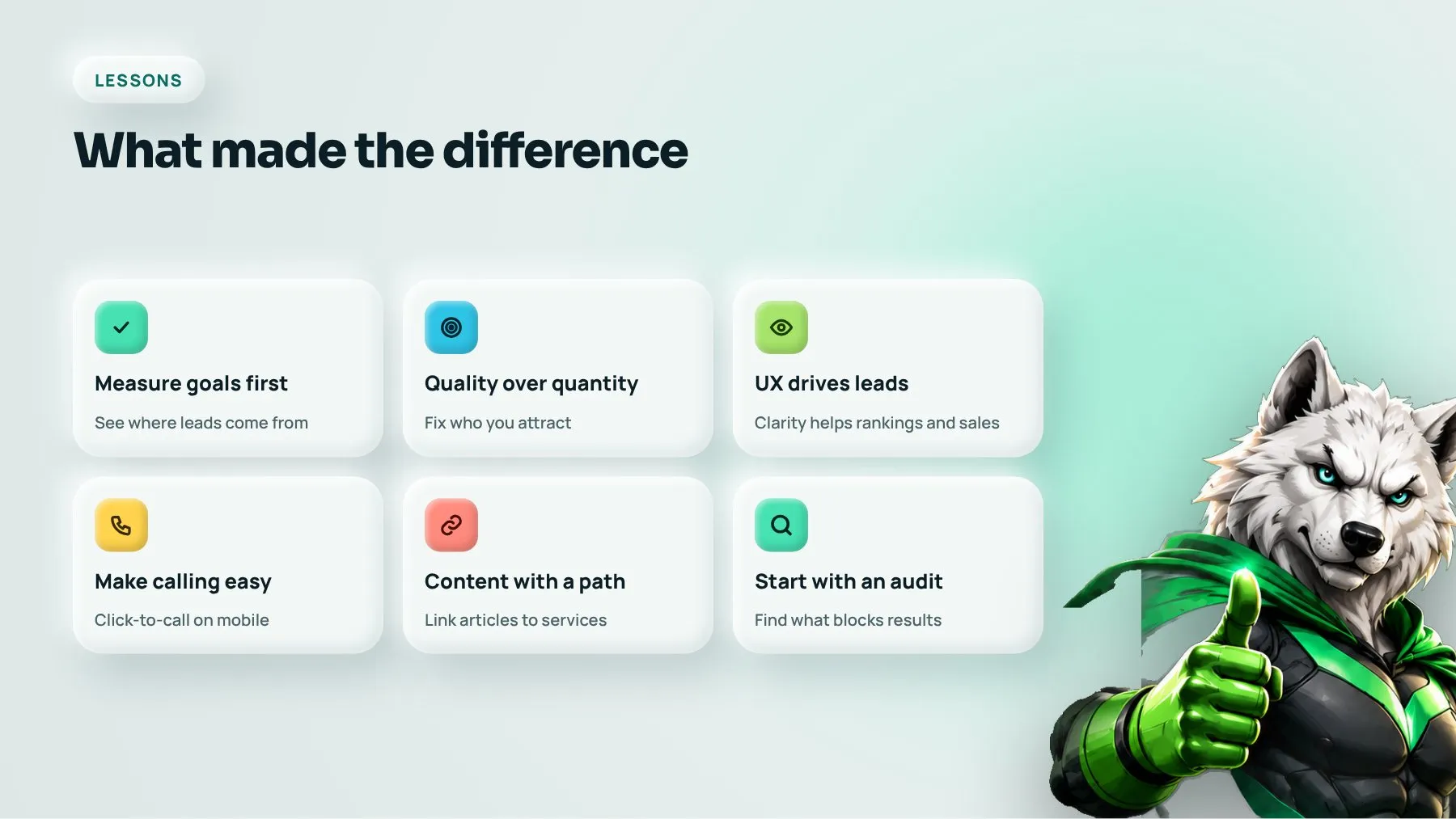
What made the difference: lessons for insurance businesses
Measure goals before you chase traffic
Until conversion goals were defined, there was no way to see which pages produced leads. Measurement turned guesswork into decisions.
Quality of traffic beats quantity
A modest rise in visitors produced a dramatic rise in enquiries because targeting improved. Fix who you attract before trying to attract more.
UX is an SEO and sales issue
Confusing layout costs you rankings and leads at the same time. Clear structure helps search engines and prospects alike.
Make calling easy
Many insurance buyers prefer to talk. Visible phone numbers and click-to-call on mobile turn interest into conversations.
Content should lead somewhere
Educational content builds trust, but only pays off when it links clearly to the service and the next step.
How to apply this to your business
- Run a full SEO audit covering technical issues, keyword targeting and UX.
- Define your conversion goals and make sure calls and forms are tracked.
- Map one clear topic to each key page and rewrite titles and headings to match.
- Put a clear call to action, and click-to-call on mobile, on every important page.
- Simplify forms to the minimum needed.
- Publish content that answers buyers’ real questions and links to your service pages.
FAQ
How long does SEO take for an insurance website?
On-site and conversion fixes can lift leads relatively quickly because they improve how existing traffic behaves. Ranking gains from SEO and content usually start to show in three to six months and build from there.
Why focus on conversions rather than traffic?
Traffic is only valuable if it turns into enquiries. Improving conversion rate means every visitor you already have is worth more, which is often the fastest route to more leads.
Is content marketing worth it in insurance?
Yes, when it answers the specific questions prospects have before choosing cover. Good content earns rankings and trust, and it shortens the path to a call when it links clearly to your services.
Want more leads from your website, not just more visitors? See our SEO services and lead generation work, or book a strategy call.