In 2023 we published a list of the ten Google ranking factors that mattered most. Most of that advice still holds. What has changed is the search results page itself: AI Overviews now answer many queries directly, AI assistants recommend businesses, and Google has become stricter about rewarding content that is genuinely helpful. This guide revisits each factor, explains what it means now and shows what to do about it.
One note before we start: Google uses hundreds of signals and does not publish their weights. Anyone giving you an exact ranking formula is guessing. What follows is how experienced practitioners prioritize the work.
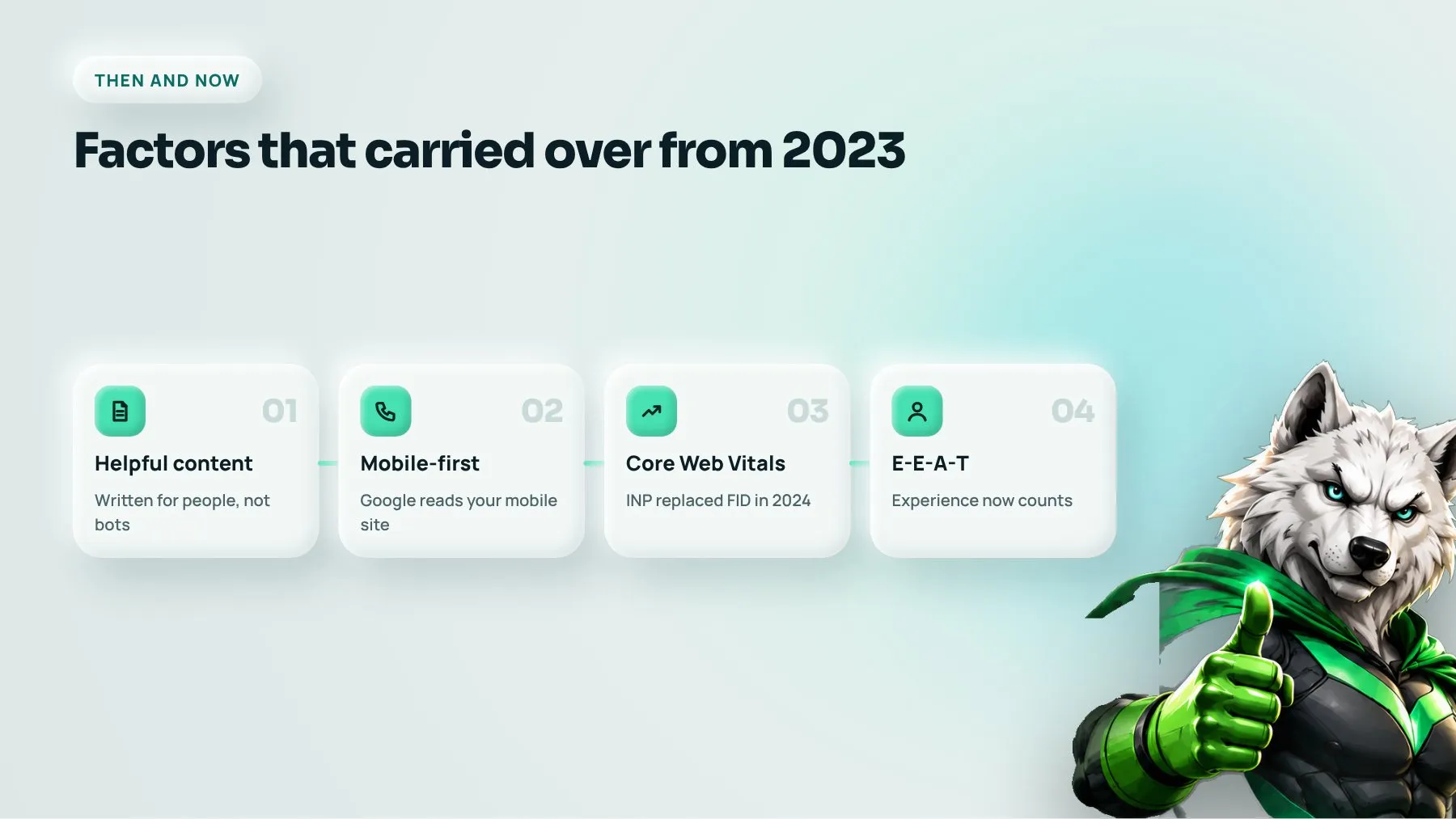
1. Content quality: still the foundation
Then: Create content that addresses user intent, provides real value and covers topics in depth to build authority.
Now: This matters more than ever. Google’s helpful content system, now folded into its core ranking systems, is designed to reward content written for people rather than for search engines. Mass-produced pages, thin articles and AI-generated content with nothing original tend to lose ground.
What to do:
- Start every page from a real question your customers ask.
- Add what only you can add: your experience, examples, processes, pricing guidance and opinions.
- Cover the topic fully, including the follow-up questions a reader will have.
- Update important pages when facts change instead of publishing new near-duplicates.
Common mistake: writing for a keyword list instead of for a buyer. If a page would not help a customer, it will struggle to rank.
2. Mobile-first indexing
Then: Most searches come from mobile, so make sites responsive and fast on every device.
Now: Mobile-first indexing is complete. Google primarily crawls and evaluates the mobile version of your site. If content, links or structured data are missing on mobile, Google effectively does not see them.
What to do: Check that your mobile pages contain the same content and internal links as desktop, that buttons are easy to tap and that nothing important is hidden behind elements that do not load on phones.
3. Page experience and Core Web Vitals
Then: Core Web Vitals measured loading, interactivity and visual stability.
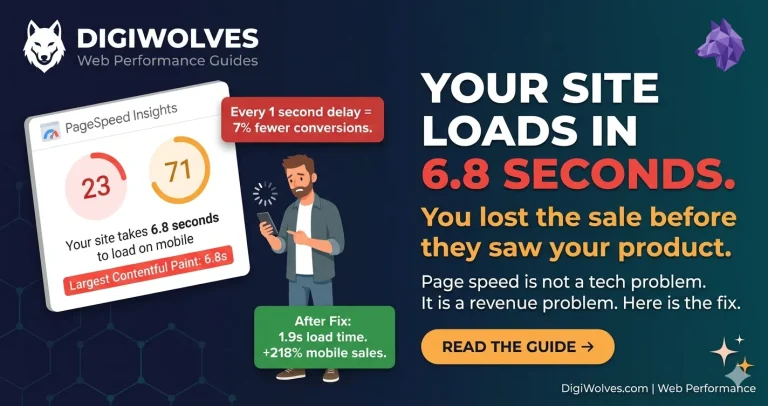
Now: The metrics have evolved. In 2024, Interaction to Next Paint (INP) replaced First Input Delay as the responsiveness metric, alongside Largest Contentful Paint (loading) and Cumulative Layout Shift (stability). Page experience is a tie-breaker more than a trump card: a fast site with weak content will not beat a slower site with far better content, but between similar pages, experience counts. And speed affects conversions regardless of rankings.
What to do: Compress images, remove unused scripts and plugins, defer non-essential code and fix layout jumps. Measure with real-user data in Search Console, not only lab tests.
4. E-E-A-T: experience, expertise, authoritativeness, trust
Then: E-A-T: expertise, authoritativeness and trustworthiness, especially for health and finance topics.
Now: Google added a second E for experience in late 2022. It wants evidence that the author has first-hand experience of the subject. Trust sits at the center. This is not a single score but a set of signals Google’s systems and human quality raters look for.
What to do:
- Name real authors with relevant credentials and bios.
- Show first-hand proof: case studies, photos of your work, real results.
- Make it easy to verify your business: address, team, reviews, policies.
- Cite reliable sources for factual claims, especially on health, legal or financial topics.
5. Backlinks: quality over quantity
Then: High-authority, industry-relevant links beat large volumes of generic ones.
Now: Still true. Links remain a strong signal, but Google has become better at ignoring manipulative ones. Paid link schemes, private blog networks and irrelevant guest posts are a risk, not an asset. Mentions of your brand on trusted sites also help AI systems recognize you.
What to do: Earn links with content others want to reference, such as original guides, tools and useful data from your own work, and through genuine relationships with industry publications, partners and local organizations.
6. Semantic search and natural language
Then: Google understands context and intent, so write naturally and cover topics comprehensively.
Now: Language models have taken this much further. Google matches meaning, not just words. Keyword stuffing is pointless; topical depth and clear answers win. This is also the bridge to AI search: content that answers questions directly and clearly is easier for AI Overviews and assistants to quote.
What to do: Group content into topic clusters, answer the main question near the top of each page, use clear headings and add structured data (schema) where it fits. Our answer engine optimization work builds on exactly this.
7. Security and accessibility
Then: Use HTTPS and make sites accessible to everyone.
Now: HTTPS is a baseline; most sites have it. Accessibility is good practice and often good SEO: descriptive alt text, logical heading structure, readable contrast and clear link text help both users and search engines understand pages.
What to do: Confirm every page loads securely with no mixed content, and run an accessibility check on your key templates.
8. Local SEO and geo-targeting
Then: Use location keywords, optimize your Google My Business profile and earn local reviews.
Now: The tool is now called Google Business Profile, and it remains central for any business serving a local area. Relevance, distance and prominence drive map rankings.
What to do: Choose the right primary category, complete every field, add real photos, post updates, keep your name, address and phone consistent everywhere, and ask every happy customer for a review.
9. User engagement
Then: Dwell time, bounce rate and click-through rate signal content quality.
Now: Google has long said it does not use Google Analytics data such as bounce rate for ranking, and the details of how it uses interaction data are debated. The practical lesson is unchanged: if searchers click your result and quickly return to look for a better answer, that is bad for you in every way.
What to do: Write titles and descriptions that set accurate expectations, answer the question quickly and make the next step obvious.
10. Core updates: build to last
Then: Watch algorithm updates and adapt.
Now: Google still releases several core updates a year, and they have hit sites built on shortcuts hardest. The best protection is not reacting to each update but building a site that deserves to rank: helpful content, real expertise, sound technical health and earned authority.
What is new since 2023: AI search
The biggest change is where answers appear. AI Overviews summarize answers at the top of many results pages, and people increasingly ask AI assistants for recommendations. Ranking well still matters, because these systems lean on trusted, well-ranked sources. But you also want to be the source they cite. That means clear, factual answers, consistent business information across the web and a strong brand presence beyond your own site. Learn more in our guide to AI Overviews optimization.
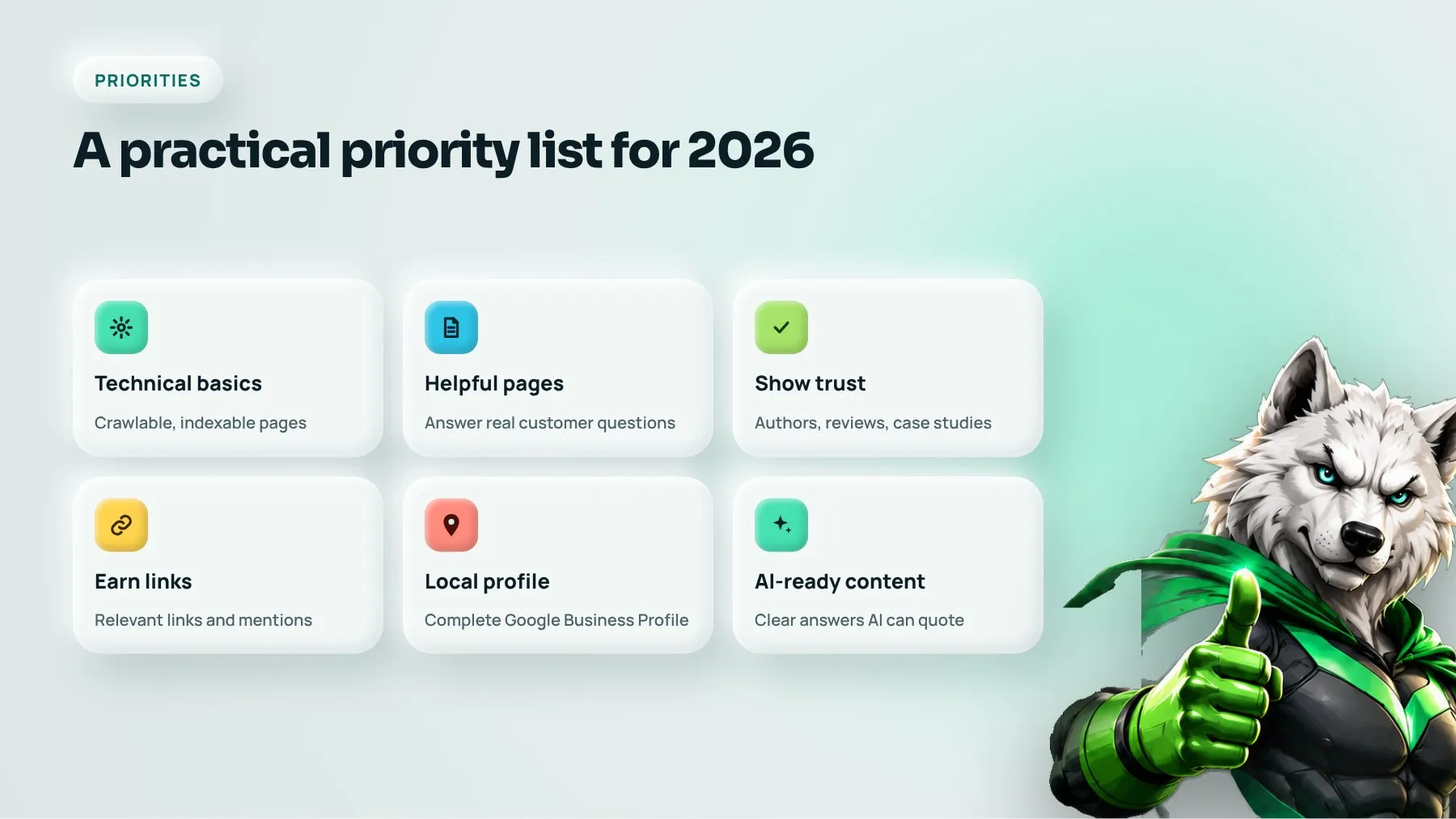
A practical priority list for 2026
- Fix technical basics so Google can crawl and index your important pages.
- Build genuinely helpful pages for your core services and customer questions.
- Show experience and trust: authors, case studies, reviews, clear business details.
- Earn relevant links and brand mentions.
- Optimize your Google Business Profile if you serve local customers.
- Structure content so AI systems can quote it.
FAQ
What is the most important Google ranking factor?
There is no single one. In practice, helpful content that matches search intent, combined with trust signals and relevant links, carries the most weight. Technical health makes sure Google can see it.
Do Core Web Vitals really affect rankings?
Yes, but modestly. They act more as a tie-breaker between pages of similar quality. Their bigger impact is often on conversions, because faster pages keep more visitors.
Does SEO still matter with AI Overviews?
Yes. AI Overviews and assistants draw heavily on pages that already rank and are trusted. Strong SEO is the foundation for AI visibility, with extra attention to clear answers and structured content.
Want a plan built around the factors that matter for your business? See our SEO services or book a strategy call.