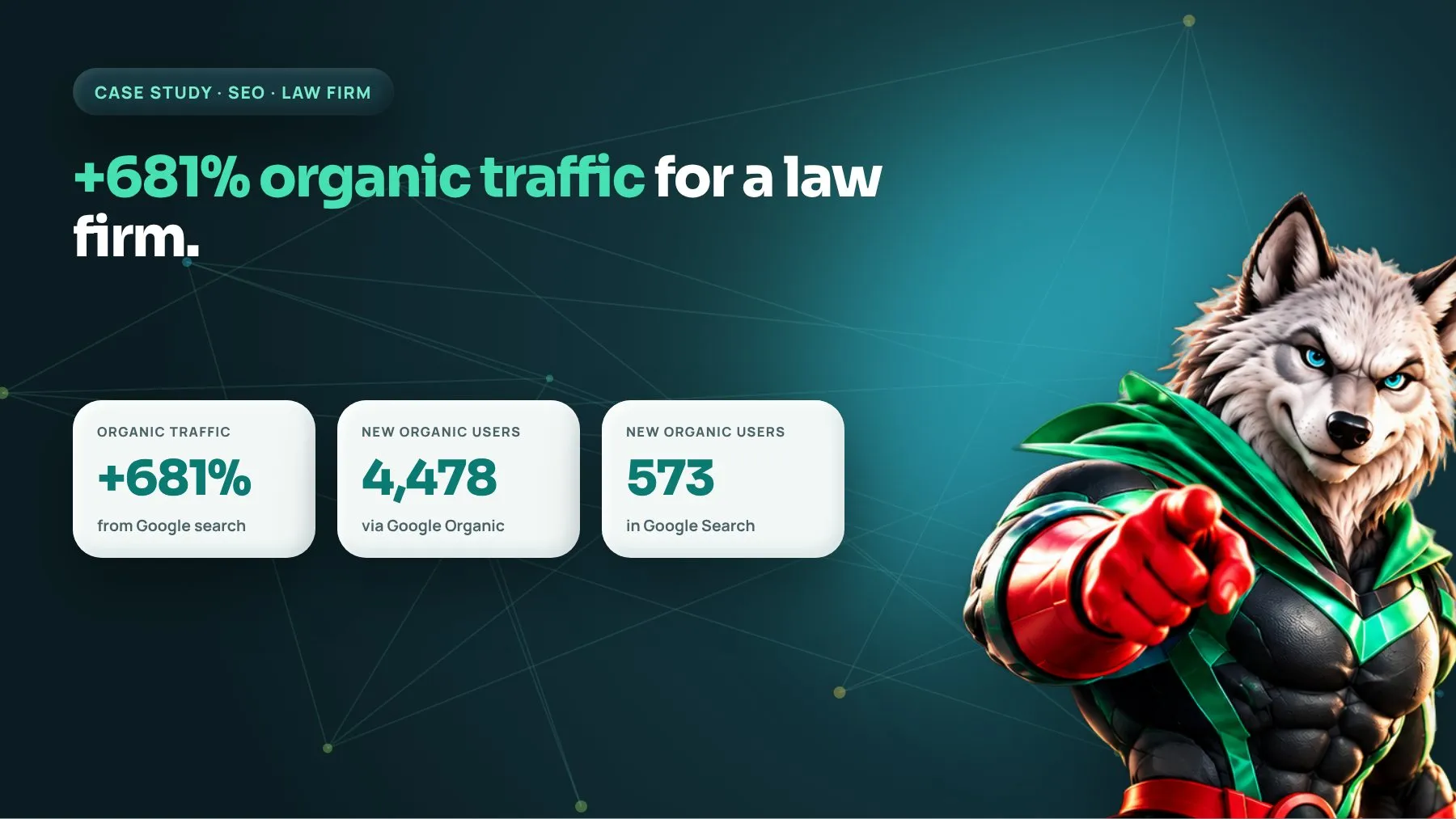
A law firm asked us to grow its website traffic using proven SEO methods: stronger on-page signals, clearer calls to action, better content and real link building. Our audit showed the site’s biggest weaknesses were thin local listings and too few quality links. By fixing both, we delivered a 681% increase in organic traffic, with 4,478 new organic users finding the firm exclusively through Google Organic Search.
At a glance
- Client: Law firm
- Service: SEO (link building, local SEO, content assets)
- Key results: 681% increase in organic traffic; 4,478 new organic users from Google Organic Search; 573 new organic users found the firm in Google Search
The challenge: a law firm search engines did not trust yet
Legal is one of the most competitive spaces in search. Prospective clients searching for a lawyer are often making a high-value, high-stakes decision, so every firm in the market wants to be on page one. Google knows this, and it applies a high bar for trust and authority to legal websites, which fall into the category of topics where bad information can seriously affect someone’s life.
When we reviewed the overall health of this firm’s website, two gaps stood out:
- Weak local listings. Most legal searches have local intent. If a firm is missing from, or inconsistent across, the directories and listings Google uses to confirm a business is real and local, it struggles to appear in the map pack and in local organic results.
- Few quality links. Links from other reputable websites are still one of the strongest signals of authority. A law firm with a sparse link profile is competing against rivals that have spent years earning links, and on-page improvements alone rarely close that gap.
The firm’s goals also included better on-page metrics, calls to action and content quality. Those matter, but they deliver far more when the site has the authority to rank in the first place. So we focused first on authority and local trust.
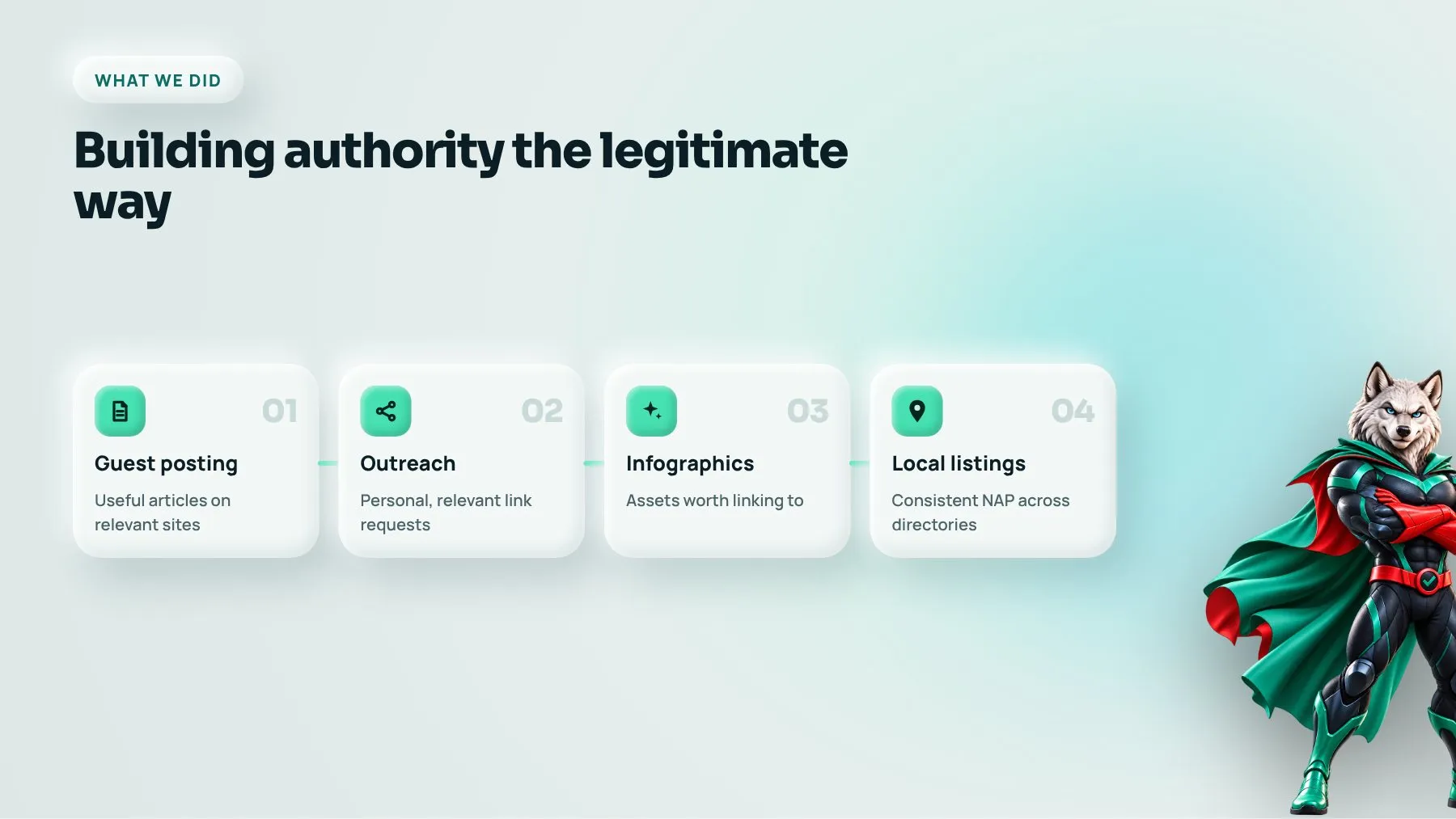
What we did: building authority the legitimate way
We have worked with many law firms over the years, so we knew which tactics hold up in a market where shortcuts get punished. Everything below was done manually and with relevance in mind.
Guest blog posting
We placed useful, well-written articles on relevant websites, such as legal, business, local news and community publications, with a natural link back to the firm. The point is not volume. A single article on a respected, relevant site is worth more than dozens on low-quality blogs. Topics were chosen to be genuinely helpful to readers (for example, explaining what to do after a common legal situation) so the content earned its place on the host site.
Outreach link building
Outreach means contacting site owners, editors and journalists directly and giving them a reason to link: a resource that improves their article, an expert answer, a correction to a broken link, or a local angle. Good outreach is personal and specific. We prioritized sites with real audiences and topical relevance to the firm’s practice areas and location, and avoided link networks, paid link schemes and anything that would put the firm at risk.
Asset creation, including infographic design
Links are much easier to earn when you have something worth linking to. We created linkable assets, including infographics, that turned legal information into clear, shareable visuals. A good legal infographic might explain a process step by step or summarize what people need to know about a common situation. Assets like this give outreach a hook and keep attracting links over time, because other writers want to reference them.
Local SEO listing submissions
We submitted and cleaned up the firm’s listings across relevant local and legal directories, making sure the firm’s name, address and phone number were identical everywhere. Consistent citations help Google trust that the firm is a real, established local business, which supports both map rankings and local organic visibility. Legal directories also bring their own referral traffic from people actively looking for a lawyer.
The results: 681% more organic traffic
- 681% increase in organic traffic.
- 4,478 new organic users found the firm exclusively through Google Organic Search.
- 573 new organic users found the firm in Google Search.
For a law firm, organic visitors are some of the most valuable traffic there is. They arrive having searched for a legal problem, they are not paid for per click, and they keep coming as long as the rankings hold. In a market where paid clicks are among the most expensive in Google Ads, every visitor earned organically is a visitor the firm does not have to buy. The authority built through links and listings also keeps paying off, because it supports every page on the site, including pages created later.
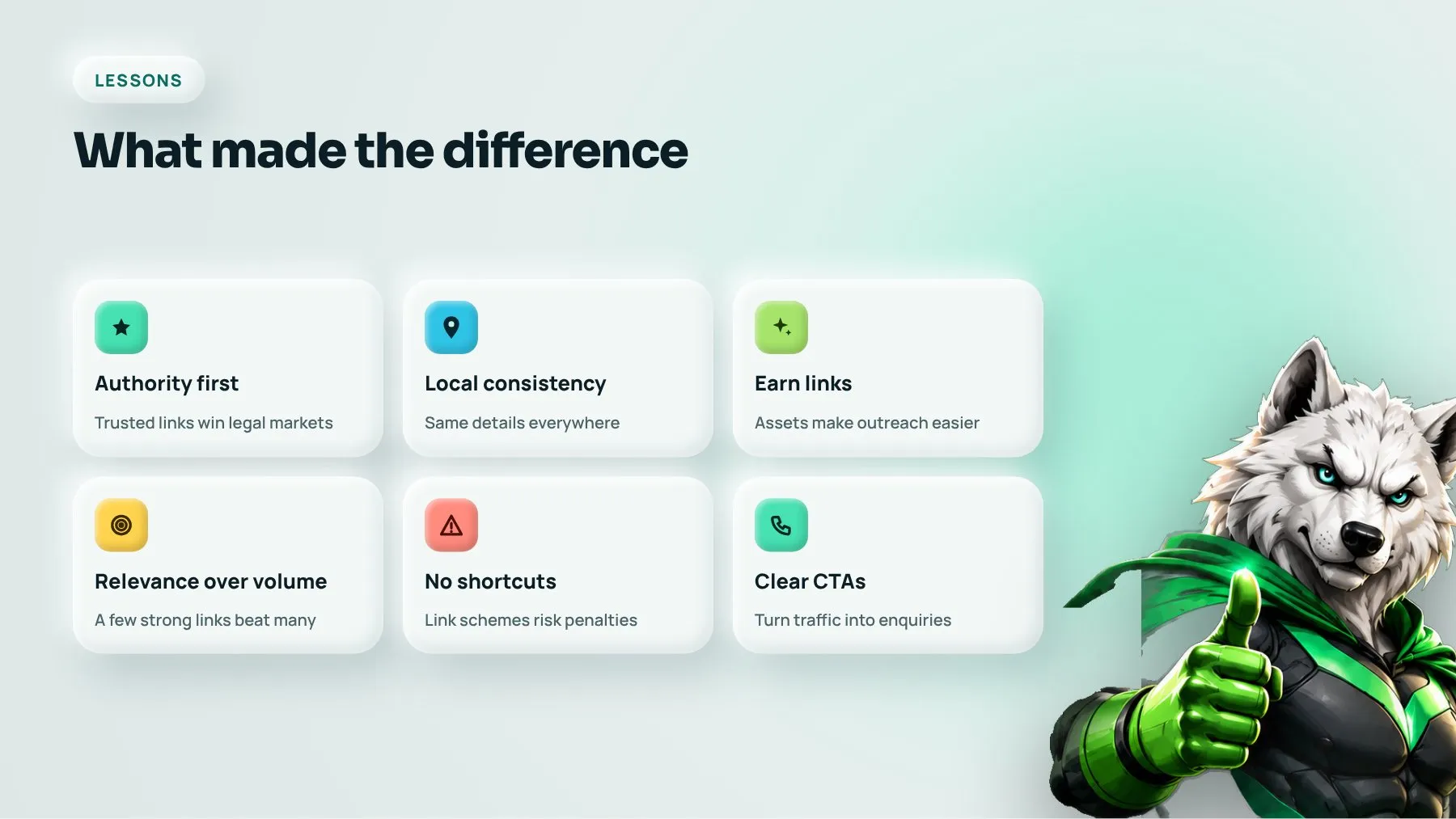
What made the difference: lessons for law firms
1. Authority before polish
On-page improvements matter, but in competitive legal markets the firm with more trusted links usually wins. Build authority alongside content.
2. Local consistency is basic but powerful
Consistent listings across directories is unglamorous work that directly supports local visibility. Many firms still get it wrong.
3. Earn links with assets
Infographics and helpful resources give other sites a reason to link. They make outreach easier and keep attracting links.
4. Relevance beats volume
A handful of relevant, reputable links beats a pile of low-quality ones, and protects the firm from penalties.
5. Stay away from shortcuts
Legal is closely scrutinized. Link schemes can wipe out years of progress. Sustainable methods are the only safe choice.
How to apply this to your firm
- Audit your listings: is your firm’s name, address and phone number identical everywhere?
- Claim and complete your profiles on the main legal directories.
- Review your backlink profile and compare it with the firms that outrank you.
- Create one genuinely useful asset, such as an infographic or guide, for each core practice area.
- Plan regular, personal outreach to relevant local and legal publications.
- Make sure every key page has a clear call to action so new traffic becomes enquiries.
FAQ
How long does SEO take for a law firm?
SEO results usually start to show in three to six months, and competitive legal markets can take longer to reach the top positions. Link building and local listings build authority steadily, so the gains tend to compound over time.
Is link building safe for law firms?
Yes, when it is done properly: relevant sites, real content and genuine outreach. What is not safe is buying links in bulk or using private networks, which can lead to penalties. Ask any agency exactly how and where they get links.
Should a law firm invest in SEO or Google Ads?
Many firms use both. Google Ads brings enquiries quickly but costs money for every click, and legal clicks are expensive. SEO takes longer but builds an asset that keeps producing traffic. Ads can cover the gap while SEO builds momentum.
Want this kind of growth for your firm? See our SEO services, browse our industries or book a strategy call.