When someone searches for a service “near me” or in a specific city, Google shows a map with a handful of businesses and then the regular results. Being in that map pack, or near the top of the results below it, is often the difference between a phone that rings and one that does not. That is what local SEO is for: making your business the obvious choice for people searching in your area.
This guide covers ten tactics that still matter in 2026, how to do each one properly and the mistakes we see most often.
1. Understand how local rankings work
Google ranks local results on three broad factors:
- Relevance: how well your business matches what the person searched for.
- Distance: how close you are to the searcher or the location in their search.
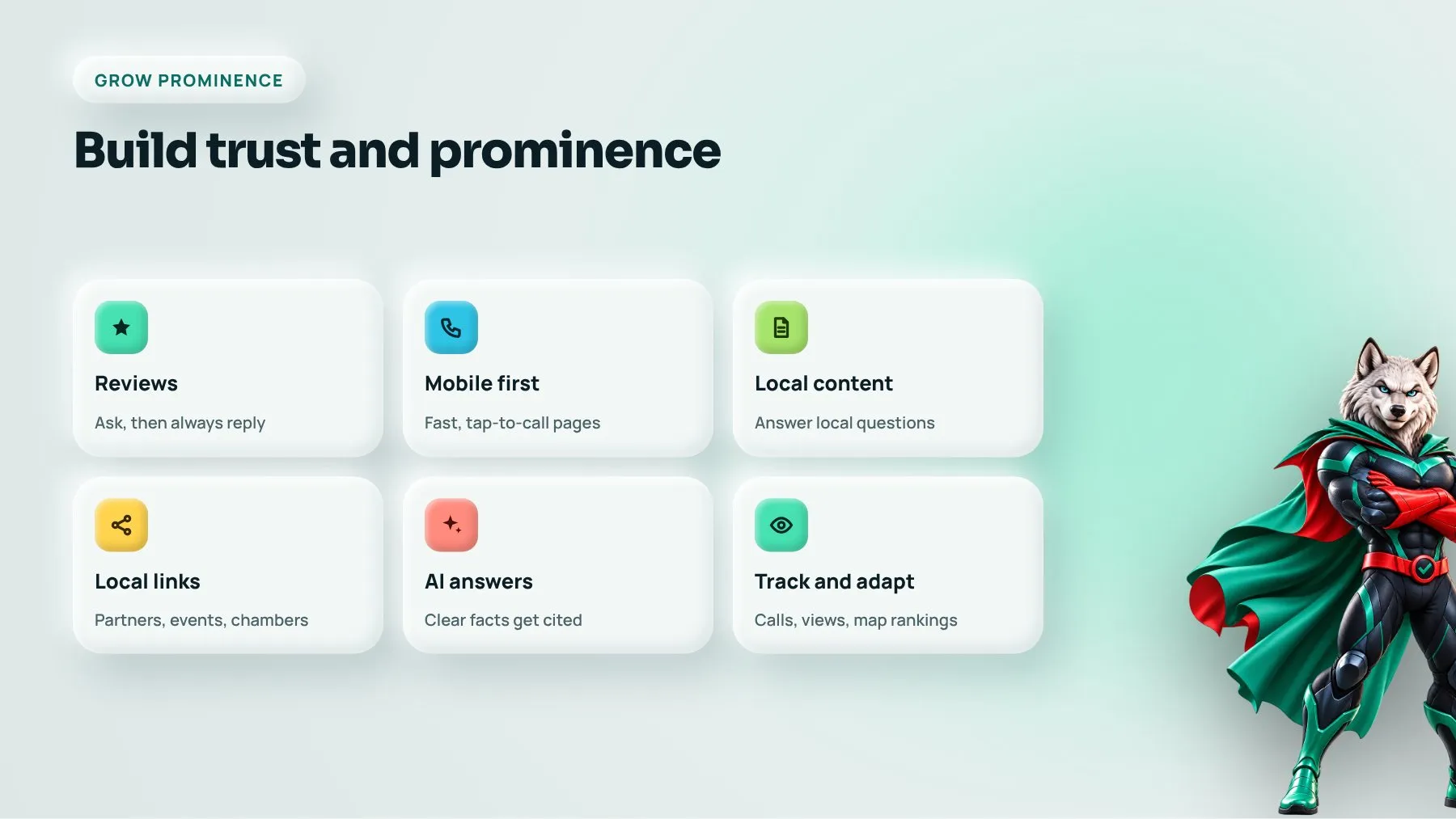
- Prominence: how well known and trusted your business is, judged from reviews, links, mentions and your overall web presence.
You cannot move your premises, but you can control relevance and prominence. Every tactic below improves one or both.
2. Use location-specific keywords
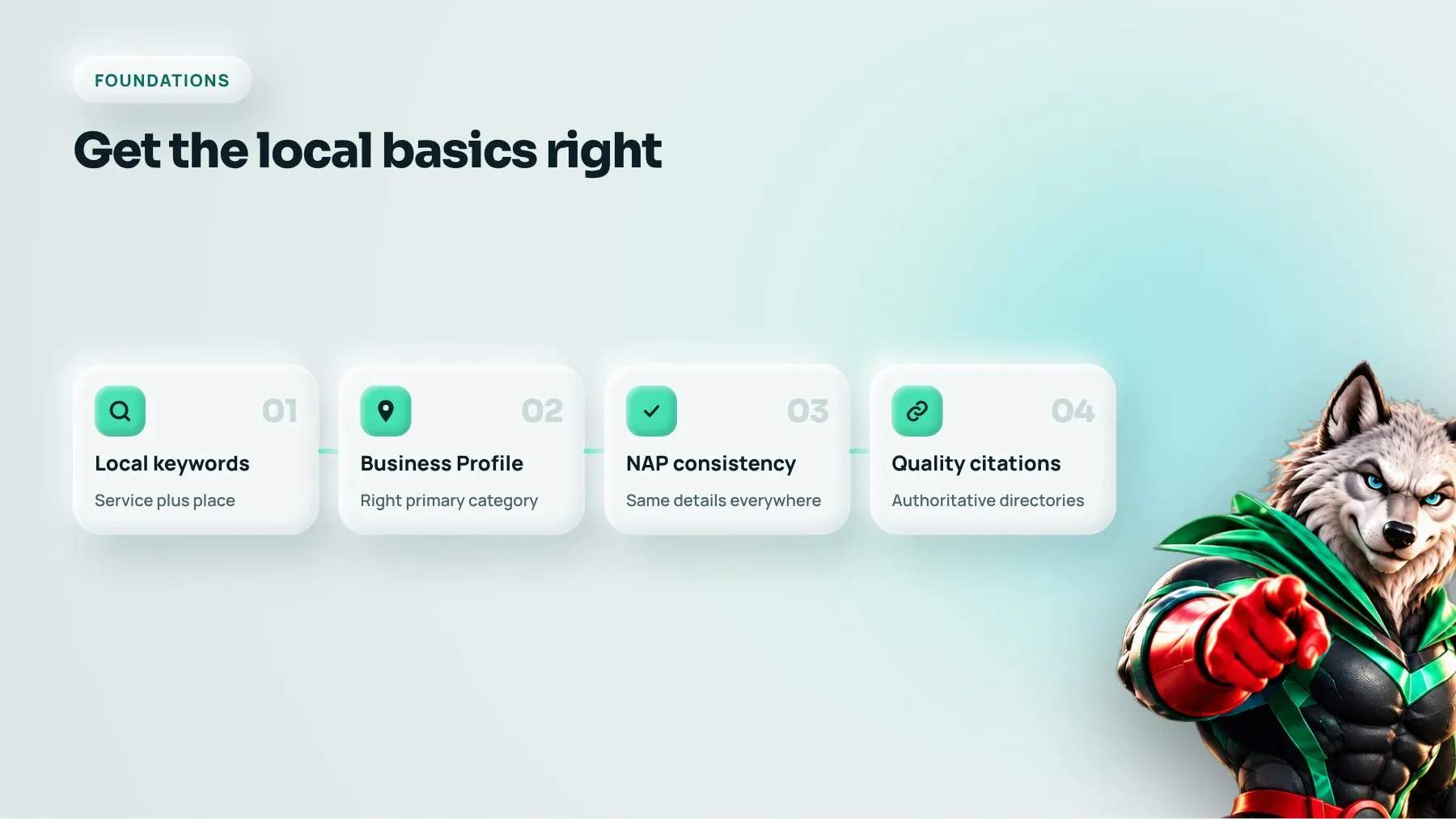
Optimize your website for the phrases your customers actually use when they look for your services in your area. That usually means the service plus a place: “commercial roofer in Leeds”, “family lawyer Dubai Marina”, “emergency plumber Brooklyn”.
How to do it well:
- Put the main service and location in your page title, main heading and the opening paragraph.
- Create a dedicated page for each core service, and, if you serve several distinct areas, a genuinely useful page for each one.
- Write naturally. Precision matters more than repetition.
Common mistake: creating dozens of near-identical “service in [town]” pages with only the place name changed. Google treats these as low-value doorway pages. Each location page needs real local substance: projects completed there, the team that covers it, local considerations and directions.
3. Get the most from your Google Business Profile
Your Google Business Profile, formerly Google My Business, is your storefront in search and Maps. It often gets more views than your website.
- Choose the right primary category. This is one of the strongest local ranking signals. Pick the most specific category that describes your main business, then add relevant secondary categories.
- Complete every field: hours, holiday hours, services, products, service areas, attributes and a clear description.
- Add real photos of your premises, team and work, and keep adding them.
- Post updates about offers, events and new work.
- Answer questions and keep your contact details accurate.
Common mistake: stuffing keywords into the business name. It breaks Google’s guidelines and can get a profile suspended.
4. Keep NAP consistent everywhere
NAP means name, address and phone number. They must match exactly across your website, Google Business Profile, directories and social profiles. Inconsistencies, such as an old address or a different phone number, confuse search engines and customers, and weaken trust in your listing.
Run an audit whenever you move, rebrand or change numbers, and update the major data sources first.
5. Build quality local citations
Citations are mentions of your business details on other sites, such as directories, industry associations and local listings. Quality matters more than quantity. Focus on:
- The major platforms in your country, such as Apple Business Connect, Bing Places, Yelp and the leading national directories.
- Respected directories for your industry.
- Local chambers of commerce and business associations.
A few accurate listings on authoritative sites are worth more than hundreds on low-quality directories.
6. Earn and respond to online reviews
Reviews influence both rankings and the decisions of people comparing you with competitors. Encourage satisfied customers to leave reviews on Google and relevant industry platforms.
- Ask at the right moment, when the job is done and the customer is happy.
- Make it easy with a direct review link.
- Respond to every review promptly and professionally, including negative ones. A calm, helpful reply to a complaint can reassure future customers more than another five-star review.
Common mistake: offering incentives for reviews or posting fake ones. Both break platform rules, and fake reviews are increasingly targeted by regulators.
7. Make mobile performance non-negotiable
Most local searches happen on phones, often when someone needs a business quickly. Google indexes the mobile version of your site, so mobile is the version that counts.
Make sure pages load fast on a mobile connection, the phone number is tap-to-call, buttons are easy to use and directions are one tap away. A beautiful site that is slow or awkward on a phone loses customers before they reach out.
8. Create content with local relevance
Write content that speaks to local customers’ needs, questions and circumstances. Examples include guides to local regulations that affect your service, case studies of work in specific areas, seasonal advice for your climate and answers to the questions your team hears every week.
This content serves people, builds relevance for local searches and gives AI-driven search results something specific to cite. As AI Overviews and assistants answer more local questions, clear, factual, well-structured content is increasingly how businesses get mentioned. Our AI Overviews optimization work builds on exactly this foundation.
9. Build links with local flavor
Links from respected local websites are strong signals of prominence. Good sources include:
- Partnerships with complementary local businesses.
- Sponsorship of local events, charities or sports clubs.
- Membership of chambers of commerce and industry associations.
- Coverage in local news for genuinely newsworthy work.
These links also bring real referral traffic and build your reputation in the community.
10. Track and adapt continuously
Local SEO is never finished. Track:
- Google Business Profile performance: searches, views, calls, website clicks and direction requests.
- Google Search Console: the queries and pages bringing in local traffic.
- Google Analytics: how visitors behave and which pages lead to enquiries.
- Rankings across your area: map pack positions vary street by street, so check from several locations.
Review the data monthly, and adjust categories, content and outreach based on what it tells you.
Your local SEO checklist
- Pick the most accurate primary category on your Google Business Profile.
- Complete every profile field and add fresh photos monthly.
- Audit NAP consistency across your top directories.
- Set up a simple review request process with a direct link.
- Test your site on a phone and fix anything slow or awkward.
- Publish at least one genuinely local piece of content each month.
- Track calls and direction requests, not just rankings.
FAQ
How long does local SEO take?
Profile fixes and category changes can have an effect within weeks. Reviews, content and links build over months, and most businesses see solid progress within three to six months of consistent work.
Do I need a physical address to rank locally?
Service-area businesses can have a Google Business Profile without showing an address, but they must still be genuinely based in the area. Using virtual offices to fake a presence breaks Google’s guidelines.
Should I pay for local SEO or do it myself?
The basics, such as a complete profile and asking for reviews, are worth doing yourself. In competitive markets, a specialist can help with strategy, content, links and tracking that are hard to do well alongside running a business.
Want to own the local results in your area? See our SEO services, browse our case studies or book a strategy call.