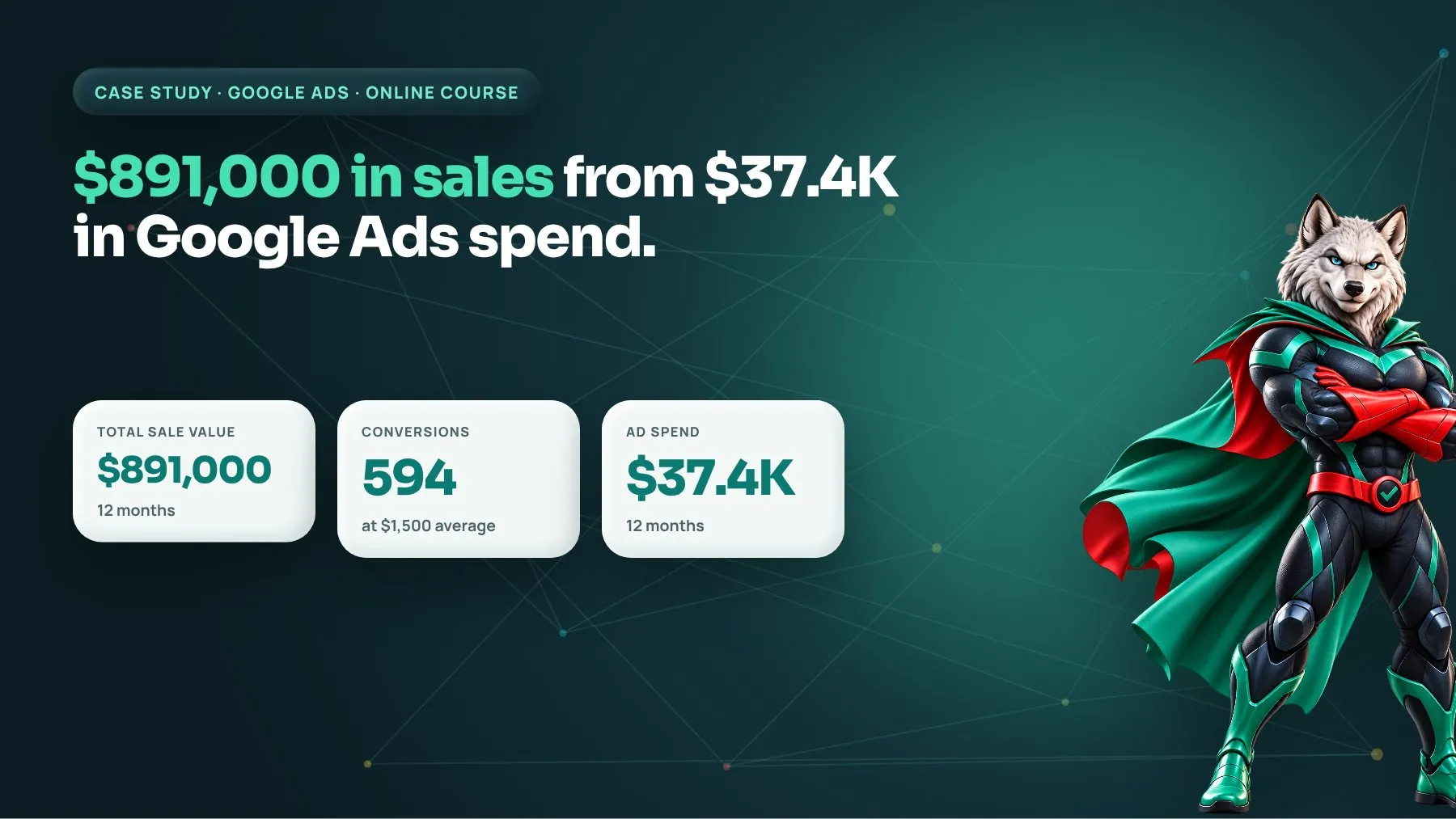
Our client sells online stretching courses and already had solid organic visibility through SEO. The problem was that over 99% of visitors left without buying. We built Google Ads search and remarketing campaigns, cut wasted spend with negative keywords and created high-converting landing pages. Over 12 months, $37.4K in ad spend produced 594 conversions with a total sale value of $891,000.
At a glance
- Client: Online stretching and flexibility course provider
- Services: Google Ads management (Search and remarketing), landing page design and conversion optimization
- Timeframe: 12 months
- Key results: $37.4K spent, 83K visitors, 594 conversions, $1,500 average sale value, $891,000 total sale value
The challenge: plenty of visitors, almost no buyers
The client had done the hard work of building an online presence. SEO was bringing people to the website, and the business wanted to expand online sales with Google Ads.
But analytics showed a serious problem: over 99% of the traffic visiting the website left without buying the course.
That matters enormously for an online course business. Digital products have no stock or shipping costs, so almost all the revenue from an extra sale is margin. A site that converts poorly wastes that advantage, and it makes paid advertising look unprofitable, because every click is bought at full price but almost none of them pay back. Before spending more on traffic, the business needed to fix what happened after the click.
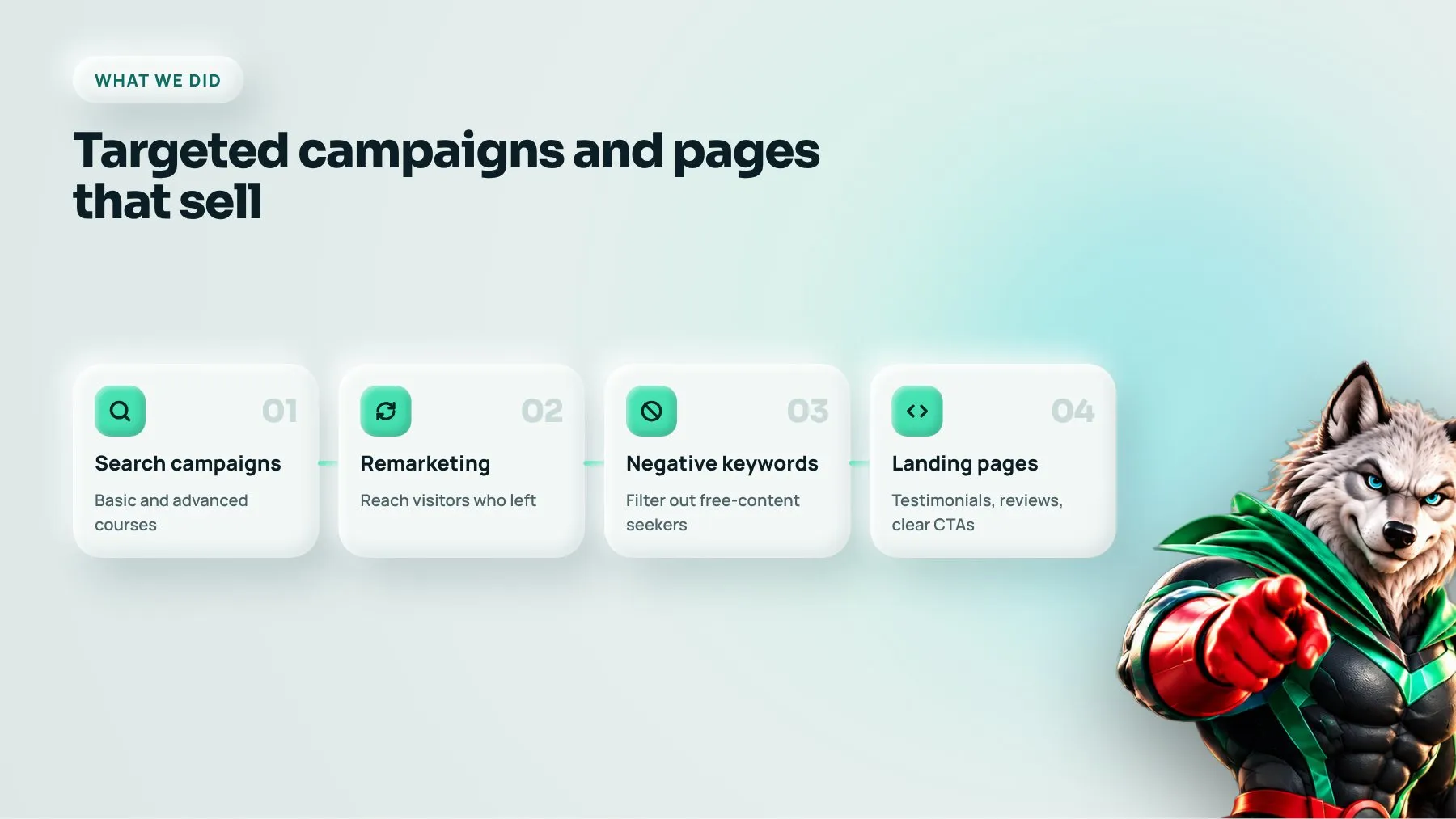
What we did: targeted campaigns and pages that sell
Search campaigns built around two products
We created search campaigns around the two online products: a basic stretching course and an advanced stretching course. Separating them matters. Someone searching for beginner flexibility routines is in a different place from someone looking to progress an existing practice, and each needs different keywords, ad messages and landing pages. Splitting campaigns by product also lets the budget follow whichever course is selling more efficiently.
Remarketing for people who left without buying
We noticed that 25% of the budget was dedicated to a remarketing display campaign. Remarketing targets people who have already visited the website but left without converting. For a considered purchase like a course, many people need more than one visit before deciding. Remarketing keeps the course in front of them while they think it over, and it reaches a warm audience that already knows the brand.
Running remarketing well means segmenting audiences, for example people who viewed a course page versus people who only read a blog post, excluding people who have already bought, and limiting how often ads appear so they remind rather than annoy.
A large list of negative keywords
Next, we built up a large list of negative keywords to prevent low-converting searches. Fitness and stretching searches attract a lot of people looking for free routines, single videos or general information. Those searchers rarely buy a paid course. Typical negative themes in this space include “free”, “YouTube”, “pdf”, “app” and job-related searches such as instructor vacancies. Blocking them protects the budget for people with real buying intent.
High-converting landing pages
Finally, we created high-converting landing pages designed to turn paid visitors into students. They included:
- Multiple calls to action, so a visitor ready to buy never has to scroll back to find the button
- Video testimonials from students talking about the course, which show real results from real people
- 5-star reviews to emphasize the course’s credibility online
The pages were built for one job: helping a visitor decide to buy. That is very different from a general website page that has to serve many purposes at once.
The results: 594 sales worth $891,000
Over 12 months the campaigns delivered:
- Amount spent: $37.4K
- Number of visitors: 83K
- Average sale value: $1,500
- Total conversions: 594
- Total sale value: $891,000
Put simply, the client spent $37.4K on advertising and generated $891,000 in course sales. For a business whose website was losing over 99% of visitors without a sale, that is a transformation. It also shows how much revenue was sitting untapped in the existing audience: the combination of focused targeting, remarketing and persuasive landing pages turned traffic into students.
The broader lesson is that data-driven advertising works best for course creators when paired with conversion-focused pages, whether that means rebuilding the website or creating dedicated landing pages for paid traffic.
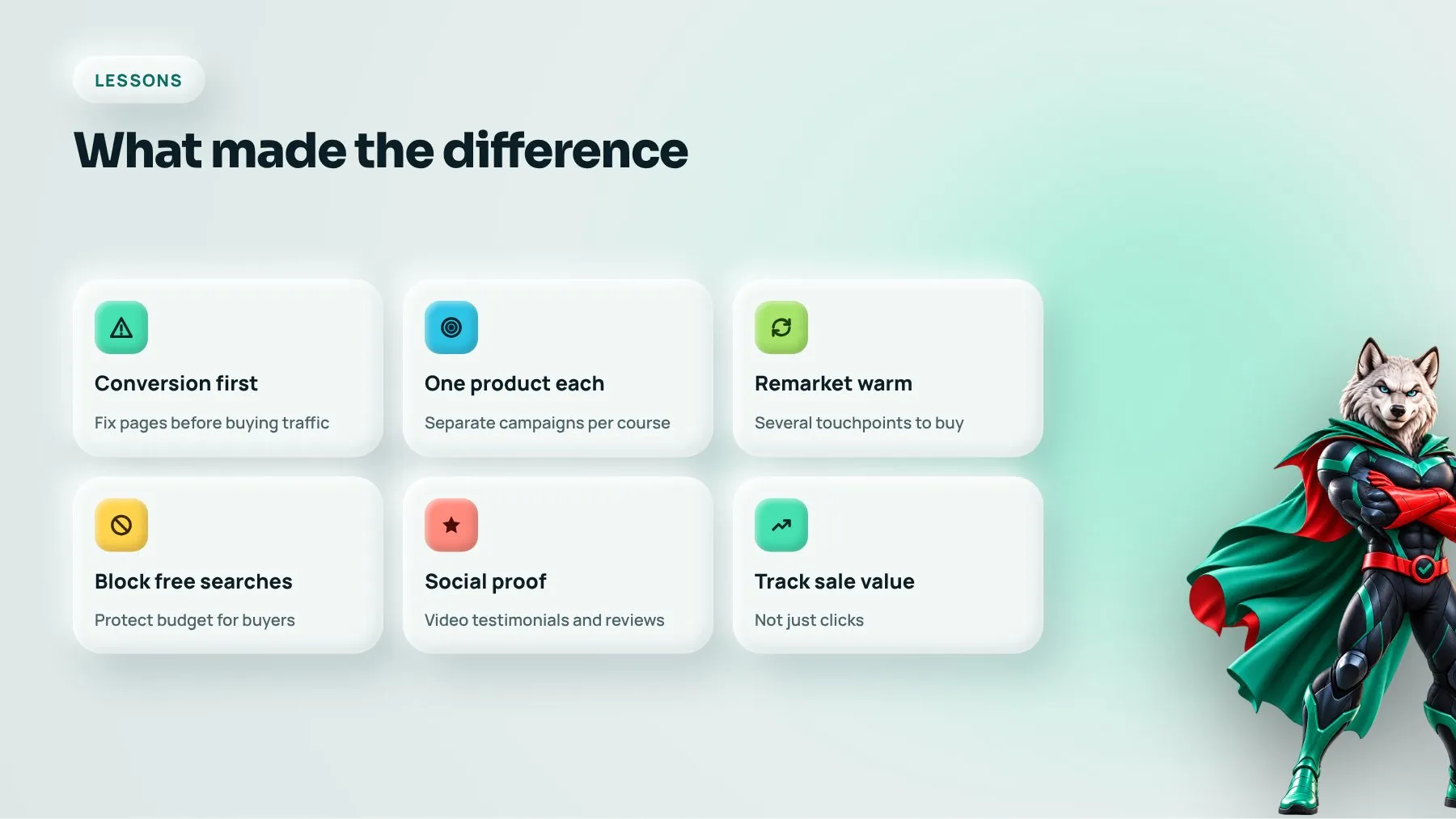
Lessons for online course creators
- Fix conversion before buying more traffic. If almost every visitor leaves, more visitors just means more waste.
- Give each product its own campaign. Different courses attract different searchers with different needs.
- Remarket to warm audiences. People considering a course often need several touchpoints before buying.
- Negative keywords are essential in fitness. Filter out people looking for free content.
- Social proof sells courses. Video testimonials and reviews answer the question every buyer has: will this work for me?
How to apply this to your business
- Check your conversion rate in analytics. If it is very low, start with your landing pages.
- Build a dedicated landing page for each course or product you advertise.
- Add real testimonials, ideally video, near your calls to action.
- Review your search terms report weekly and add negative keywords.
- Set up remarketing audiences that exclude existing customers.
- Track sales value, not just clicks, in your ads account.
FAQ
Do Google Ads work for selling online courses?
They can work very well when the targeting is tight and the landing page is built to convert. The biggest risk is paying for clicks from people looking for free content, which is why negative keywords and strong landing pages matter so much.
How much should I spend on remarketing?
It depends on your traffic volume and sales cycle. Remarketing is usually a smaller share of the budget than search, because the audience is limited to past visitors, but it often converts efficiently because those people already know you.
What makes a landing page convert for a course?
A clear promise, specific outcomes, credible social proof such as testimonials and reviews, and an obvious call to action repeated through the page. Removing distractions like unrelated navigation also helps keep visitors focused.
Want more sales from your online course or digital product? See our Google Ads management, explore our website development service or book a strategy call.