Our client is a travel company that has sold tour packages for more than 10 years. It had grown on repeat customers and referrals, then tried Google Ads on its own without the results it wanted. After we rebuilt the campaigns, leads rose by 260.42% and the company saved up to 23% on each lead.
At a glance
- Client: Established travel and tour-package company
- Services: Google Ads management, competitor research, offer and landing page improvement, remarketing
- Key results: 260.42% increase in lead generation; up to 23% lower cost per lead
The challenge: referrals had plateaued and DIY ads were leaking money
For a decade, the business relied on old clients and word of mouth. That is a sign of a good product, but it is not a growth engine. Referrals arrive when they arrive; you cannot turn them up when you want more bookings.
So the company tried Google Ads itself. That is a common step, and an expensive one to get wrong. Travel is a crowded category in paid search. Large online travel agencies and well-funded operators bid on the same terms, and searchers compare several packages before they enquire. Without careful keyword control, a travel account pays for clicks from people looking for cheap flights, visa information, job openings or destinations the company does not sell.
The owners recognized they needed a PPC specialist. They came to us with a clear goal: more enquiries for their tour packages, at a cost that made sense.
What we did
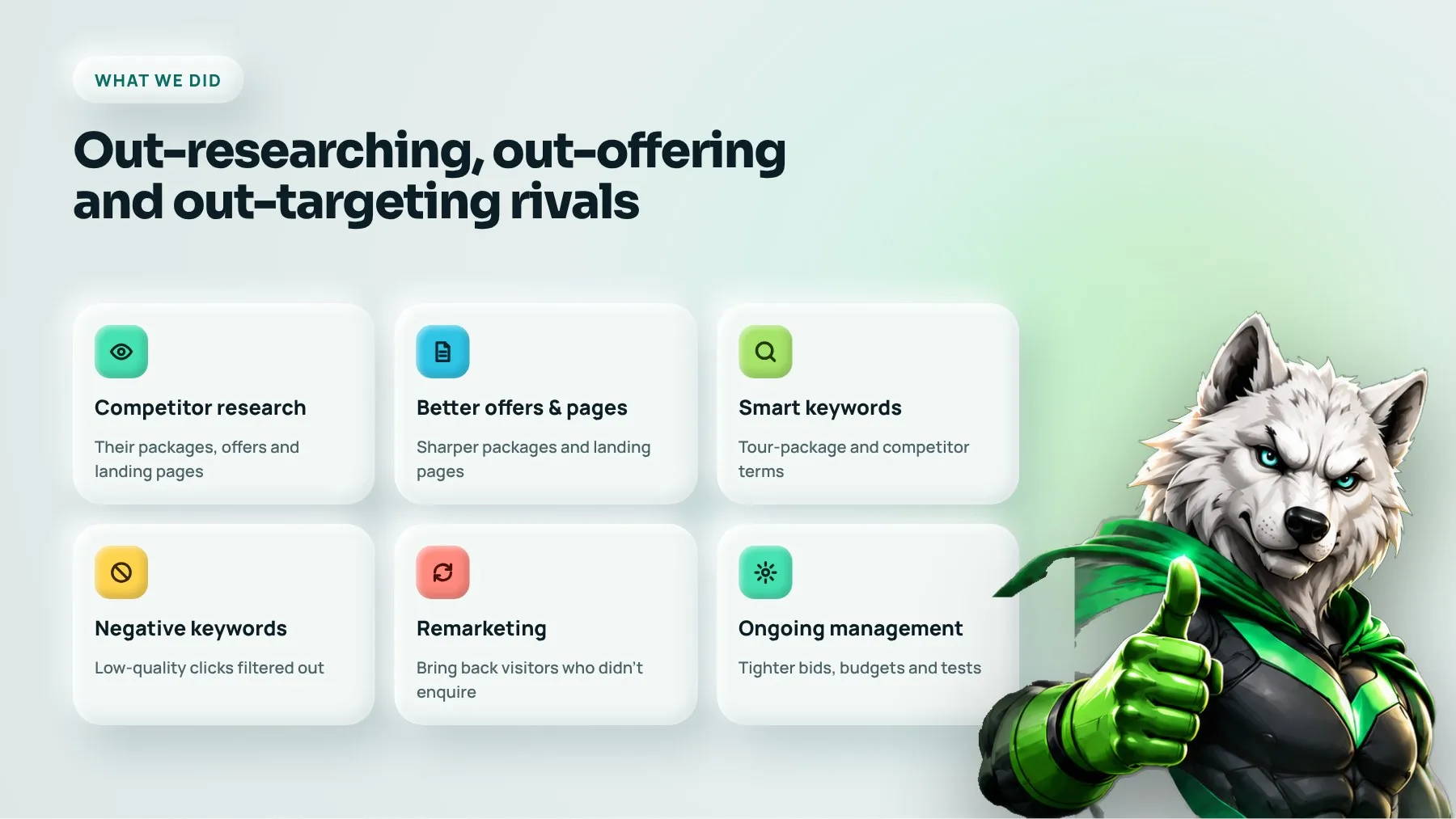
We started by understanding the business goals, then built a full optimization plan for the account.
Competitor research: packages, offers and landing pages
Before changing a single bid, we studied the competition. We reviewed competitors’ tour packages, their offers and their landing pages. In travel, the ad is only half the battle; searchers click several ads and compare. The question is not just “will they click our ad?” but “when they compare us side by side, will we win?”
We looked at what competitors included in their packages, how they presented prices and inclusions, what guarantees or flexibility they offered and how easy it was to enquire. That gave us a clear picture of where the client was stronger and where it was losing on the comparison.
Improved the offer and landing pages with the client
Using that research, we sat down with the client and improved the offering and the landing pages. This is often the biggest lever in a paid account, and the one most agencies skip because it means working beyond the ad platform.
Good travel landing pages share a few traits. They match the package the ad promised, show the itinerary and inclusions clearly, answer the obvious questions (dates, group size, what is and is not included), display trust signals such as years in business and reviews, and make enquiring easy with a short form, a clear phone number and a messaging option. Every extra step or unclear detail loses enquiries that were already paid for.
Targeted tour-package keywords and selected competitor terms
We focused the budget on keywords tied directly to the tour packages the client sells: destination plus “tour package”, “holiday package” or “itinerary” style searches that show buying intent. We used tighter match types so the ads appeared for relevant searches rather than loose variations.
We also targeted some competitor keywords. Bidding on competitor names can work when your offer genuinely compares well, because those searchers are already in buying mode. It needs care: ad copy should not imply you are the competitor, and these terms often cost more, so they are watched closely and kept only where they deliver enquiries at a sensible cost.
Better negative keywords to filter low-quality clicks
Negative keywords tell Google which searches should never trigger your ads. In travel, they are essential. We built negative keyword lists around themes that bring clicks but not customers, such as job and career searches, free or DIY travel information, visa and document questions, destinations and trip types the client did not offer, and pure flight-only searches. Reviewing the search terms report regularly and adding new negatives as they appear is how an account stays clean over time.
Started remarketing ads
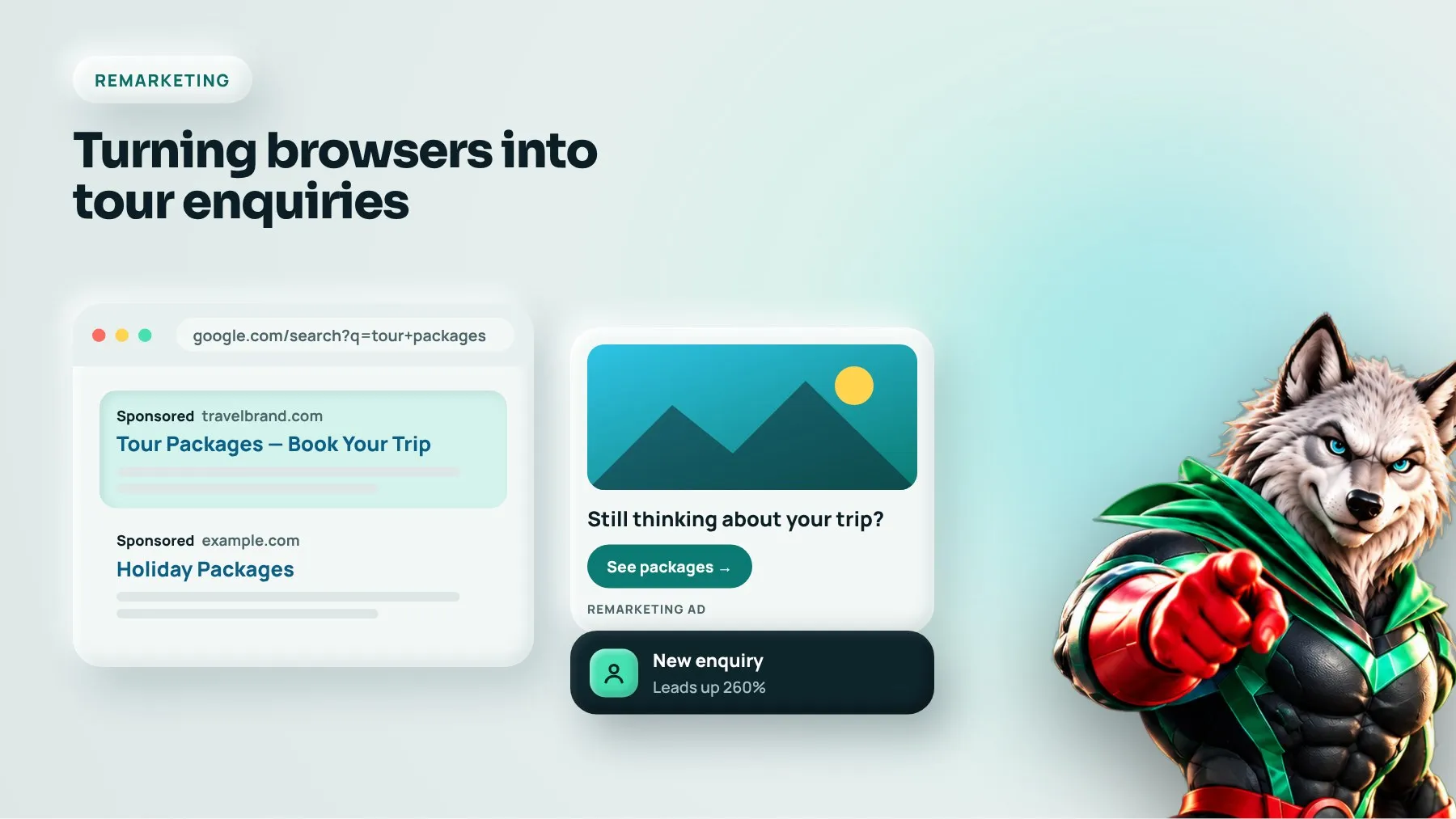
Travel is a considered purchase. Many people visit a package page, leave to check with family or compare prices, and forget to come back. Remarketing shows ads to people who have already visited the site, reminding them of the package they viewed. We segmented audiences by the pages people visited so the ads stayed relevant, and capped frequency so the brand stayed visible without becoming annoying.
Better ongoing campaign management
Finally, we put the account on a disciplined management routine: checking search terms, adjusting bids and budgets toward the campaigns and packages that produced enquiries, testing new ad copy, and making sure conversion tracking recorded real leads. Paid search is never “set and forget”; small weekly decisions compound.
The results
- 260.42% increase in lead generation. The company now gets more than three and a half times the enquiries it had before, giving the sales team far more opportunities to book trips.
- Up to 23% saved on each lead. Better keyword control and stronger pages meant less money spent on clicks that would never convert, so each enquiry cost less.
More leads at a lower cost per lead is the combination owners want. It means growth is not simply bought with a bigger budget; the same money works harder.
What made the difference: lessons for travel businesses
- Fix the offer before scaling the ads. If your package and page lose on comparison, more clicks just means more wasted spend.
- Know your competitors’ pages, not just their keywords. Searchers compare offers side by side; you need to win that comparison.
- Negative keywords are profit protection. Travel searches attract huge amounts of irrelevant traffic; filtering it is non-negotiable.
- Remarketing suits long decision cycles. People rarely book a tour on their first visit; bringing them back is efficient.
- Consistent management compounds. Weekly attention to search terms and bids keeps an account improving.
How to apply this to your business
- Review three competitors’ landing pages and list where your offer is stronger and weaker.
- Make sure each ad leads to a page about that specific package, not your homepage.
- Read your search terms report and add negatives for irrelevant themes.
- Set up remarketing audiences for people who viewed package pages.
- Track enquiries as conversions so bids optimize for leads, not clicks.
You can see how we run accounts like this on our Google Ads management page, or browse more case studies.
FAQ
Is Google Ads worth it for a travel company?
It can be, if the account is tightly controlled. Travel searches are competitive and full of irrelevant queries, so returns depend on strong negative keywords, relevant landing pages and accurate conversion tracking.
Should I bid on my competitors’ brand names?
It can work when your offer compares well, because those searchers are ready to buy. Watch the cost closely, write honest ad copy and drop the terms if they do not produce enquiries at a sensible cost.
How quickly will I see results from a rebuilt PPC account?
Paid search moves faster than SEO. Many accounts show clear improvement within the first few weeks, with further gains over two to three months as data builds and the account is refined.
Want more enquiries without simply spending more? See our Google Ads management or book a strategy call.