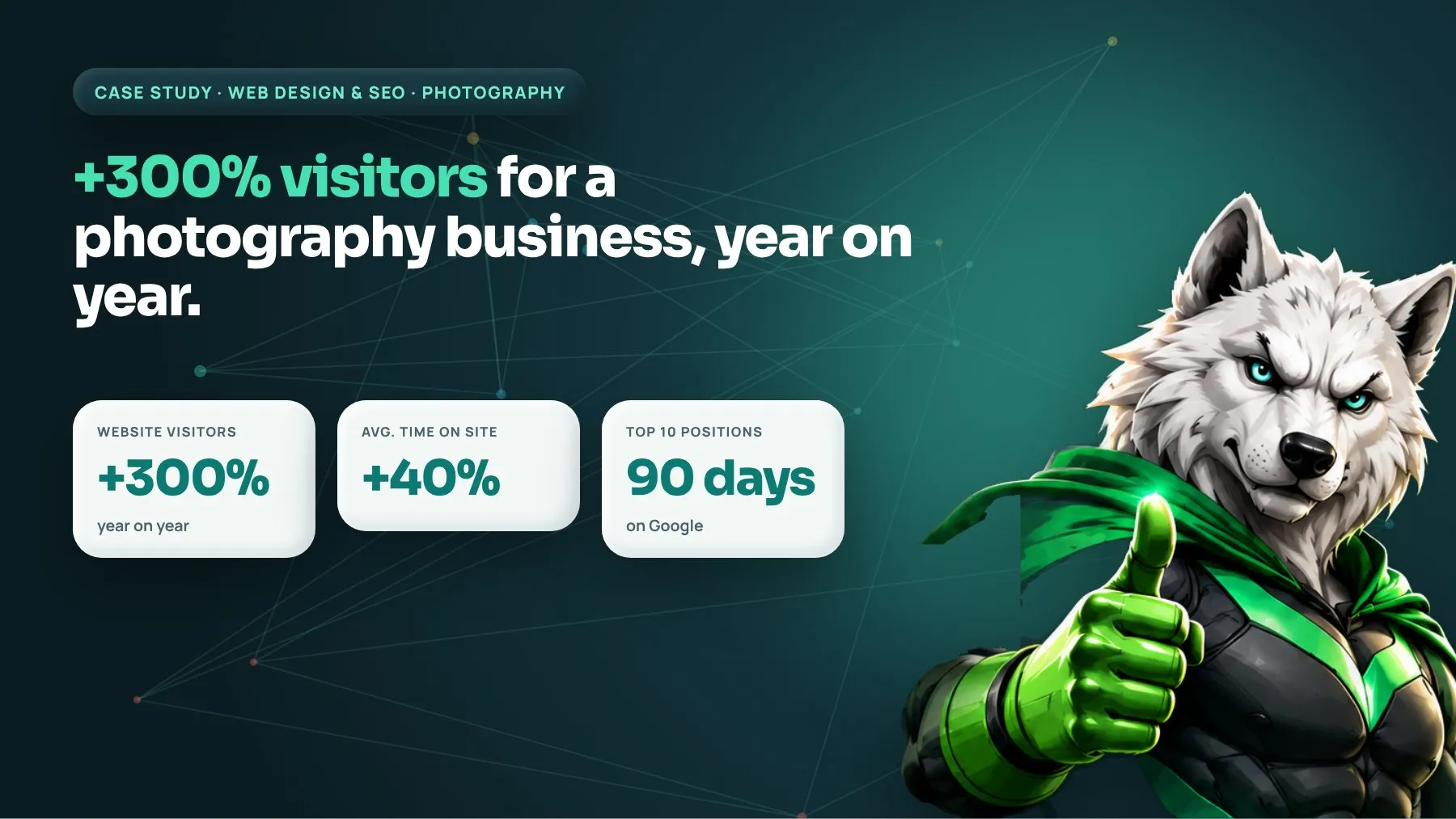
PictureMe, a photography business offering tours and courses, hired us to generate more leads, grow its customer base and win new service contracts. Its existing website had been custom built by another agency and was difficult to update. With a new website, sharper positioning and SEO copywriting, PictureMe saw a 300% year-on-year increase in website visitors and top 10 Google keyword positions within 90 days.
At a glance
- Client: PictureMe, photography business (tours and courses)
- Services: Website design and development, SEO copywriting, competitor and keyword research, brand positioning, analytics setup
- Key results: 300% increase in website visitors year on year; 40% increase in average time on site; highest organic search volume, up over 50% in 12 months; top 10 Google keyword positions in 90 days; fully mobile-friendly website
The challenge: a website that held the business back
PictureMe’s problem is common among growing service businesses. The website looked like an asset, but in practice it was a bottleneck. We identified four things that had to change to produce more leads:
- Not enough traffic. Too few potential customers were finding the site.
- Weak keyword positions. The site was not ranking well for the searches that matter to a photography tour and course business.
- No clear point of difference. The site did not explain why someone should choose PictureMe over the many other photographers and course providers.
- Hard to update. The custom build made even simple changes difficult, so content went stale and opportunities were missed.
That last point is easy to underestimate. When a business cannot change its own website, it cannot add new courses, refresh seasonal tours, publish helpful content or fix what is not working. SEO depends on steady improvement, and a site that is painful to edit stops improving. For a business selling experiences, where the offer changes through the year, this was a serious commercial limit.
What we did
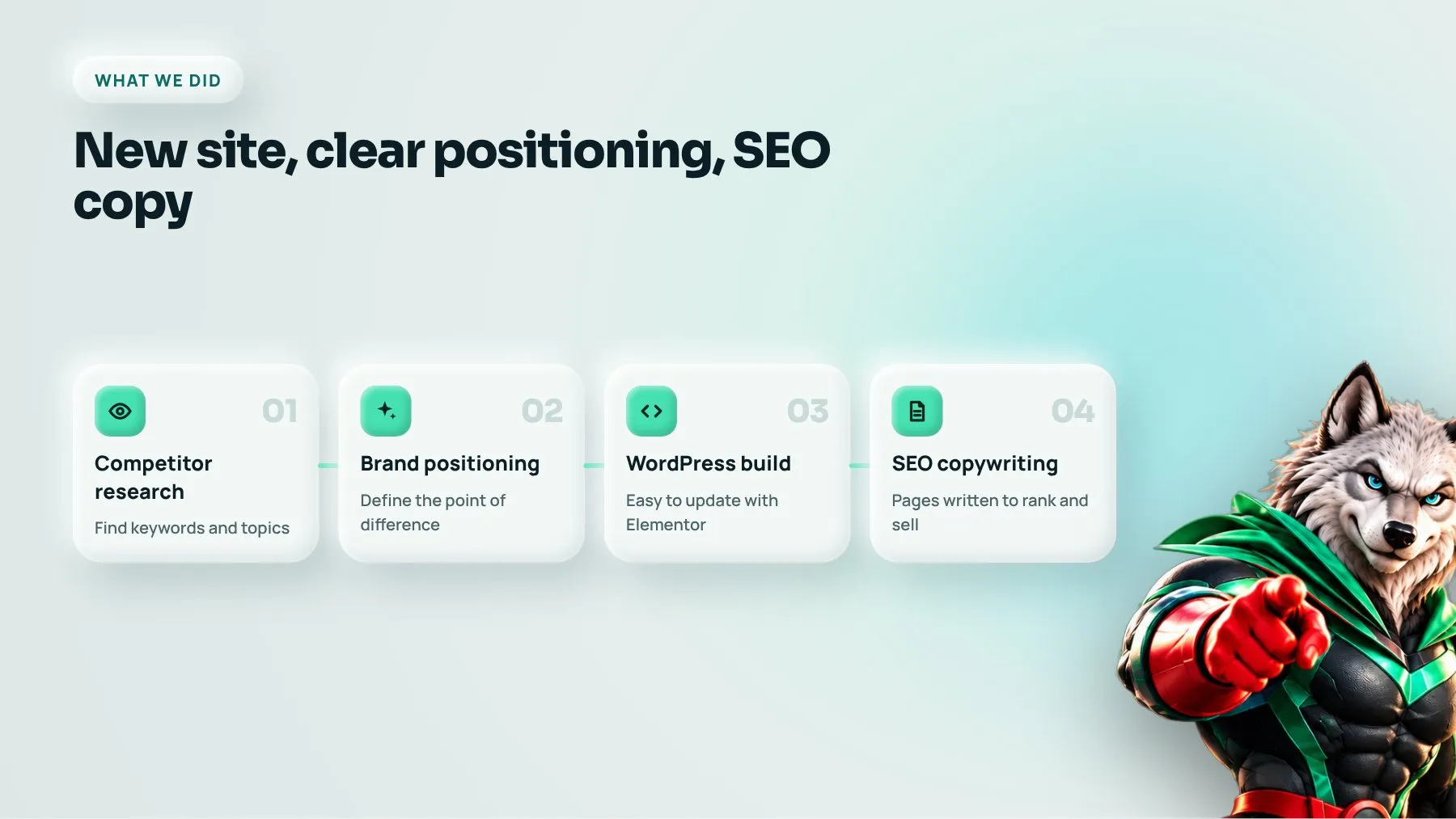
Competitor research to find keywords and topics
We began by studying competitors and the search landscape. Which photographers and course providers ranked well? Which searches brought them customers? What topics did potential students and tour guests want to learn about? This gave us a clear list of keywords and content themes, prioritized by how likely they were to lead to a booking.
Unique selling propositions and brand positioning
Before writing a word of web copy, we defined what makes PictureMe different and wrote brand positioning statements to anchor everything else. This is the step many businesses skip, and it shows. Without a clear point of difference, a website ends up sounding like every competitor and visitors decide on price alone. With it, every page reinforces a reason to choose you. Our branding work always starts here for that reason.
Renaming tours and courses
We suggested new names for some tours and courses so they were easier to recognize. Clever internal names often mean nothing to a customer and nothing to Google. A name that says what the experience is, and ideally matches the words people search for, helps both understanding and ranking. It is a small change with an outsized effect on click-through and enquiries.
New website design, style and content
We designed a new website with a fresh style and new content built for a photography business: strong imagery, clear navigation between tours and courses, and simple routes to enquire or book. Visual businesses need a site that shows the work beautifully without sacrificing speed.
Built on WordPress with Elementor
We designed and built the new site using WordPress and the Elementor page builder. This directly solved the “hard to update” problem. PictureMe can now edit pages, add new courses and publish content without needing a developer for every change. WordPress also offers a mature SEO toolset and a well-understood structure for search engines. The new site is fully mobile-friendly, which matters for a business whose customers often browse on their phones. See our website development services for how we approach builds like this.
SEO copywriting that describes the brand
We wrote the website copy with both readers and search engines in mind. Each page targets a specific topic and set of keywords from the research, while still sounding like PictureMe and explaining its point of difference. Good SEO copy does not stuff keywords; it answers the visitor’s questions in the language they use, which is also what Google rewards.
Renaming all images
Every image on the site was renamed with descriptive file names. For a photography business, images are the core content, and generic camera file names tell search engines nothing. Descriptive names, together with good alt text, help images appear in image search and support the relevance of each page.
Google Analytics and Search Console reporting
Finally, we set up Google Analytics and Google Search Console for the new site, so performance could be measured from day one. Without clean tracking, you cannot see which pages and searches produce enquiries, and you cannot make good decisions about what to improve next.
The results
- 300% increase in website visitors year on year. The new site reached far more potential customers than the old one.
- 40% increase in average time on the website. Visitors stayed longer, a sign the content and design were engaging and relevant.
- Highest organic search volume, over 50% higher in 12 months. Organic search grew substantially over the year.
- Top 10 Google keyword positions in 90 days. The new site and copy earned page-one visibility within a single quarter.
- Mobile-friendly website. A better experience for the many visitors on phones.
Together, these results show the value of fixing the foundation. More visitors arrived, they stayed longer, and the business can now keep improving the site itself.
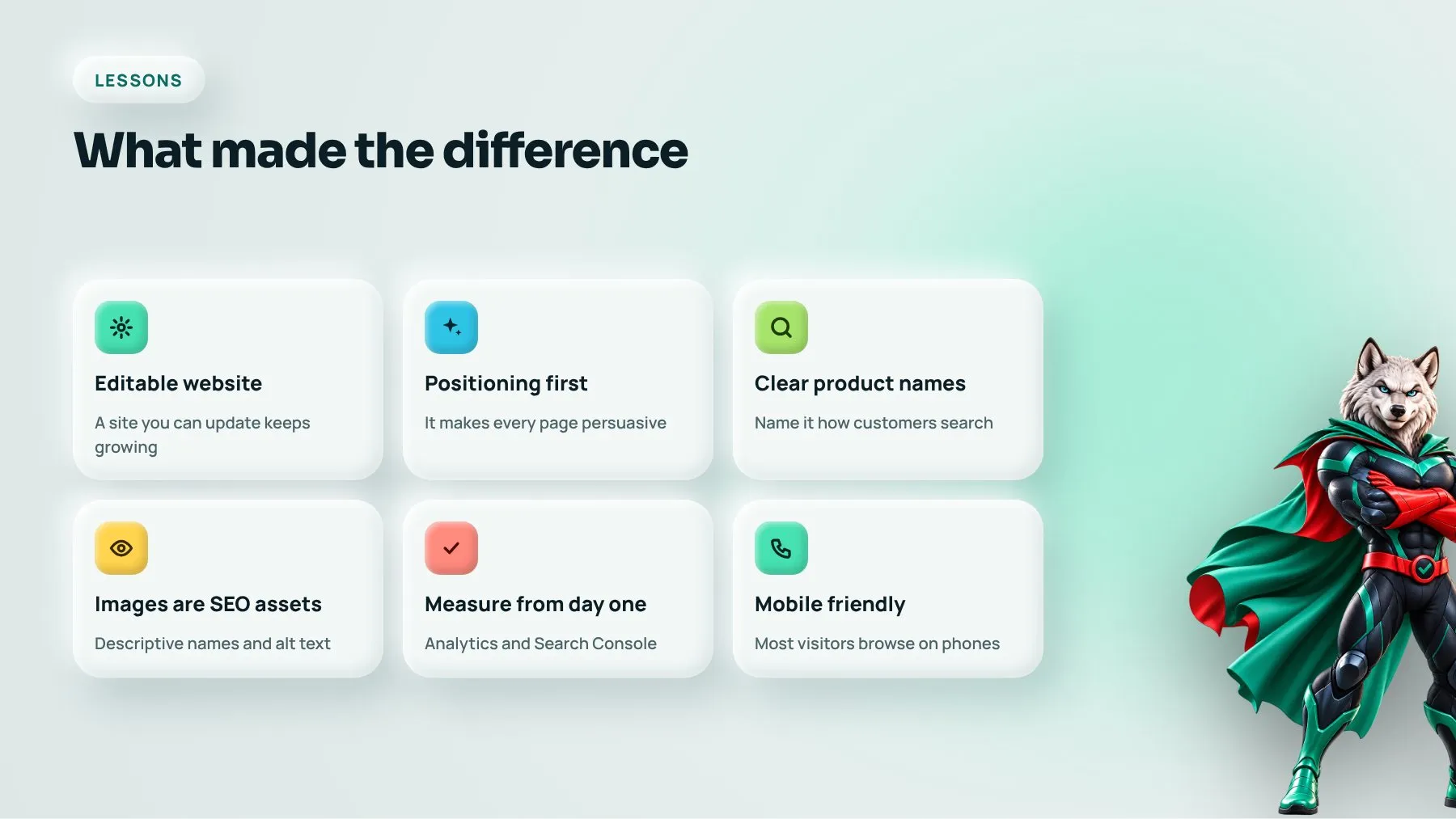
What made the difference: lessons for photography and experience businesses
- A website you cannot edit will not grow. Choosing a platform the team can update is a commercial decision, not just a technical one.
- Positioning comes before copy. Knowing your point of difference makes every page more persuasive.
- Name products the way customers search. Clear names help visitors and rankings at the same time.
- Treat images as SEO assets. Descriptive file names and alt text matter most for visual businesses.
- Measure from day one. Analytics and Search Console turn a launch into a process of continuous improvement.
How to apply this to your business
- Ask whether you can update your own website easily. If not, plan a fix.
- Write down in one sentence why a customer should choose you over competitors.
- Check your product, tour or service names: would a stranger know what they are?
- Rename image files descriptively and add useful alt text.
- Make sure Google Analytics and Search Console are installed and checked monthly.
FAQ
Will a new website improve my Google rankings?
A new website alone does not guarantee rankings, but a well-built one with strong content, good structure and fast mobile pages removes many barriers. Combined with keyword research and SEO copywriting, it can bring results within months, as with the top 10 positions here in 90 days.
Is WordPress good for SEO?
Yes. WordPress is widely used, search-engine friendly and easy to update, which matters because SEO depends on regular improvements. The key is a clean build and good content rather than the platform alone.
Why does brand positioning affect SEO?
Positioning shapes what you write, which keywords you target and how persuasive your pages are. Clear positioning makes visitors more likely to stay and enquire, which supports both leads and the engagement signals search engines notice.
Want the same for your business? See our website development services, learn about our SEO or book a strategy call.