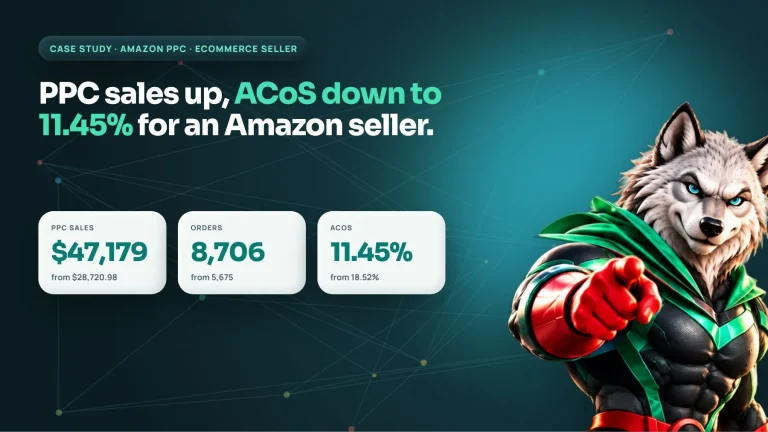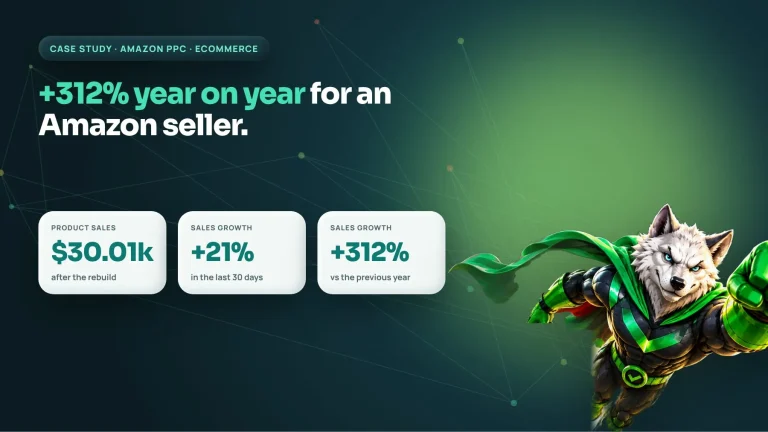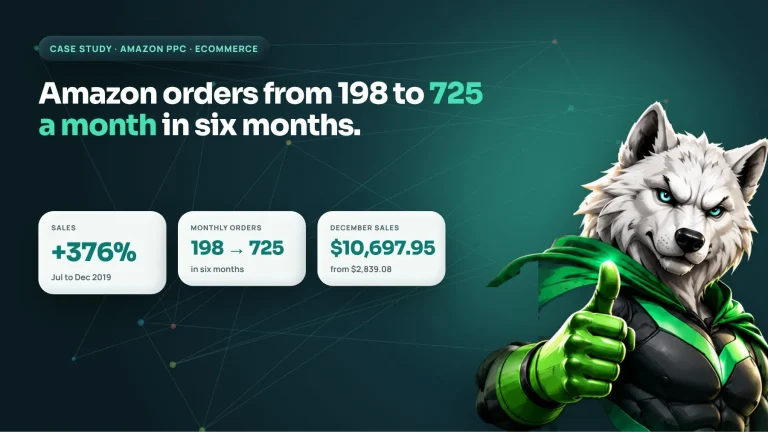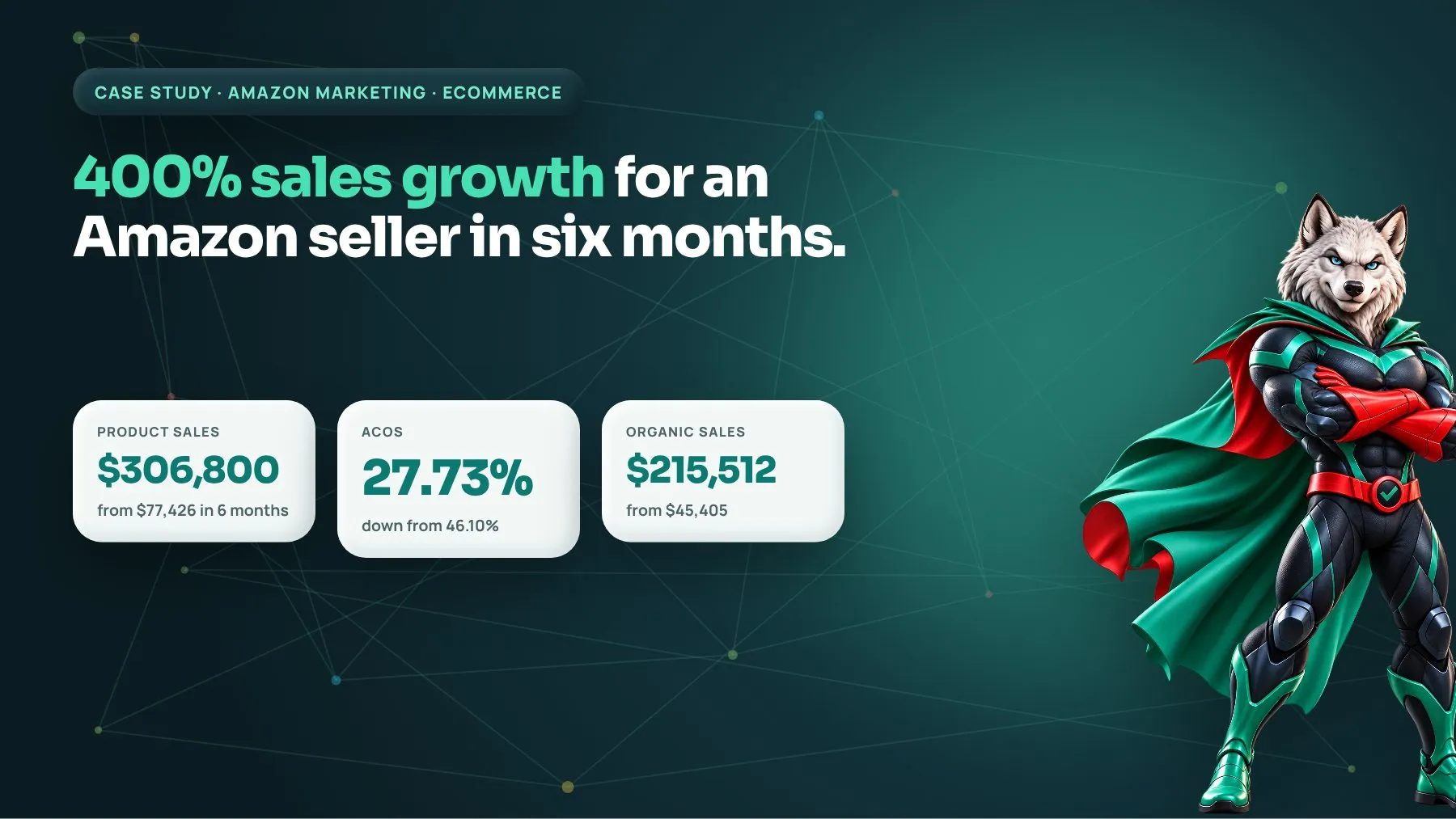
During the months of COVID-19, an Amazon seller asked us to help them grow. In six months, product sales rose from $77,426.67 to $306,800.77, roughly a 400% increase, while advertising efficiency improved: ACoS fell from 46.10% to 27.73%. Most of the growth came from organic sales, not just paid ads.
At a glance
- Client: Amazon seller
- Services: Amazon PPC management and Amazon SEO (keyword and listing optimization)
- Timeframe: 6 months, during COVID-19
- Key results:
- Product sales: $77,426.67 → $306,800.77 (around 400% growth)
- PPC sales: $32,021.10 → $91,288.86
- ACoS: 46.10% → 27.73%
- Organic sales: $45,405 → $215,512
The challenge: growing on Amazon without burning margin on ads
The pandemic changed shopping behavior almost overnight. More buyers went straight to Amazon, and more sellers followed them, which meant more competition for the same search results and more pressure on advertising costs.
For this seller, the starting position had a familiar problem. ACoS (advertising cost of sale, the share of ad-driven revenue spent on ads) was 46.10%. In plain terms, nearly half of every dollar earned through ads went back into ads. At that level, many products barely break even once Amazon fees, product cost and shipping are paid. Spending more on the same campaigns would have bought revenue, but not profit.
The real opportunity was elsewhere. On Amazon, advertising and organic ranking feed each other. Sales from ads help a product rank higher in organic results, and organic sales cost nothing per click. A seller who relies only on PPC rents their visibility. A seller who uses PPC to earn organic rank starts to own it.
What we did: data-driven Amazon PPC and organic growth
We worked on two fronts at the same time: making paid campaigns profitable, and turning that paid activity into organic sales through the right keywords.
Restructuring PPC around performance data
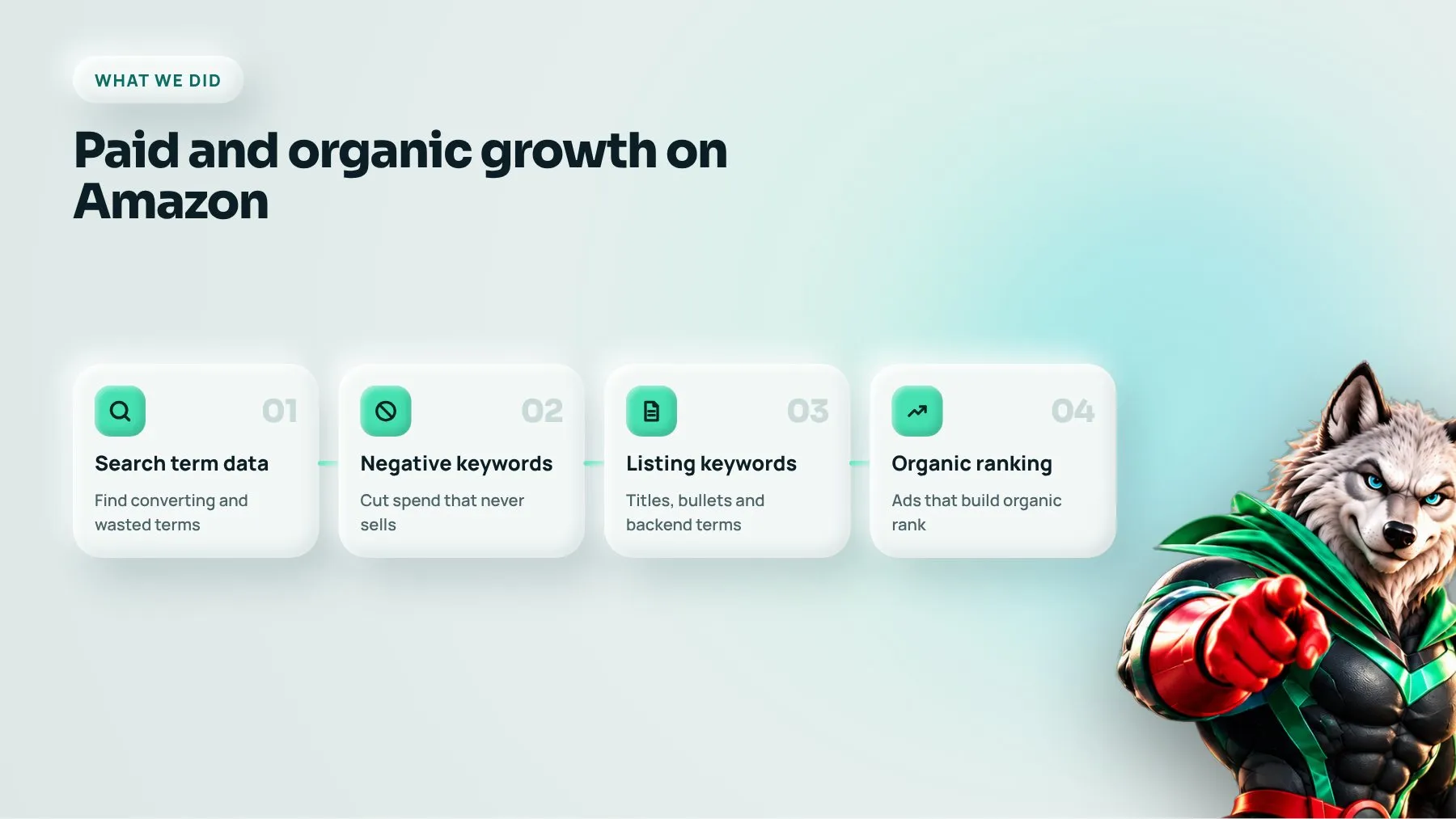
We started with the search term data inside the seller’s campaigns. This shows the exact phrases shoppers typed before clicking and buying. From it we could see:
- Converting search terms that deserved their own exact-match targeting and stronger bids.
- Wasted spend on terms that drew clicks but never sold, which we added as negative keywords.
- New keyword opportunities found by automatic and broad campaigns, which we then harvested into tightly controlled manual campaigns.
Separating discovery campaigns from performance campaigns is one of the most reliable ways to lower ACoS. Discovery campaigns keep finding new search terms at controlled bids. Performance campaigns spend where conversion is proven. Bids were then adjusted regularly based on actual ACoS per keyword rather than set once and left alone.
Choosing the right keywords for organic ranking
PPC sales grew, but the bigger goal was organic. We used the keyword data to identify the terms that buyers actually used and that converted for this product. Those keywords then shaped the listing itself:
- Title: the most important buyer keywords placed early and naturally, so the product was relevant for the searches that mattered.
- Bullet points: benefits written for shoppers, using the secondary keywords they search for.
- Backend search terms: relevant terms that didn’t fit naturally on the page, covered in the hidden keyword fields.
When a listing is relevant for a keyword and sells well through ads on that keyword, Amazon’s algorithm tends to reward it with higher organic placement. That is the loop we built: ads drive sales on the right keywords, sales lift organic rank, and organic rank brings in sales with no ad cost.
Managing spend as sales rose
As organic sales increased, we kept advertising focused on the keywords and placements that still needed paid support, rather than simply raising budgets across the board. That is how PPC sales grew while ACoS fell.
The results: 400% growth with healthier economics
Over six months the numbers moved in the right direction across the board:
- Product sales grew from $77,426.67 to $306,800.77, roughly a 400% increase.
- PPC sales grew from $32,021.10 to $91,288.86.
- ACoS dropped from 46.10% to 27.73%.
- Organic sales grew from $45,405 to $215,512.
The most important line is the last one. Organic sales grew far more than paid sales, and by the end they made up the clear majority of total revenue. That changes the economics of the whole business. Every organic sale carries no advertising cost, so profit per unit improves as the mix shifts.
The ACoS improvement matters just as much. Moving from 46.10% to 27.73% means a much smaller share of ad revenue is spent on ads, freeing up margin to reinvest in stock, new products or further growth. Together, the two trends show a seller who didn’t just buy more revenue but built a more profitable account.
What made the difference: lessons for Amazon sellers
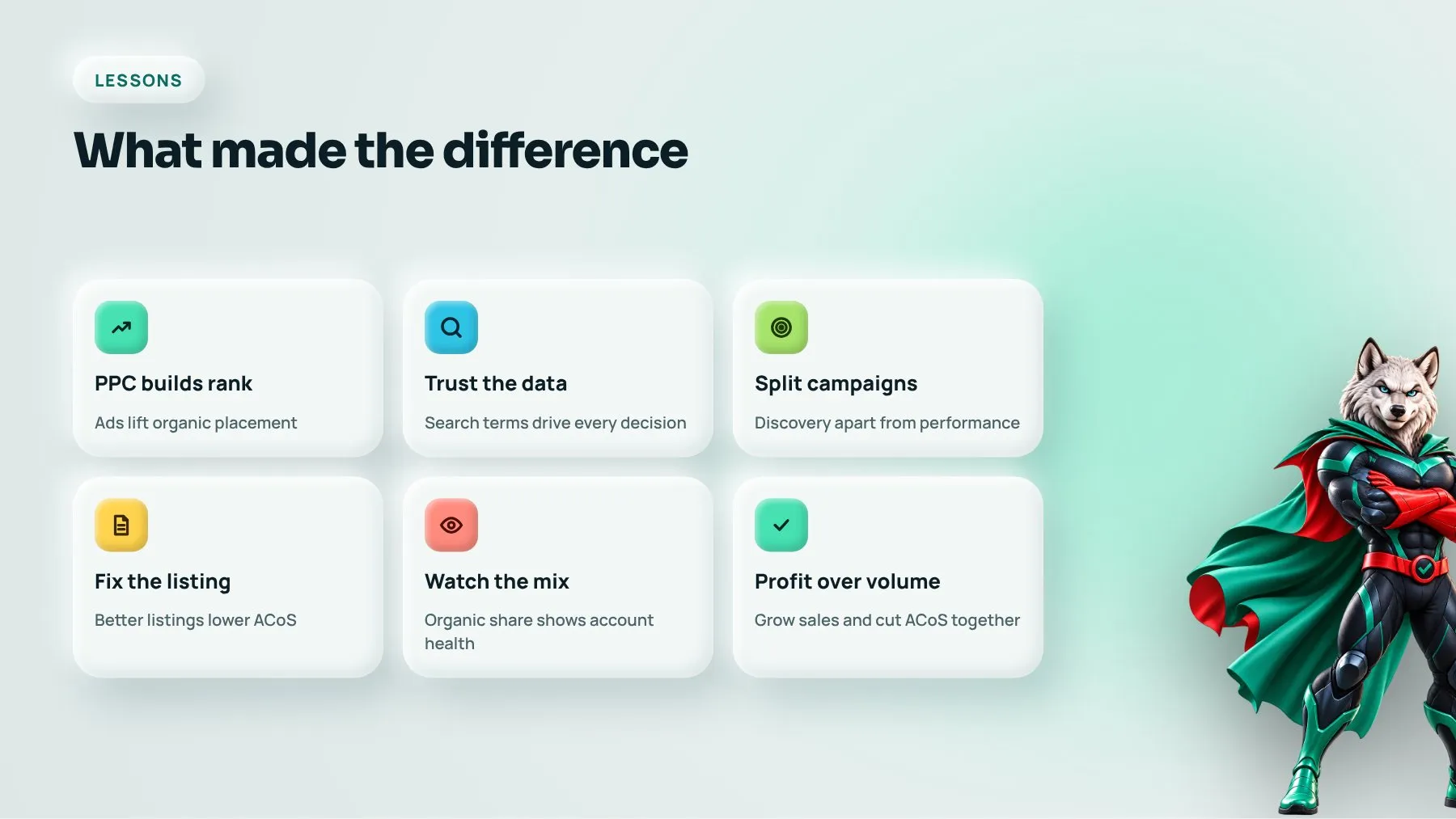
Treat PPC as a ranking tool, not just a sales tool
Ads that target the right keywords help products rank organically for those same keywords. Plan campaigns with organic rank in mind.
Let search term data make the decisions
The search term report tells you what buyers actually type. Use it to add negatives, promote winners and find new keywords.
Separate discovery from performance
Keep automatic and broad campaigns for finding terms, and manual exact campaigns for spending on proven ones.
Fix the listing as well as the ads
A strong listing converts more of the traffic you pay for, which lowers ACoS and supports organic ranking.
Watch the sales mix
The share of organic versus paid sales is one of the best indicators of an Amazon account’s long-term health.
How to apply this to your business
- Download your search term report and identify terms with spend but no sales.
- Move proven converting terms into exact-match manual campaigns.
- Rewrite titles and bullets around the keywords that actually convert.
- Fill backend search terms with relevant terms not already on the page.
- Track total sales, organic sales and ACoS together every month.
FAQ
What is a good ACoS on Amazon?
It depends on your margins. A product with high margins can afford a higher ACoS than a low-margin one. The useful question is your break-even ACoS, which is your profit margin before advertising, and whether your campaigns sit comfortably below it.
Does Amazon PPC help organic rankings?
Yes. Sales made through ads count toward a product’s sales history, which is one of the factors Amazon uses to rank products. Advertising on the right keywords can help a product climb organically for those terms.
How long does it take to see results from Amazon PPC optimization?
Bid and negative keyword changes can affect ACoS within weeks. Organic ranking gains usually take longer, often a few months, as sales history builds. This seller saw the full picture over six months.
Want to grow your Amazon sales profitably? See our Amazon marketing services, explore more case studies, or book a strategy call.