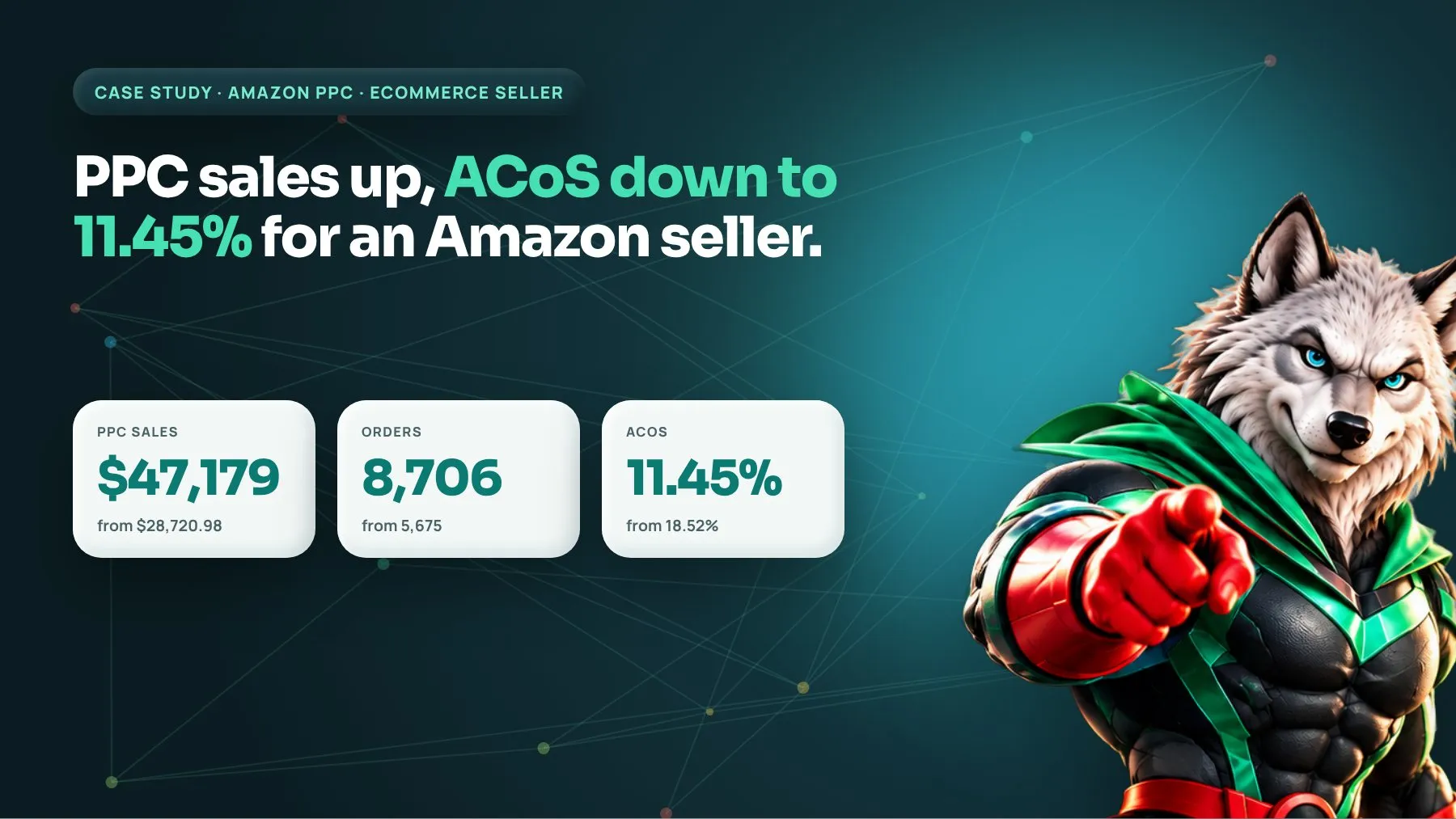
Every Amazon seller eventually hits the same wall: push advertising harder and sales grow, but so does the advertising cost of sale (ACoS) until the extra revenue stops being profitable. This Amazon seller came to us wanting both more PPC sales and a lower ACoS. Over the engagement, PPC sales rose from $28,720.98 to $47,179.31, orders grew from 5,675 to 8,706, and ACoS fell from 18.52% to 11.45%.
At a glance
- Client: Amazon seller
- Service: Amazon PPC management and listing support
- Key results: PPC sales from $28,720.98 to $47,179.31; orders from 5,675 to 8,706; ACoS reduced from 18.52% to 11.45%
The challenge: growth that was getting more expensive
ACoS is ad spend divided by ad-attributed sales. At 18.52%, nearly a fifth of every advertised dollar of revenue was going back to Amazon as ad cost, before product cost, fulfillment fees and referral fees. For many categories that leaves a thin margin, and it means each extra sale from advertising earns less than the one before.
The usual reaction is one of two extremes. Some sellers cut bids across the board, which protects margin but strangles volume and lets competitors take the top placements. Others raise budgets to chase rank, which grows sales but makes ACoS climb. This client wanted neither. The brief was to grow PPC sales meaningfully while bringing ACoS down, which means improving the efficiency of the account, not simply turning a dial.
Why it matters commercially: on Amazon, advertised sales also feed organic rank. Products that sell consistently climb the search results, and organic sales carry no ad cost. A well-run PPC account therefore pays twice, once in direct sales and again in the organic visibility that follows.
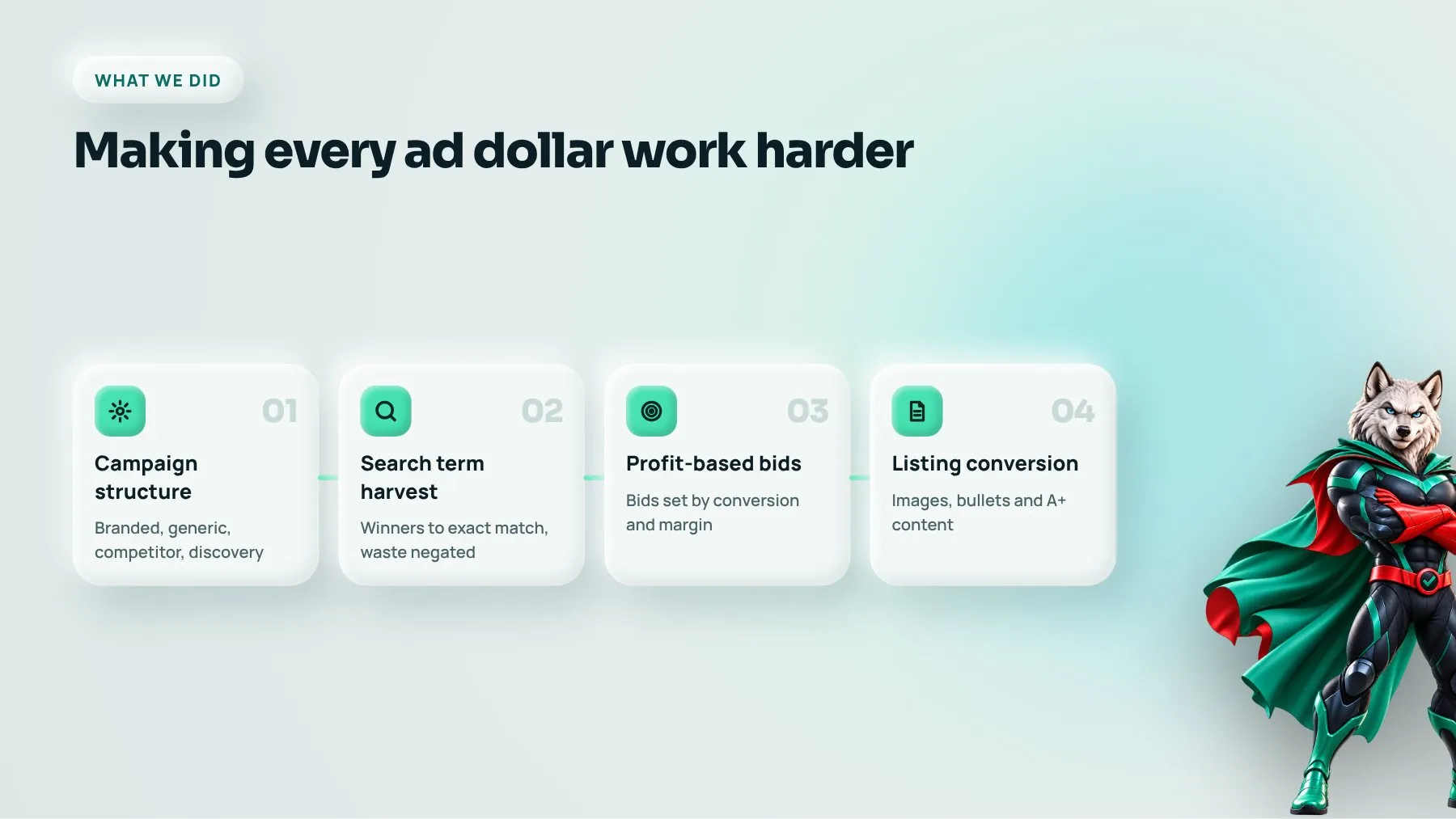
What we did: making every advertising dollar work harder
Our Amazon marketing process focuses on where money is wasted and where profitable demand is being missed. In this account, that meant five areas of work.
Restructuring campaigns by intent
Mixed campaigns, with branded, generic and competitor terms bidding together, make it impossible to control ACoS because each type of search behaves differently. We separated campaigns by purpose: branded terms (cheap, high-converting, defensive), core generic terms (the main growth engine), competitor and product targeting (conquest), and automatic campaigns used purely for discovery. Each group got its own budget and target ACoS, so a strong performer was never starved to fund a weak one.
Harvesting search terms and cutting waste
Automatic and broad match campaigns surface the actual customer searches that trigger your ads. We reviewed search term reports regularly and moved proven converting searches into exact match campaigns, where bids can be set precisely. At the same time, we added negative keywords for searches that spent money without converting: wrong product types, irrelevant sizes or uses, and curiosity searches with no buying intent. Negating the same terms in the discovery campaigns stops the account paying twice for the same search.
Bidding to profit, not to position
Rather than one bid for every keyword, we set bids by keyword based on its conversion rate and the margin the product can support. High-converting exact match terms earned more aggressive bids and top-of-search placement adjustments; terms with weak conversion were reduced or paused. We also reviewed dayparting patterns and placement reports so spend concentrated where it converted best.
Supporting conversion on the listing
Advertising can only send traffic; the listing has to convert it. A higher conversion rate lowers ACoS automatically, because the same clicks produce more sales. We reviewed titles, bullet points and images for clarity and keyword coverage, and checked that the main image and price stood up against competitors on the search results page. Where the brand was eligible, A+ content is the place to answer objections and show quality in more depth.
Daily management and weekly review
Amazon accounts drift. Competitors change bids, seasonal demand shifts and new search terms appear. We monitored budgets daily so top campaigns did not run out of spend early in the day, and reviewed performance weekly against target ACoS by campaign group.
The results
- PPC sales: from $28,720.98 to $47,179.31
- Orders: from 5,675 to 8,706
- ACoS: reduced from 18.52% to 11.45%
What this means for the business: advertising revenue grew by a large margin while each advertised dollar of sales cost noticeably less to win. The jump in orders adds sales velocity, which supports organic ranking, and the lower ACoS means more of every sale stays as profit. This is the combination most sellers struggle to achieve, because volume and efficiency usually pull in opposite directions.
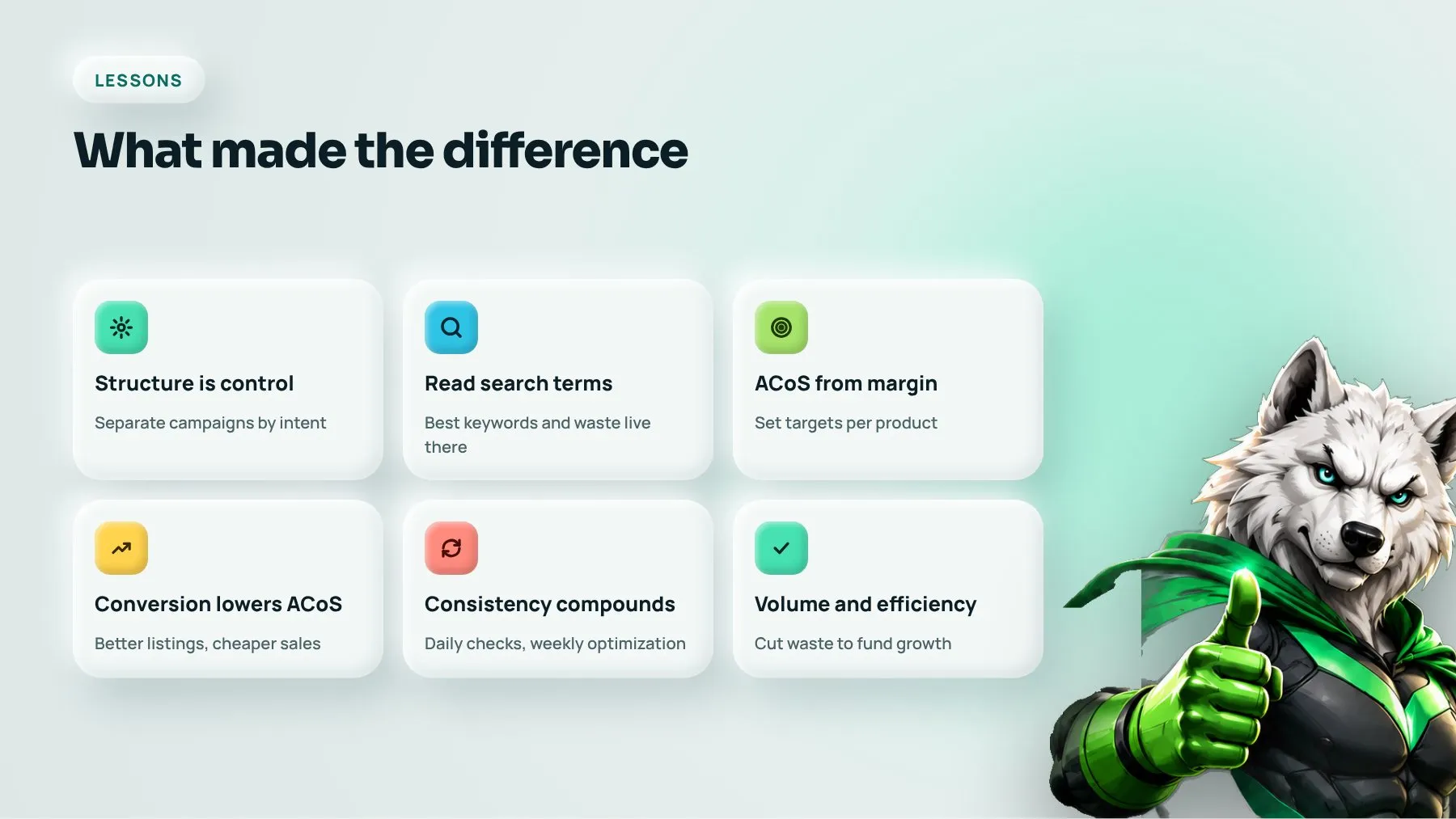
What made the difference: lessons for Amazon sellers
- Structure decides control. If branded, generic and competitor terms share a campaign, you cannot manage ACoS precisely. Separate them first.
- Search term reports are where the money is. The best keywords and the worst waste both show up there. Reviewing them regularly is non-negotiable.
- Set target ACoS from margin, not habit. A product with a healthy margin can afford a higher ACoS than one with thin margins. Bids should reflect that.
- Conversion rate is an ACoS lever. Better images, clearer bullets and stronger A+ content reduce ACoS without touching a bid.
- Consistency compounds. Daily budget checks and weekly optimization produced steady gains, rather than a single big change.
How to apply this to your Amazon account
- Calculate your break-even ACoS for each product from its margin after Amazon fees.
- Split campaigns into branded, generic, competitor and discovery groups.
- Download search term reports and move converting searches into exact match.
- Add negative keywords for irrelevant or non-converting searches across campaigns.
- Review listing images, titles and bullets against the top competitors on page one.
- Check that your best campaigns are not running out of budget before the end of the day.
FAQ
What is a good ACoS on Amazon?
It depends on your margin and goals. A good ACoS is one that leaves you profitable after product cost and Amazon fees, or one you are deliberately accepting for a launch or ranking push. Know your break-even ACoS for each product and manage against that.
Can you increase sales and lower ACoS at the same time?
Yes, when the account has inefficiencies to remove. Cutting wasted spend and improving conversion frees budget to reinvest in keywords that perform, so volume and efficiency can improve together. Once an account is already well optimized, further growth usually means accepting some trade-off.
How long does it take to improve an Amazon PPC account?
Waste reduction from negative keywords and restructuring often shows within the first few weeks. Gains from search term harvesting, bid refinement and listing improvements build over the following months as data accumulates.
Want more sales from Amazon without handing more margin to ads? See our Amazon marketing service or book a strategy call.