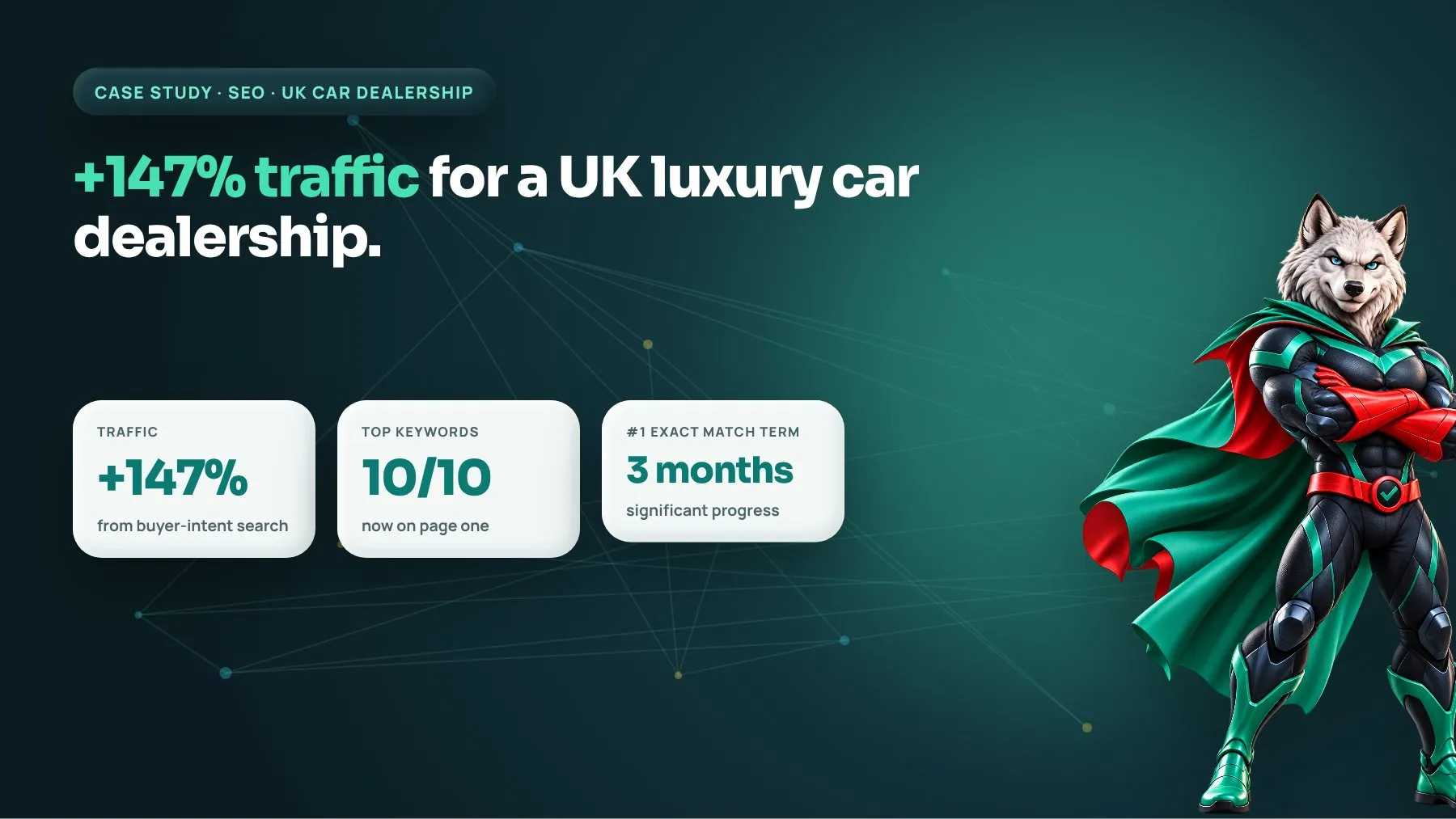
A luxury car dealership in the UK came to us after losing organic traffic and watching key pages slip down Google. Rather than chase the biggest, most crowded search terms, we focused on lower-volume, high-intent searches that real buyers use. The result was a 147% increase in traffic and all ten of the dealership’s priority keywords ranking on page one.
At a glance
- Client: Luxury car dealership, United Kingdom
- Service: Search engine optimization (SEO)
- Key results: 147% increase in traffic; all top 10 keywords ranking on page one; the #1 exact match term showing significant progress after 3 months; backlinks, organic keywords, organic traffic and traffic value all improving consistently
The challenge: lost traffic in a market where every visitor counts
The dealership had two clear goals: regain the organic traffic it had lost and push its most important pages back up the rankings. It also wanted to target lower search volume terms, which is a smarter brief than it may first sound.
Luxury car retail is a low-volume, high-value business. A dealership does not need hundreds of thousands of visitors. It needs the right few hundred people, the ones searching for a specific make, model or approved used stock in their region, to land on the right page and make an enquiry. A single extra sale can cover months of marketing.
That is why lost rankings hurt so much. When a dealership’s model and stock pages fall from page one, those buyers do not wait. They click on a competitor, a national classifieds portal or a manufacturer site, and the enquiry goes elsewhere. Broad terms like “luxury cars” are dominated by big brands and portals, and even if you could rank for them, much of that traffic is browsing rather than buying. The commercial opportunity sits in the specific, lower-volume searches, and that is where we pointed the work.
What we did
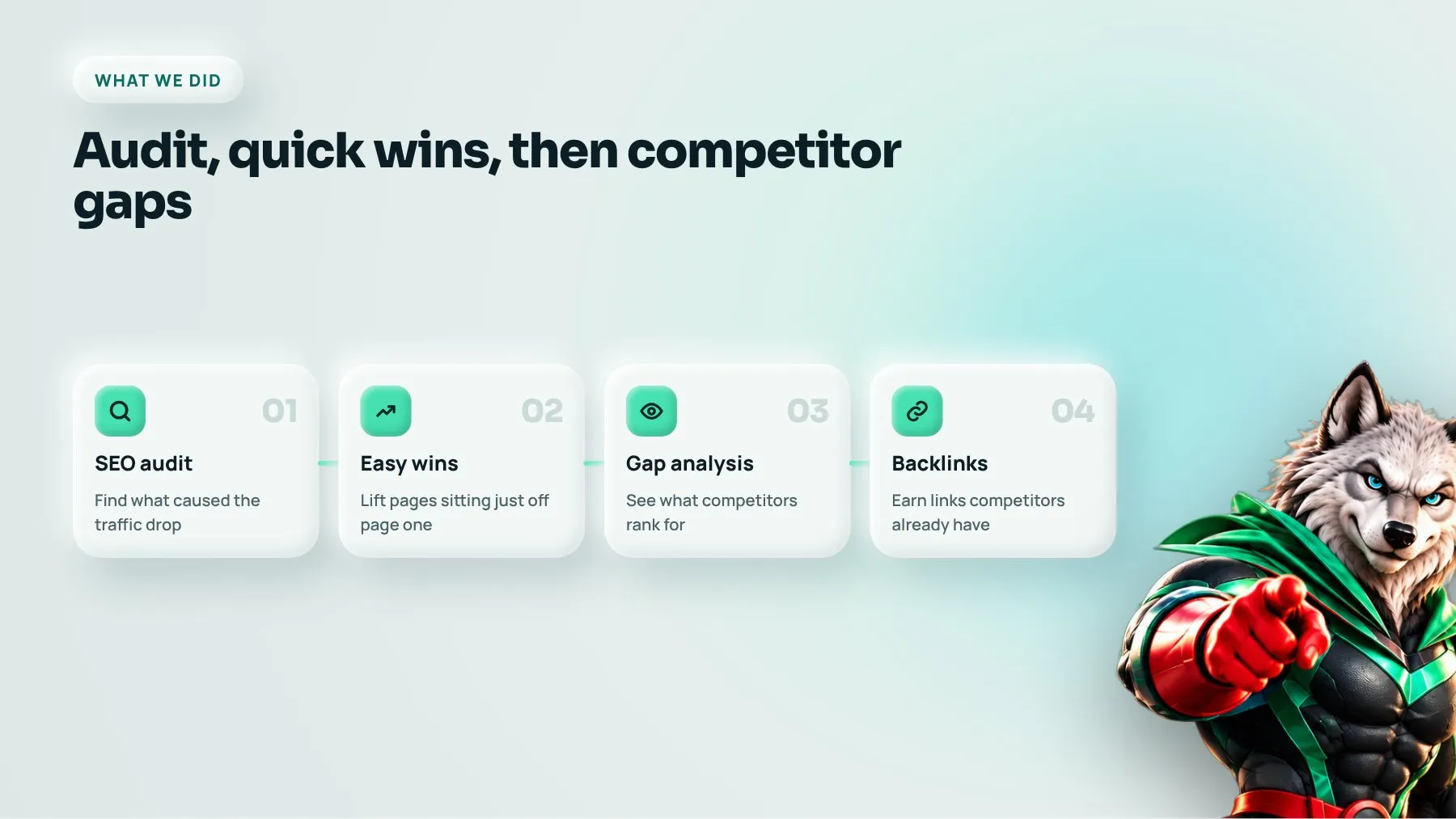
We kept the program tight and in a deliberate order: find out what is broken, fix what will move fastest, then go after the ground competitors hold.
1. A full SEO audit
Every engagement starts with an audit, because you cannot fix a traffic drop until you know why it happened. For a dealership website, the usual suspects are specific to the sector:
- Stock pages that come and go. Vehicles sell, and the pages for them are often deleted or left as dead URLs. That creates broken links, wasted crawl budget and lost link equity. We look at how sold stock is handled and whether redirects or “similar vehicles” pages keep value on the site.
- Duplicate and thin content. Inventory feeds often produce near-identical pages with manufacturer boilerplate. Google struggles to decide which to rank, so often it ranks none of them well.
- Indexing and crawl issues. We check which pages Google has actually indexed, which it is ignoring, and why, using Search Console coverage data alongside a full site crawl.
- Page speed and mobile experience. Dealership sites are image-heavy. Large, uncompressed photos slow pages down, which affects both rankings and the patience of a buyer on a phone.
- Titles, headings and internal links. We review whether each priority page clearly targets one search intent and whether the site’s internal links point authority toward the pages that make money.
The audit gives us a prioritized list, not just a long report. Each issue is weighed by how much traffic and revenue it is likely holding back.
2. Easy wins to lift rankings and traffic fast
Some fixes take minutes and move rankings within weeks. We tackled these first so the dealership saw progress early, while the slower work was underway. Typical easy wins on a site like this include:
- Rewriting title tags and meta descriptions on key pages so they match the exact phrases buyers search and earn the click.
- Tightening headings so each page clearly signals its topic.
- Fixing broken internal links and redirect chains so authority flows cleanly.
- Linking from strong, already-ranking pages to the priority pages that had slipped.
- Improving the content on pages sitting just off page one, where a modest improvement is often enough to cross the line.
Pages ranking in positions 8 to 20 are the most valuable place to start. They are already trusted by Google; they just need a push.
3. Competitive gap analysis
Next, we compared the dealership’s visibility with the competitors that were winning the searches it wanted. A gap analysis shows the keywords competitors rank for that you do not, the content types they have and you lack, and where their backlinks come from.
For a luxury dealership, gaps usually show up in model-specific pages, comparison content, finance and part-exchange information, and location-based searches. Each gap becomes a decision: create a new page, improve an existing one, or leave it because it does not fit the business. We also used the competitor backlink data to find realistic link opportunities, which is part of why the dealership’s backlink profile kept improving.
The results
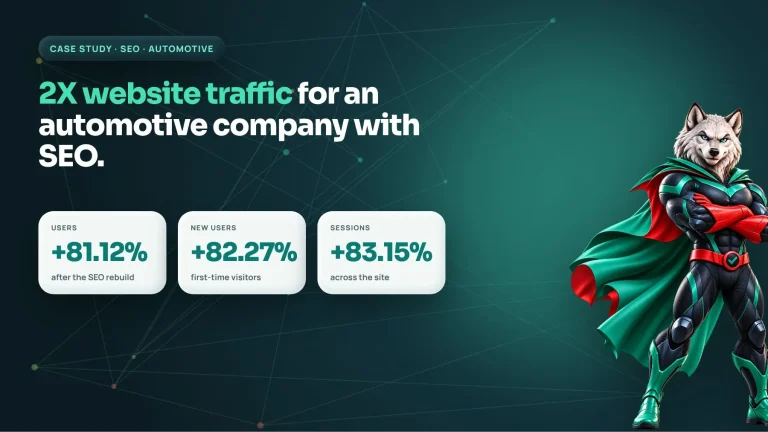
- 147% increase in traffic. More than double the visitors, and from searches chosen because they reflect buying intent.
- All top 10 keywords now rank on page one. Every priority term the dealership cared most about is visible where buyers actually look.
- The #1 exact match term showed significant progress after 3 months. The most valuable keyword moved meaningfully within one quarter.
- Consistent improvement across the board. Backlinks, organic keywords, organic traffic and traffic value are all on an upward trend.
Traffic value is worth a word of explanation. It estimates what the same organic traffic would cost if you bought it through Google Ads. Rising traffic value tells you the site is not just getting more visitors; it is getting visitors from more commercially valuable searches. For a dealership, that is the number that links SEO to the showroom.
What made the difference: lessons for car dealerships
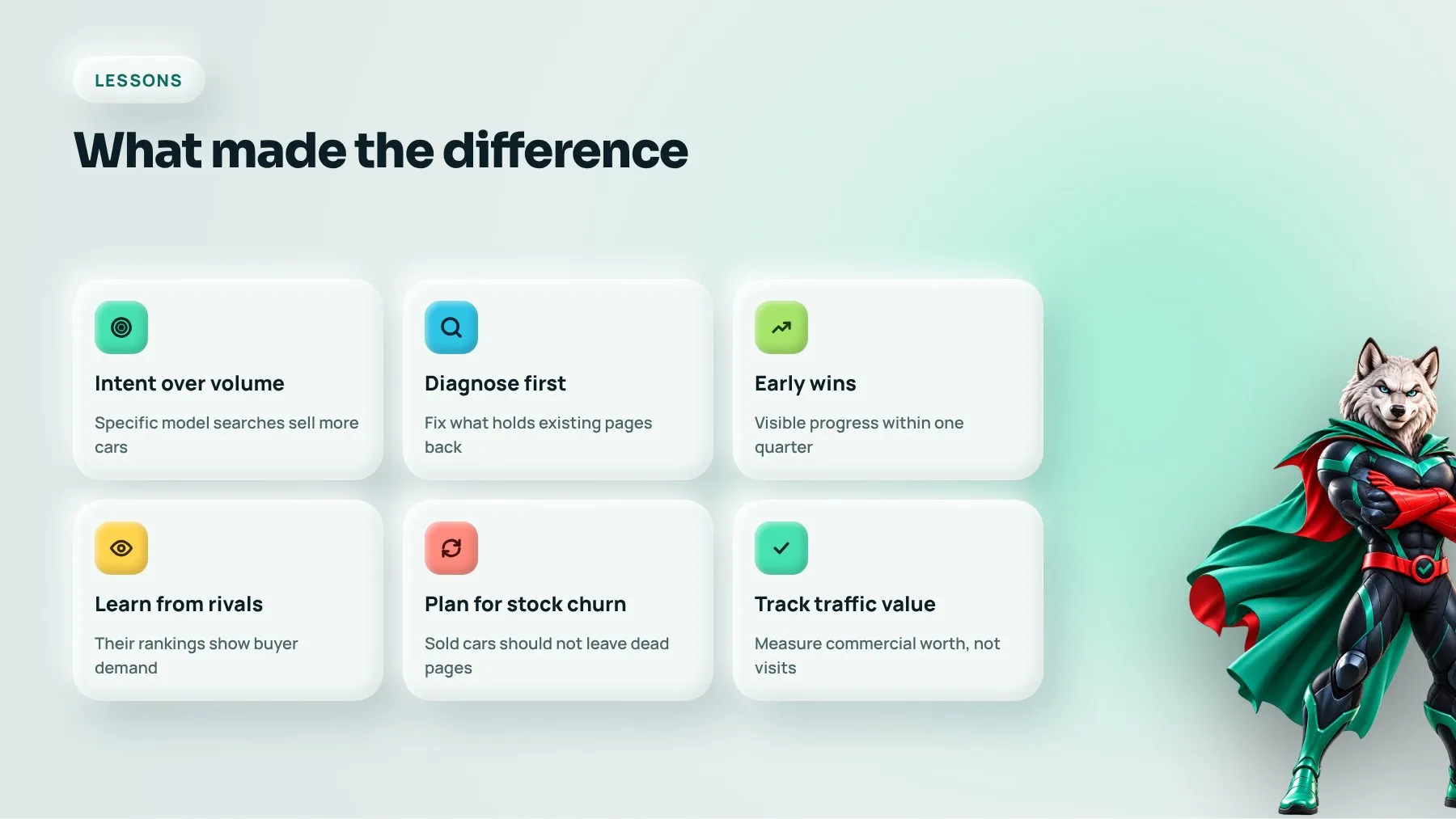
- Lower-volume keywords can be worth more. Specific model and stock searches carry far stronger buying intent than broad terms. Chasing volume for its own sake is a common and expensive mistake.
- Diagnose before you build. The audit stopped us from wasting effort on new content while technical problems were quietly holding back the pages that already existed.
- Early wins buy time for compounding work. Quick fixes delivered visible progress, which matters to any owner judging whether an agency is worth keeping.
- Your competitors have already done the research. A gap analysis shows you exactly which searches and pages are bringing them buyers, so you can compete deliberately.
- Stock churn needs a plan. Sold vehicle pages should never simply vanish. How you handle them protects the authority you have built.
How to apply this to your business
- Check Google Search Console for pages that have lost clicks over the last 6–12 months.
- List the 10 keywords that would bring you the most valuable enquiries, not the most visitors.
- Find pages ranking between positions 8 and 20 and improve those first.
- Decide what happens to a page when a product or vehicle sells: redirect, keep with alternatives, or remove properly.
- Review two or three competitors who outrank you and note what content they have that you do not.
- Track traffic value and enquiries, not just visits.
FAQ
How long does SEO take to work for a car dealership?
Quick technical and on-page fixes can show movement within weeks, as they did here with the main exact match term progressing inside 3 months. More competitive terms and new content usually take 3–6 months to mature, and results build over time rather than arriving all at once.
Should a dealership rely on classifieds portals instead of its own SEO?
Portals are useful, but you pay for every lead and compete side by side with other dealers on the same page. Ranking your own site means you own the traffic and the buyer sees your brand alone. Most successful dealers use both, with their own site doing more of the work over time.
What is a competitive gap analysis?
It is a comparison of the searches, pages and backlinks your competitors have that you do not. It turns guesswork into a clear list of opportunities and helps you decide which ones are worth pursuing for your business.
Want the same for your dealership? See our SEO services, browse more case studies or book a strategy call.