This SaaS client was neither US-based nor English-language: it was a French site that was getting barely any visits from Google, and even fewer to its English version. We built an English-US version of the site, found the high-intent keywords competitors were missing, and ran a steady eight-month program of link building and content. Traffic grew from around 100 to 22,000 visits a month, for an organic SEO investment of $24,000.
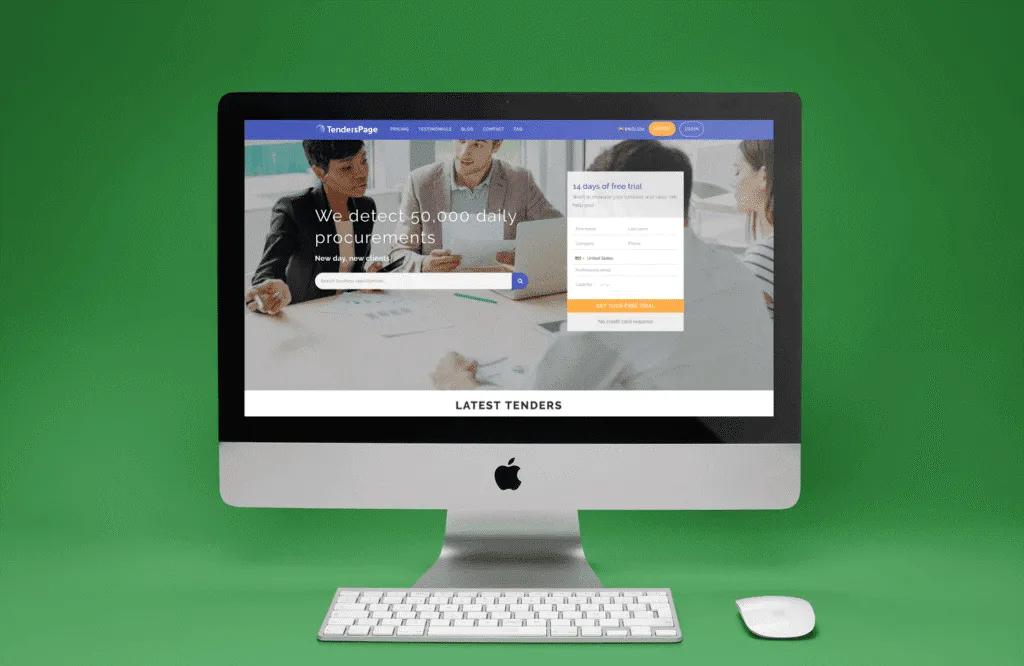
At a glance
- Client: French SaaS company (non-US, non-English)
- Services: International SEO, keyword research, link building, press releases, guest posts, SEO content
- Timeframe: 8 months, starting May 2017
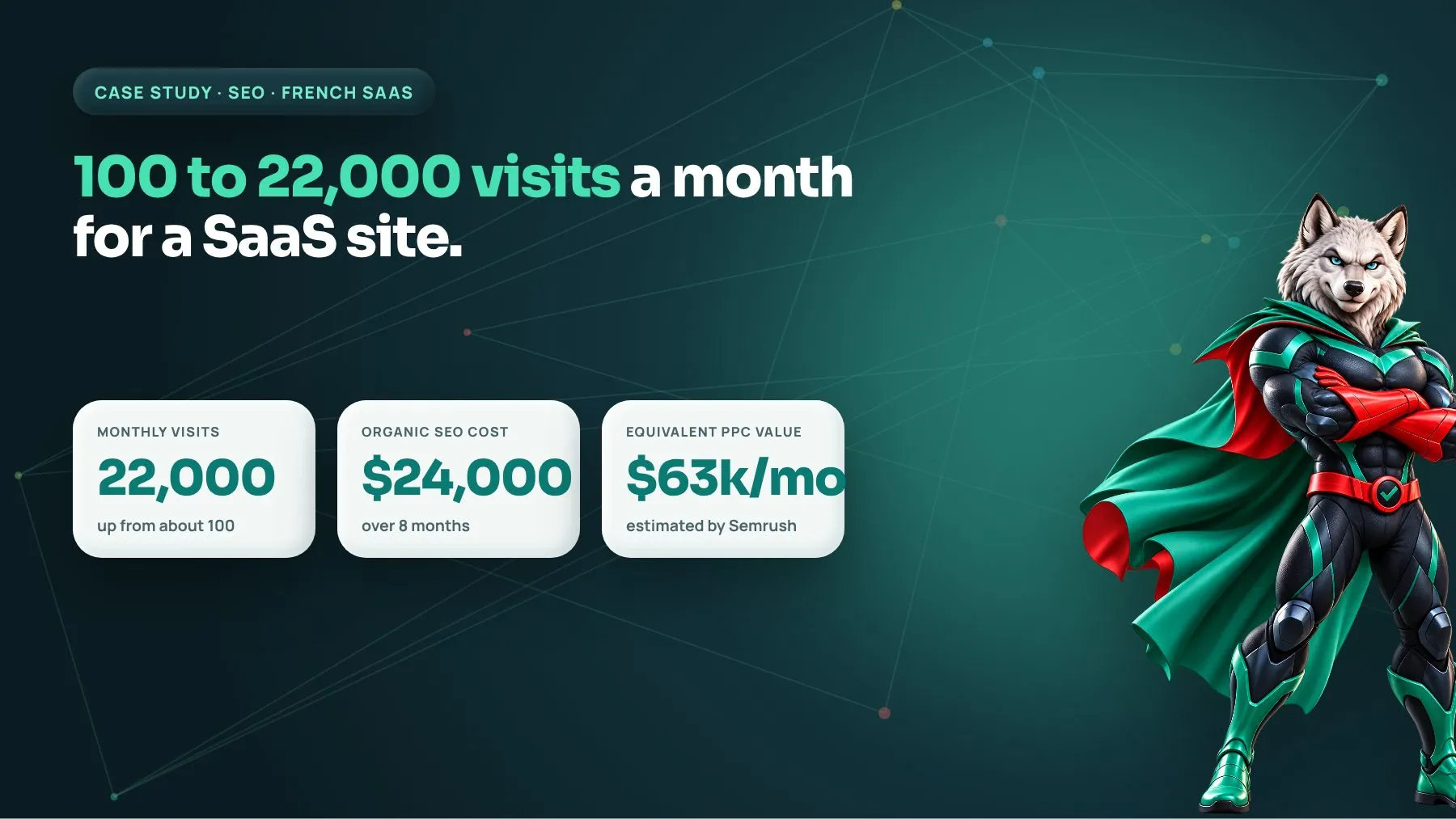
- Key results: From about 100 to 22,000 visits a month; organic SEO cost of $24,000; Semrush-estimated equivalent PPC value of $63,000 per month ($756,000 per year)
The challenge: a foreign-language SaaS site with almost no search traffic
For a SaaS company, organic search is one of the most valuable acquisition channels. Software buyers research online, and the searches they make often carry strong commercial intent. But this site had two structural obstacles.
First, it was built for French speakers. Without an English version targeting the US market, it simply could not compete for the much larger English-language searches in its category. Second, the domain had almost no authority: few backlinks and barely any visits from Google. Before any ranking work could start, we had to create an English-US version of the website and set it up properly as a multi-language site, with the correct language targeting so Google would show each version to the right audience.
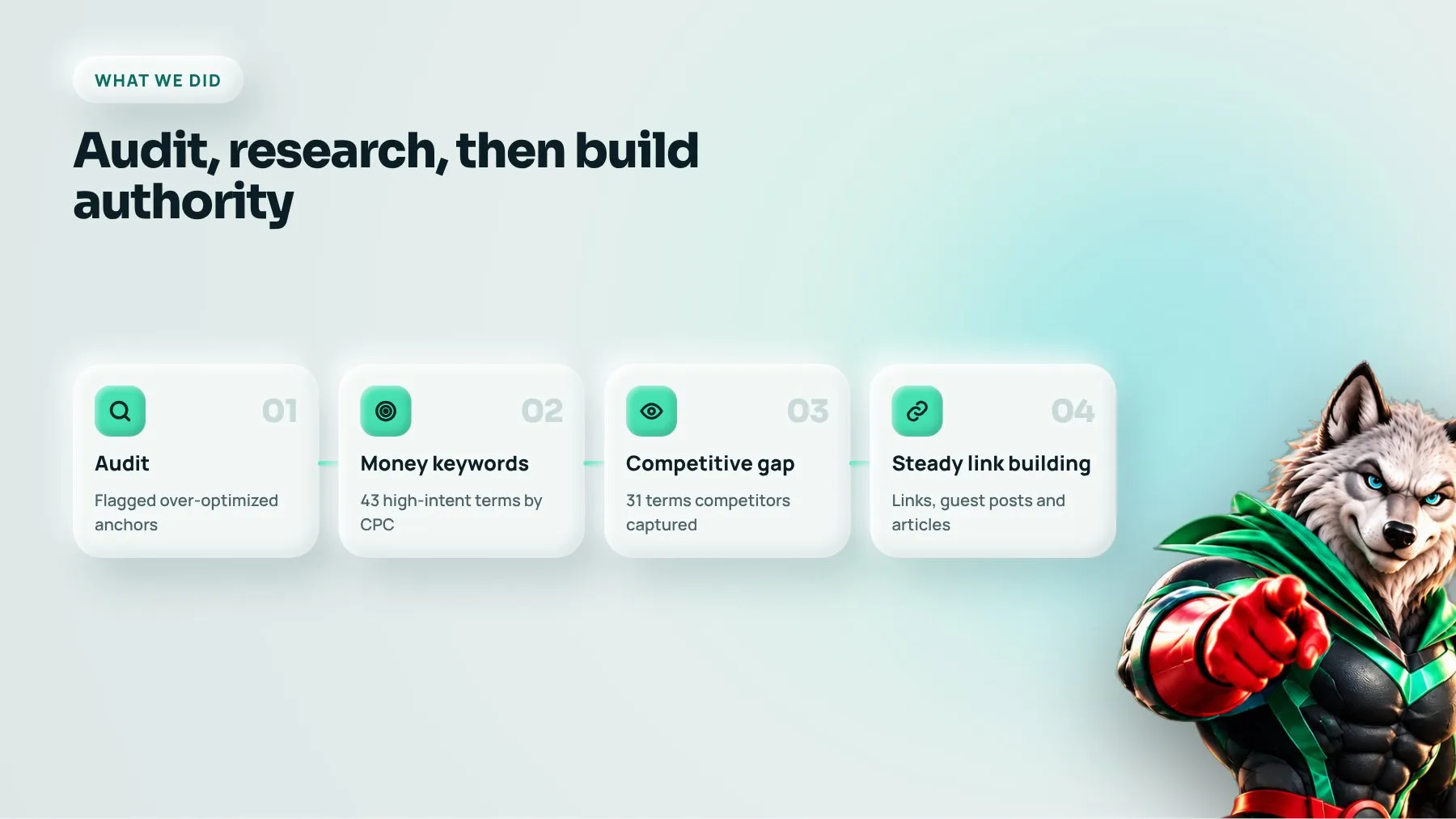
What we did: audit, research, then steady authority building
Starting with an audit
We always start with an audit. This site had no penalties; it just was not getting much traffic. One thing we did flag was that it was slightly over-optimized for its money keywords in its backlink anchor text, with one exact-match anchor making up 28% of links and another 25%. Because the site had so few links overall, this was not a serious problem, but it shaped our plan: new links needed a natural mix of anchor text so the profile would not look manipulated as it grew.
Finding “hidden money keywords”
SaaS niches tend to have lower search volumes than consumer markets, but the traffic converts better because the intent is higher. Someone searching for a specific type of business software is usually a buyer, not a browser.
We found 43 terms with search volumes between 20 and 18,000 a month and cost per click between $0.20 and $25. Cost per click is a useful signal in SEO: it shows what advertisers are willing to pay for a visitor, which reflects how commercially valuable that search is. We started by focusing on high-priority terms around the $4 to $5 per click range, where commercial value was strong and competition was realistic for a young domain.
Closing the competitive gap
A competitive gap analysis compares the keywords competitors rank for against your own. We found 31 more terms, with search volumes from 20 to 1,600 a month and cost per click between $0.10 and $3. They fell into three groups:
- Local areas the client had not yet targeted.
- Brand names of organizations the client works with, which people search for alongside the service.
- Service keywords for things the client offered but had no content for, or was not optimizing.
We shared all of these with the client, giving them a clear list of opportunities competitors were already capturing.
An example money keyword: “request for proposal”
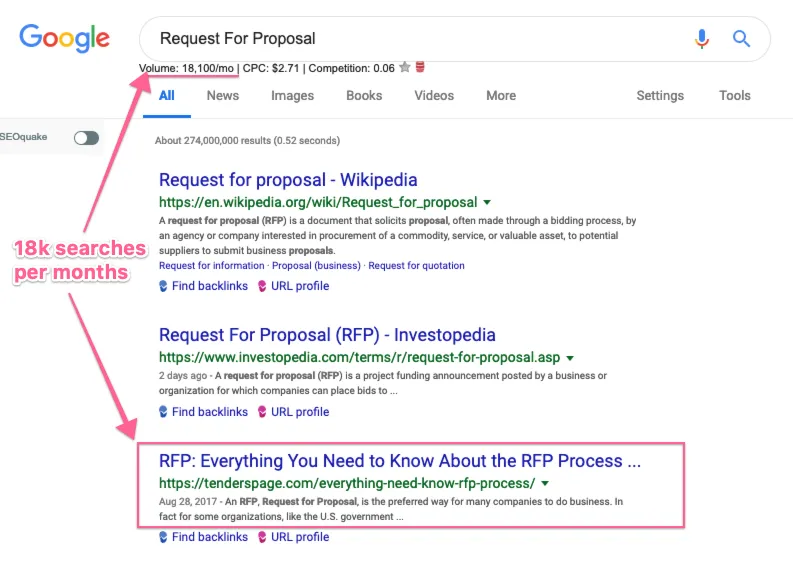
One of the money keywords was “request for proposal”, with 18,200 searches per month and 274,000,000 results in Google. Ranking for it alone brought the site around 6,000 visits per month. That shows the value of finding the right high-intent term: one strong ranking on page one can deliver a large share of a SaaS site’s qualified traffic.
The eight-month plan
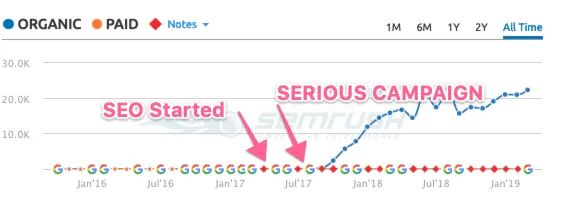
The client’s first commitment with us was in May 2017, and a few weeks later they saw a noticeable lift. They started ramping up around July 2017 with a mix of link building, press releases, blog content and guest posts.
Because this was an international, foreign-language site with no traffic, options were limited, so the plan built authority in measured stages:
Month 1
- Small-scale link building
- A mix of natural, branded and exact-match anchors, kept under control
- A press release
Months 2 to 6
- Medium-scale link building with the same controlled anchor mix
- 2 guest posts, on DA30 and DA10 sites
- 2 SEO-optimized blog articles per month
Months 7 and 8
- Medium-scale link building with the same controlled anchor mix
- 2 SEO-optimized blog articles
The anchor mix matters here. Given the existing over-optimization, a natural blend of branded and generic anchors, with exact match used sparingly, let the site gain authority without triggering a spam signal.
The results: 22,000 visits a month and $756k a year in equivalent ad value
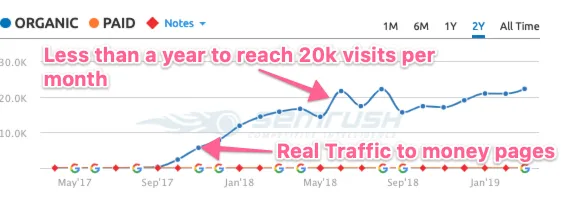
- Traffic grew from about 100 to 22,000 visits a month in 8 months
- The organic SEO cost was $24,000
- Semrush estimated an equivalent pay-per-click cost of $63,000 per month for the same traffic
- That is $756,000 per year the client would have had to spend on PPC to buy the same visits
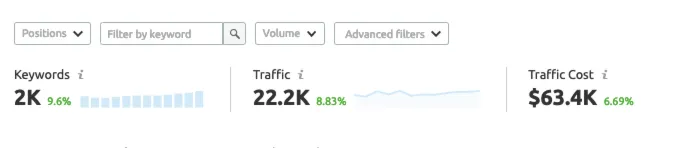
The comparison with paid search is the clearest way to see the value. Organic rankings keep delivering visits without a cost per click, so an investment that pays for itself many times over in equivalent ad spend becomes an asset rather than an ongoing expense. Traffic also kept rising month after month, bringing in new clients consistently.
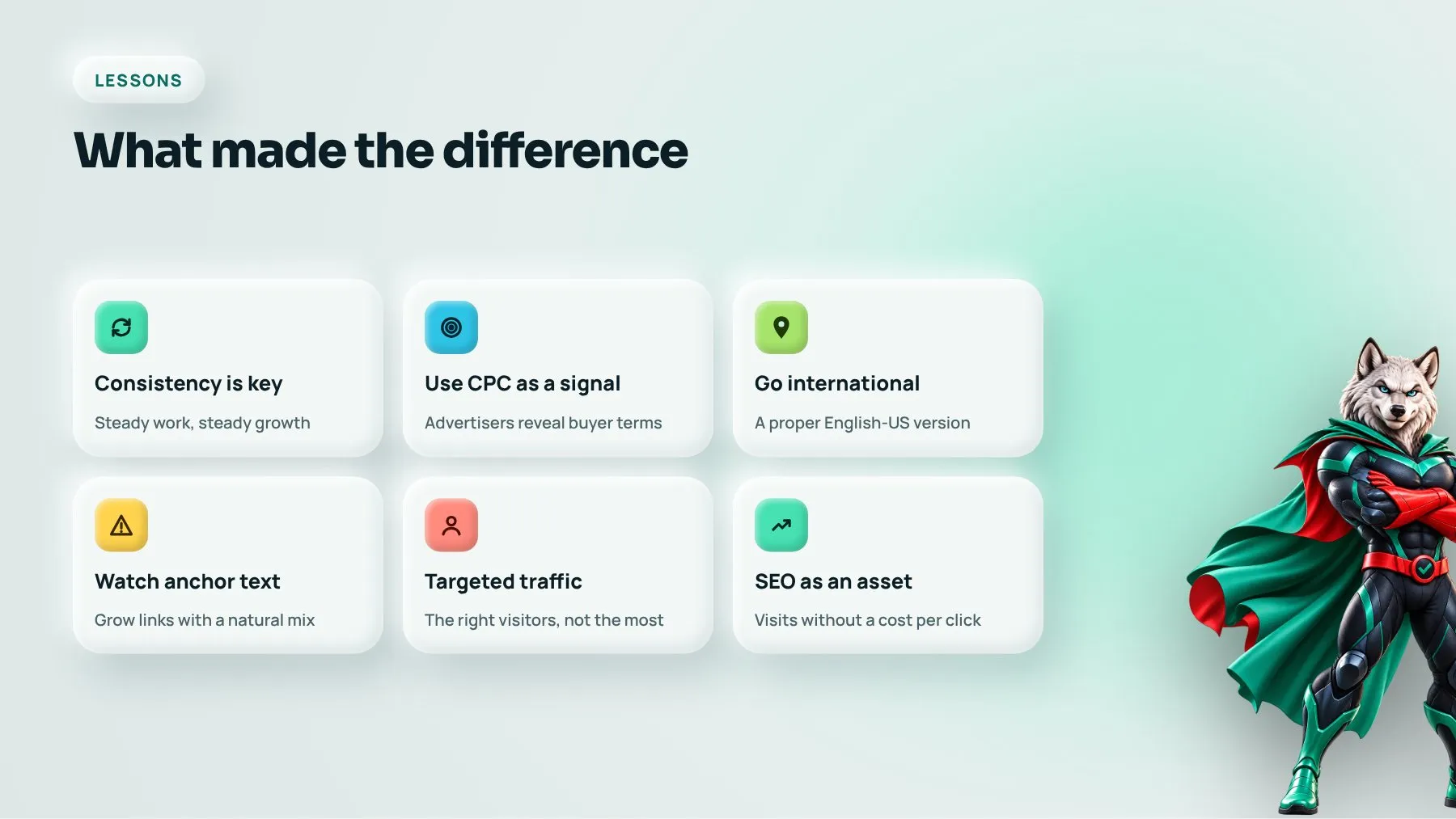
What made the difference: lessons for SaaS companies
- Consistency is key. The charts show steady growth because the work was steady, not a burst followed by silence.
- Use CPC to find commercial value. What advertisers pay tells you which keywords bring buyers.
- Go international properly. A correctly set up English-US version opened a much larger market.
- Watch your anchor text. Grow links with a natural mix, especially if the profile is already over-optimized.
- Targeted traffic beats volume. Focus on the right visitors, not the most visitors.
How to apply this to your SaaS business
- Audit your backlink anchor text for over-optimization.
- List keywords with high CPC and realistic difficulty.
- Run a competitive gap analysis to find terms you are missing.
- Create proper language versions for each major market you sell to.
- Commit to a steady monthly program of links and content.
- Compare your organic traffic value with the equivalent PPC cost.
FAQ
Is SEO worth it for SaaS companies with low search volumes?
Usually yes. Lower-volume SaaS searches tend to have high buying intent, so even modest traffic can produce valuable sign-ups and demos.
How should a non-English SaaS site expand to the US market?
Create a dedicated English-US version with properly translated and localized content, set up language targeting correctly, and build authority for that version. Simply machine-translating pages rarely performs well.
How does SEO compare with Google Ads for SaaS?
Ads deliver traffic immediately but stop when you stop paying. SEO takes longer but keeps delivering, which is why many SaaS companies use Google Ads for quick wins while building organic rankings.
Want your SaaS to win high-intent traffic? See our SEO services, browse more case studies, or book a strategy call.