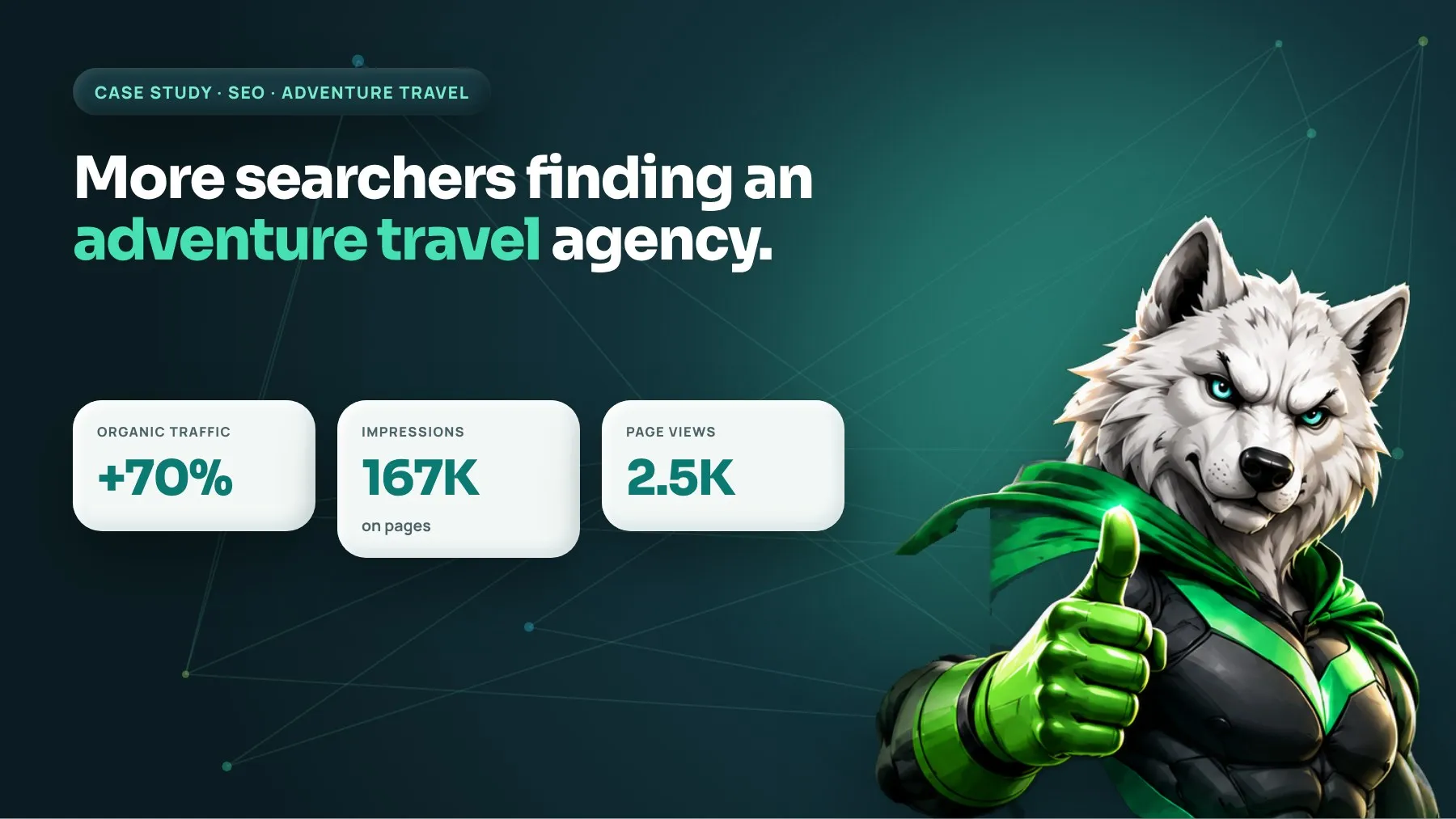
An adventure travel agency came to us wanting more people to find its packages on Google and more of those visitors to book. We ran a five-part SEO program covering keyword research, on-page optimization, technical SEO, content strategy and link building. The result: a 70% increase in organic traffic, higher rankings, 167K impressions in search and an improved conversion rate.
At a glance
- Client: Adventure travel agency
- Service: SEO (keyword research, on-page, technical, content, link building)
- Key results: 70% increase in organic traffic; 167K impressions; 2.5K page views; higher search rankings; improved user experience and conversion rate
The challenge: great trips that travelers could not find
Travel is one of the most competitive spaces in search. Online travel agencies, booking platforms, review sites and tourism boards all compete for the same queries, and they have large content teams behind them. An independent adventure agency cannot outspend them, so it has to out-focus them.
The client’s goals were clear: increase organic visibility, attract targeted traffic, and grow online bookings for its adventure packages. Our working assumption was that by improving the site’s SEO, targeting the right keywords and making the site easier to use, the agency could rank higher on search engine results pages and attract more qualified visitors, meaning people actually planning a trip rather than just browsing.
Why it matters commercially: an adventure package is a considered, relatively high-value purchase. Travelers research for weeks before booking. If the agency is not visible during that research, the booking goes to whoever is.
Our approach: five disciplines working together
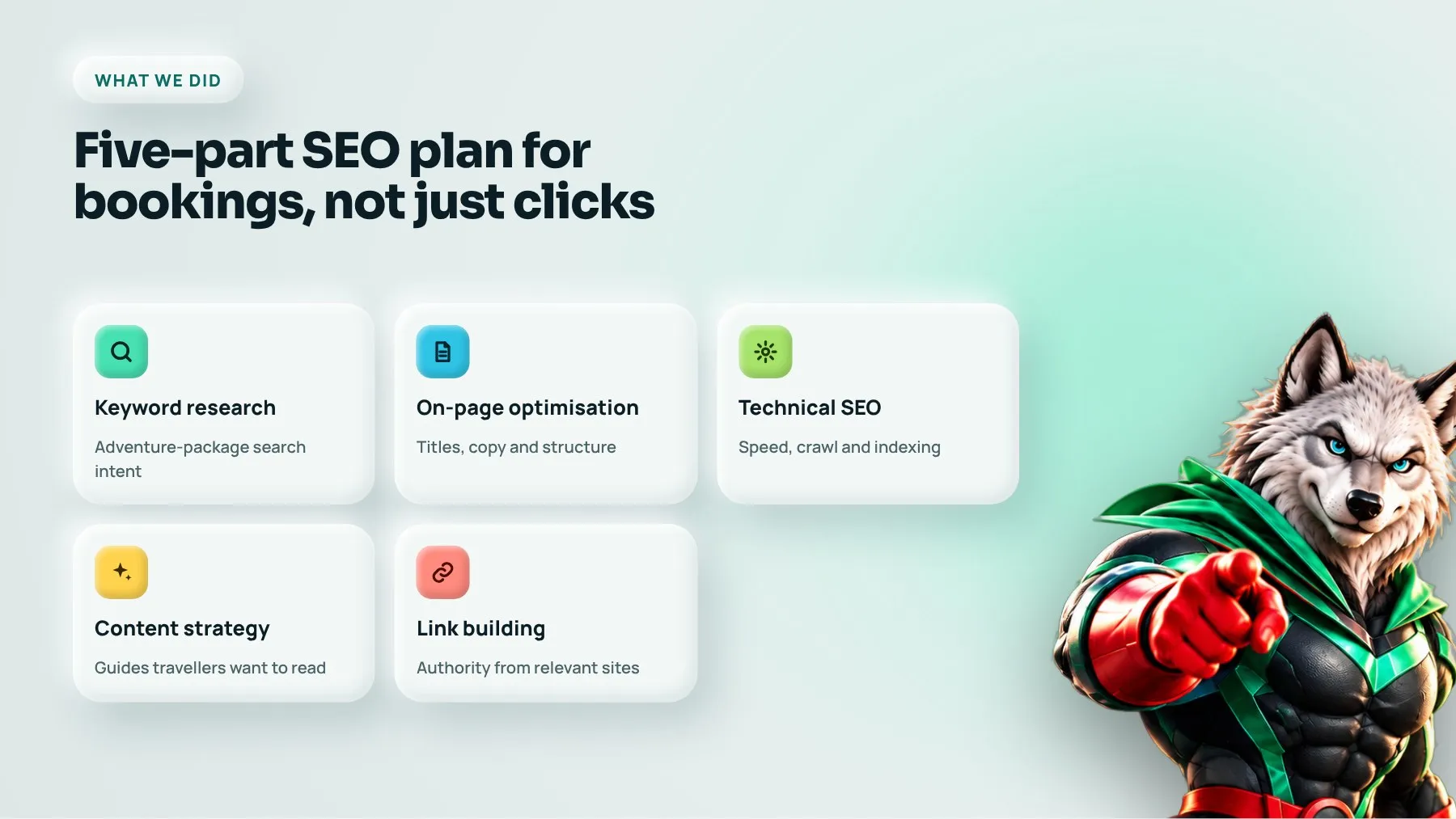
Keyword research built around trip intent
Broad terms like “adventure holidays” are dominated by huge brands and attract browsers. We mapped the searches travelers make when they are closer to booking: specific destinations combined with activities, trip lengths, difficulty levels and seasons. We grouped keywords by intent (inspiration, planning, comparison and booking) so each page had a clear job, and we prioritized terms where the agency’s actual packages were a strong answer.
On-page optimization for every package page
Each package page was matched to a primary keyword group. We rewrote title tags and meta descriptions to earn the click, structured headings around what travelers ask (itinerary, what is included, fitness level, best time to go, price), and made sure the copy answered those questions clearly. Internal links connected destination guides to the relevant packages, so authority and visitors flowed toward pages that take bookings.
Technical SEO so Google can crawl and trust the site
Travel sites tend to accumulate duplicate pages, thin filtered listings and heavy image galleries. We audited crawlability and indexation, cleaned up duplicates with canonical tags, fixed broken links and redirects, and worked on page speed, particularly image compression and mobile performance. We also reviewed structured data so search engines understand pages as trips, with prices and reviews where appropriate. These fixes also improve the experience for real visitors, which supports conversion.
A content strategy that captures the research phase
Most travelers start with questions, not with a booking page. We planned content clusters around each key destination and activity: guides, packing lists, comparisons and seasonal advice, each linking to the related packages. This earns visibility earlier in the journey and builds trust before the traveler is ready to book. It is the same approach we use to prepare content for AI Overviews and AI search, where clear, well-structured answers get cited.
Link building with relevance
Authority still matters in travel SEO. We focused on links that make sense for an adventure agency: travel and outdoor publications, destination resources, partner operators and genuinely useful content that others want to reference. Quality and relevance mattered far more than volume.
The results
After implementing the strategy, the agency saw:
- 70% increase in organic traffic
- Higher search engine rankings for its target keywords
- 167K impressions on its pages in Google search
- 2.5K page views
- Enhanced user experience across the site
- Improved conversion rate from organic visitors
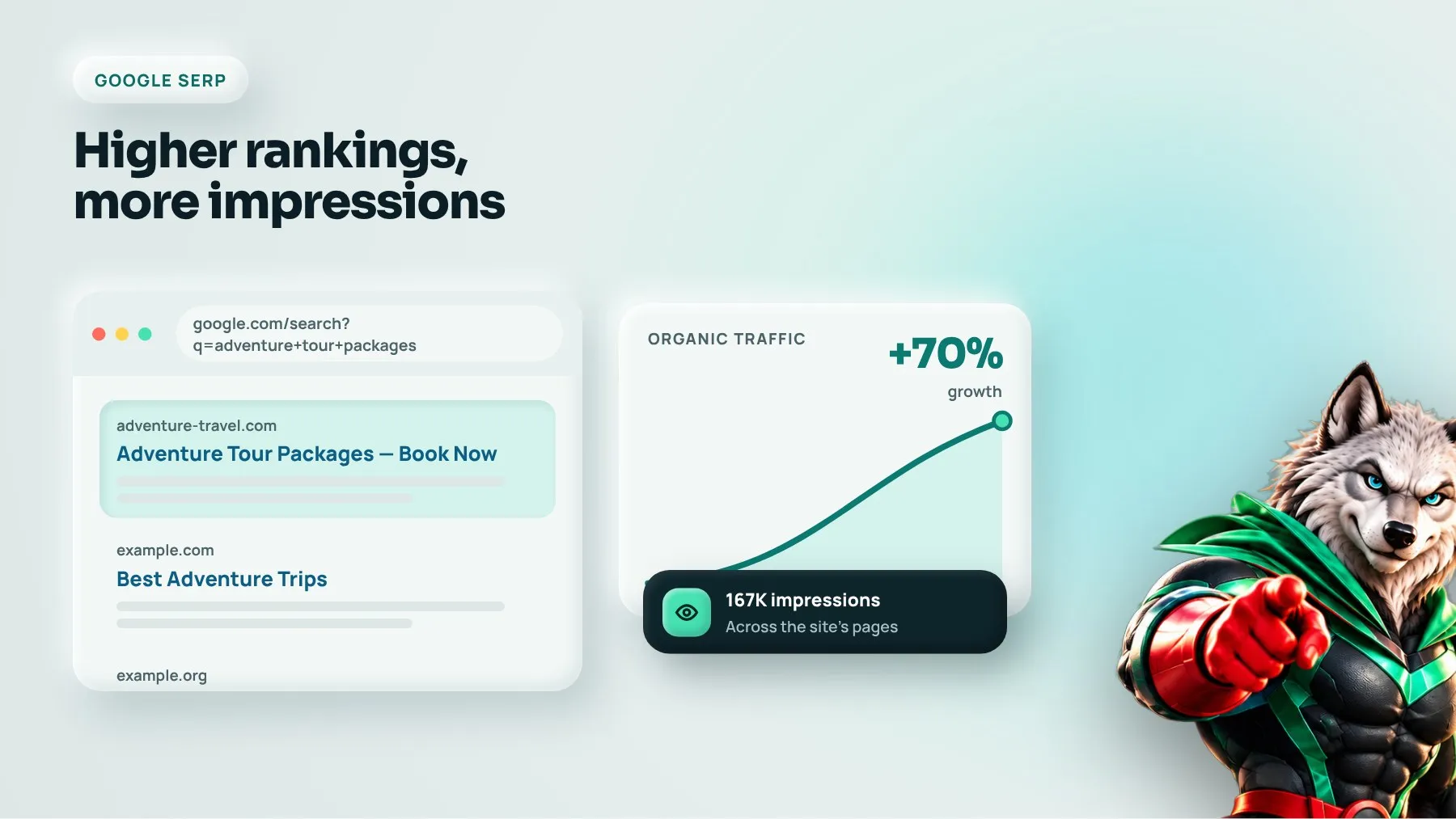
What this means for the business: 167K impressions means the agency’s pages were shown in search far more often, putting the brand in front of travelers during their research. The 70% rise in organic traffic turned that visibility into visits, and because the traffic was built on trip-specific intent, an improved conversion rate followed. Organic traffic also has no cost per click, so each additional booking from search improves overall marketing efficiency.
What made the difference: lessons for travel businesses
- Niche beats broad. Specific destination and activity searches are winnable and convert better than generic holiday terms.
- Package pages must answer real questions. Itinerary, inclusions, difficulty, timing and price are what travelers need to commit.
- Technical health is a ranking and a conversion factor. Fast, clean, mobile-friendly pages rank better and book better.
- Content earns trust before the sale. Guides that help travelers plan bring them back when they are ready to book.
- Links should look natural for your industry. Relevant travel sources carry more weight than generic directories.
How to apply this to your business
- List your best-selling packages and the exact searches a traveler would use to find each one.
- Give each package page one primary keyword theme and answer the core questions on the page.
- Run a technical audit for speed, mobile usability, duplicates and broken links.
- Build one content cluster per key destination, linked to the relevant packages.
- Track impressions, organic traffic and enquiries or bookings together in Search Console and analytics.
FAQ
How long does SEO take for a travel agency?
SEO results usually start to show in 3–6 months, with stronger gains over 6–12 months as content and authority build. Seasonal demand also matters, so content should be published well ahead of peak booking periods.
Can a small travel agency compete with big booking sites on Google?
Yes, on the right searches. Large platforms win broad terms, but specialists can rank for specific destinations, activities and trip types where their expertise is genuinely better. That is where focused SEO pays off.
Do we need to blog to rank?
You need helpful content, not necessarily a traditional blog. Destination guides, itineraries and planning advice that link to bookable packages do the same job and are often more useful to travelers.
Want more travelers finding and booking your trips? See our SEO services or book a strategy call.