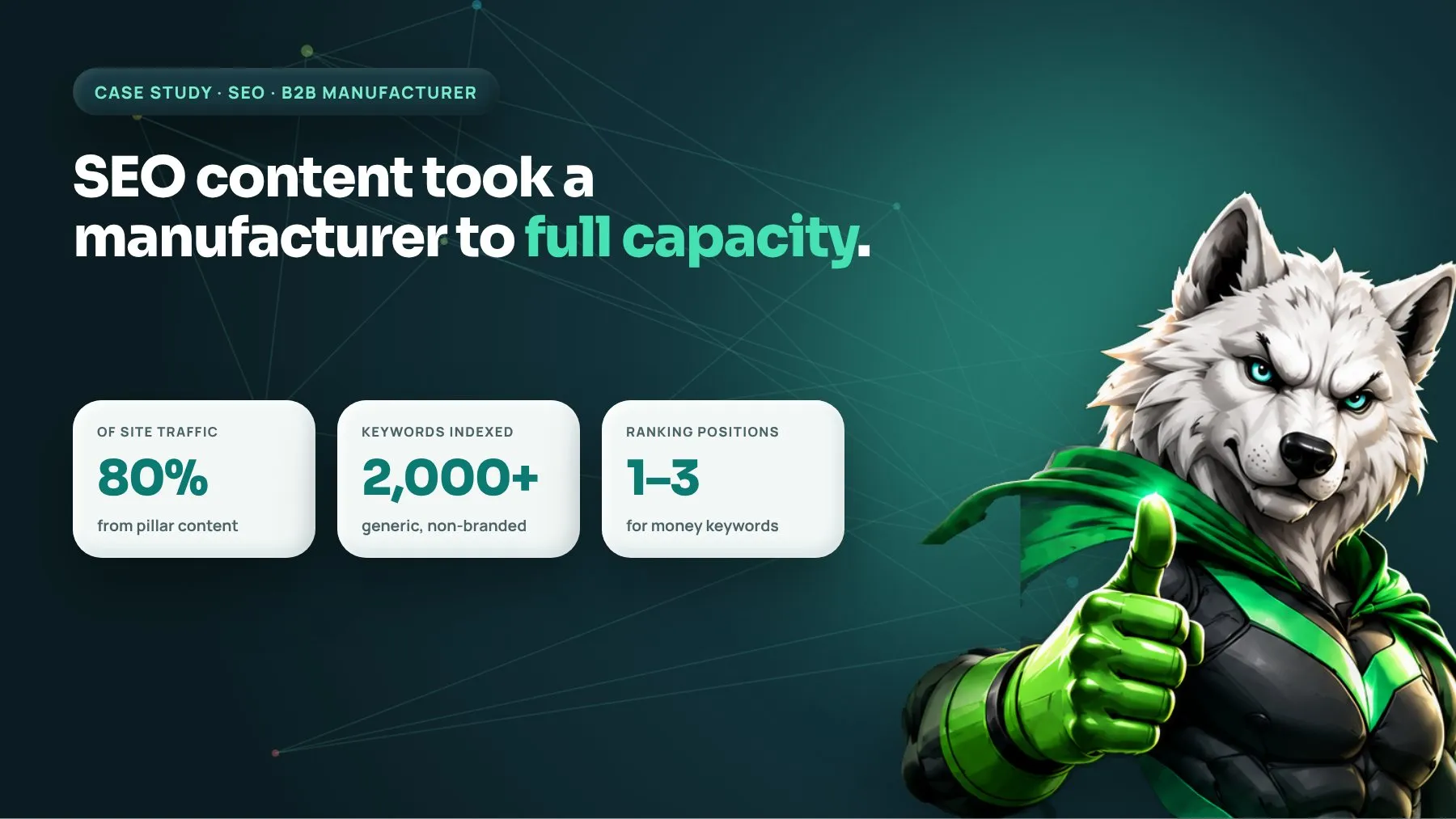
This client is a bulk contract hardware manufacturer working in a tightly targeted B2B niche, on a brand-new domain. Using a pillar article, a topic cluster, backlink outreach and steady content upgrades, we built organic search into their main source of leads. The content drove around 80% of site traffic, more than 2,000 keywords were indexed in Google, and the business grew to its maximum production capacity.
At a glance
- Client: Bulk contract hardware manufacturer (B2B)
- Services: SEO, content strategy, backlink outreach
- Timeframe: Pillar published May 2019; major content update late August 2019
- Key results: pillar and cluster content bringing around 80% of traffic; 2,000+ keywords indexed; many generic money keywords in positions 1 to 3; business reached maximum production capacity
The challenge: a niche B2B market on a new domain
When we first spoke to the client, the biggest challenge was clear: the company operates in a very targeted niche. Because they do not sell end-customer products, search volumes for most of their money keywords were low.
The upside was significant. Every lead that becomes a customer has a very high lifetime value (LTV) in revenue. Competition was fierce, and cost-per-click for the major keywords was above $10, which made relying on paid search alone an expensive way to win these buyers.
On top of that, the website was on a new domain. New domains have no track record with Google, so even good content can take time to be noticed.
This combination is typical of manufacturing and industrial B2B. There are few searchers, but each one can be worth a lot. The goal is not huge traffic; it is to be the obvious, authoritative answer when the right buyer searches.
Our SEO strategy: depth, authority, then more depth
1. A comprehensive pillar and topic cluster
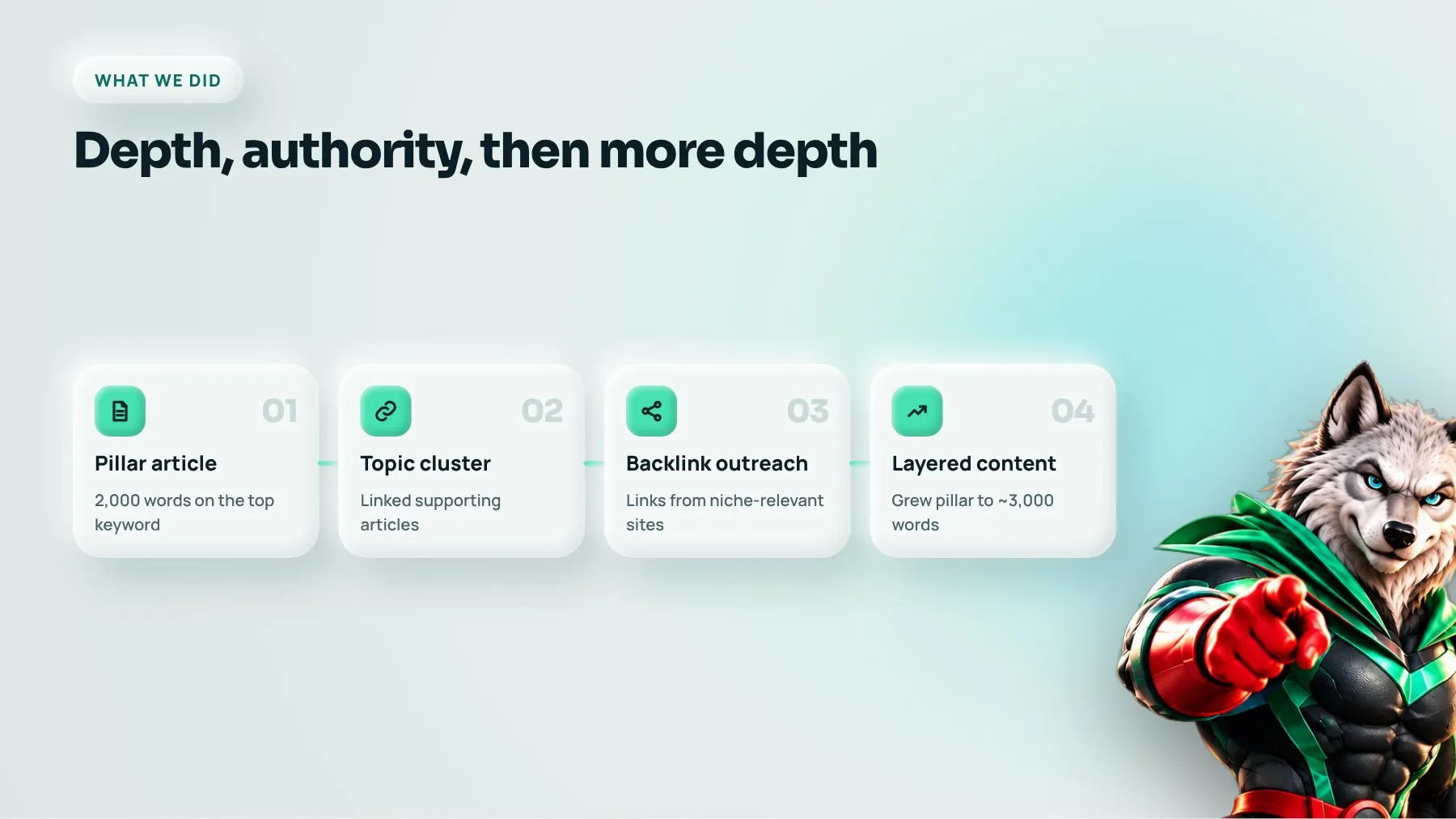
Our team identified the company’s most valuable keyword and wrote a 2,000-word pillar article, with relevant images and links. We then built a topic cluster around it: secondary articles each covering a related subtopic, all linked to and from the pillar.
Why this structure works for B2B niches:
- It matches how technical buyers research. Engineers and procurement teams want detail. A deep pillar answers the main question; cluster articles answer the follow-ups.
- It concentrates authority. Internal links from every cluster article point to the pillar, signaling to Google which page matters most.
- It captures long-tail searches. In low-volume niches, many small, specific searches add up to meaningful, highly qualified traffic.
The pillar was published in May 2019. Because the domain was new, it did not attract Google’s attention straight away. That was expected, and it set up the next step.
2. An aggressive backlink outreach campaign
New domains need external signals of trust. Our outreach team worked to secure backlinks from other websites in the same niche, pointing to the pillar and cluster articles.
Relevance was the priority. In B2B, a link from an industry publication, supplier or related business carries far more weight than a generic link, because it tells Google the content is respected by people in the field. Outreach of this kind means finding sites that genuinely cover the topic and offering them something useful to reference.
3. Layering on more content
Strengthening existing content has repeatedly worked for us, so we used it here. As soon as some keywords began appearing in the lower positions of Google’s results, we revisited the pillar and layered in more valuable, helpful information for readers.
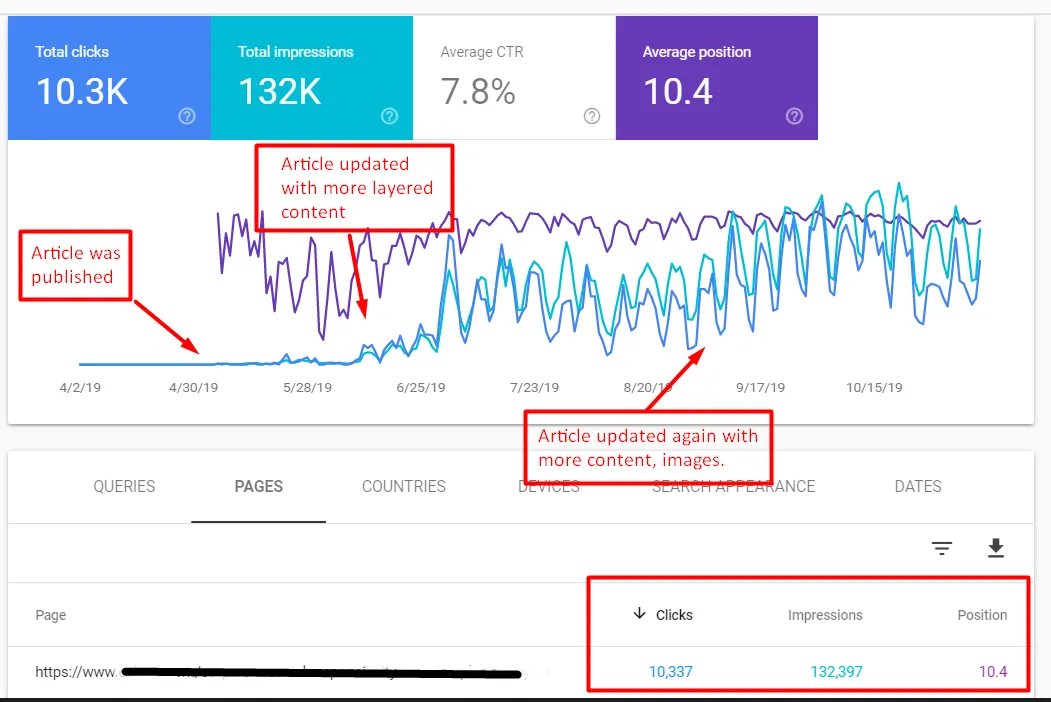
The article grew to around 3,000 words, and we created more secondary articles around it. After a month, the number of keywords indexed in Google increased, with some long-tail keywords reaching the first page. The content was then driving 80 to 90% of the site’s traffic and bringing the client dozens of high-value inquiries.
In late August 2019 we updated the article again, and traffic took off. Most of the high-value keywords ranked high in Google, and some won featured snippets on the results page.
This step is often skipped. Many businesses publish once and move on. Watching early ranking signals and then improving the page that Google is already starting to trust is one of the most efficient moves in SEO.
The results: from new domain to full capacity
This is a clear example of how carefully researched articles and a well-planned content strategy bring search traffic, and leads, to a site.
- The pillar content and topic cluster bring in around 80% of traffic to the brand-new site.
- Most of the client’s leads come through this traffic.
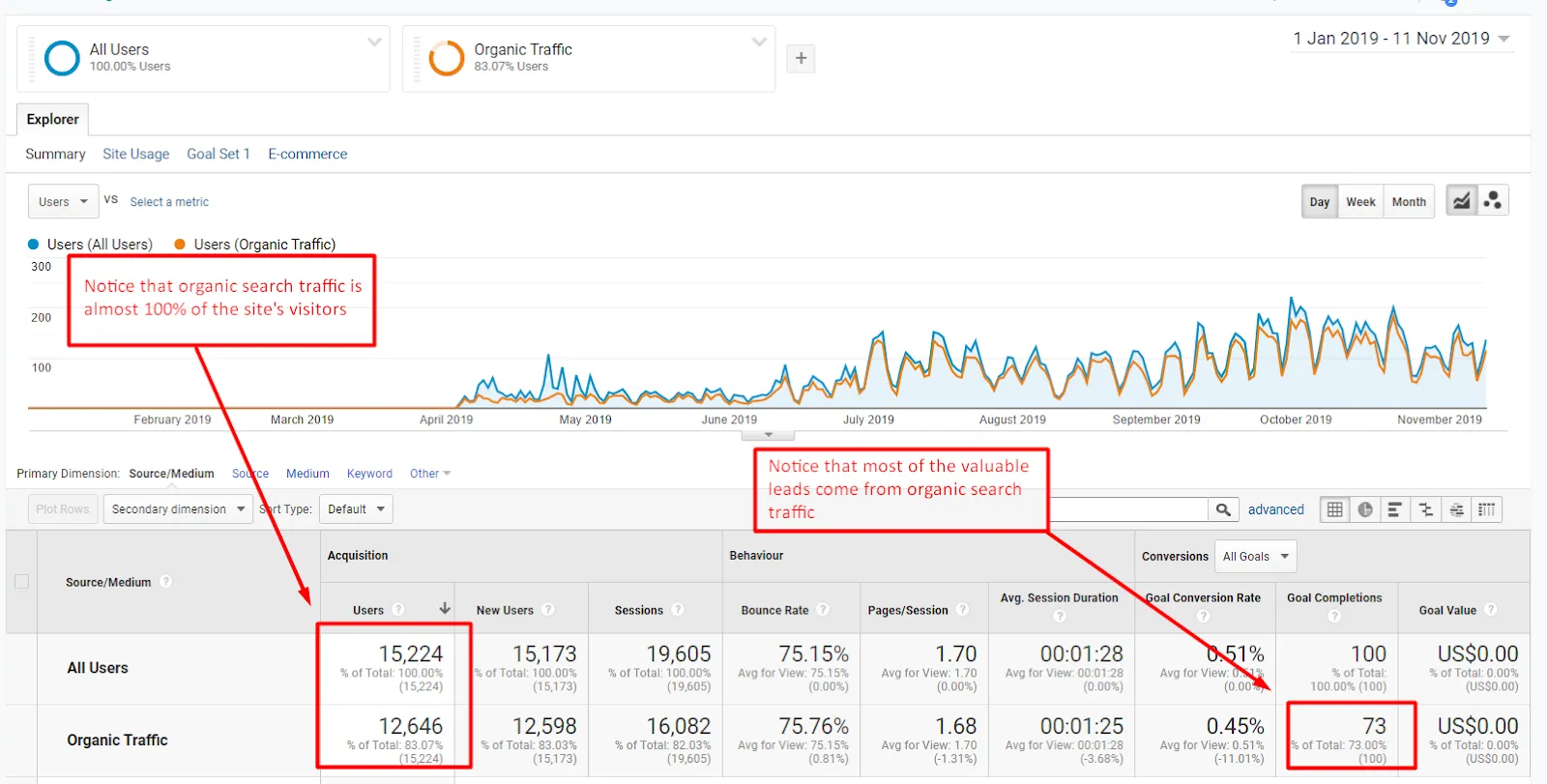
- More than 2,000 keywords indexed in Google, with dozens on the first and second pages.
- All generic, non-branded keywords. None included the client’s brand or website name, meaning these were new buyers who did not know the company yet.
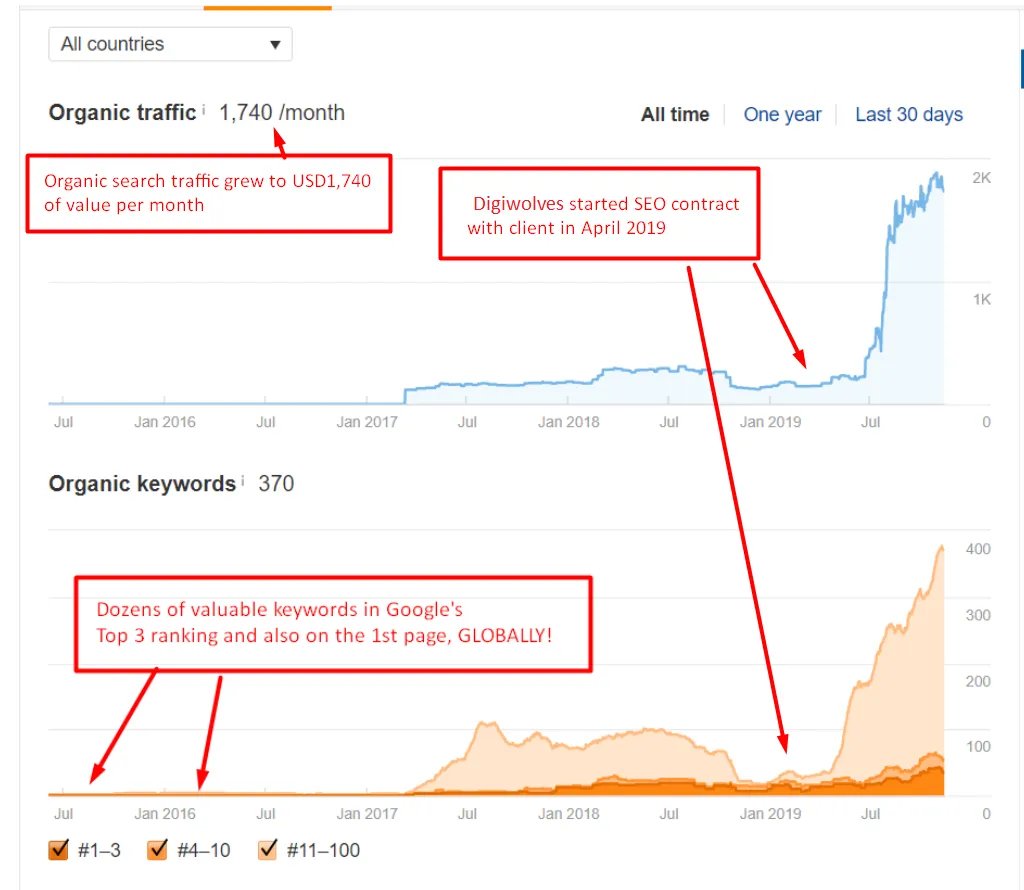
- Positions 1 to 3 for these terms in almost all of Google’s local country databases.
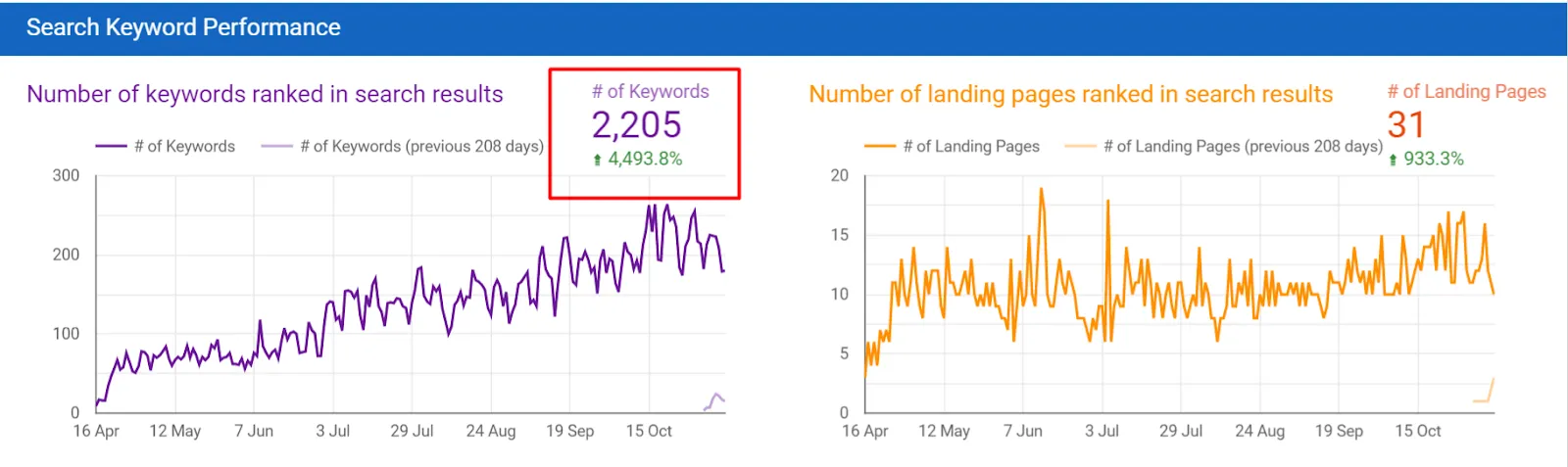
The client began ranking globally for major money keywords and receiving valuable leads from many locations. The business grew to its maximum production capacity.
For a manufacturer, that is the result that matters most. Rankings and traffic are the means; a full order book is the end.
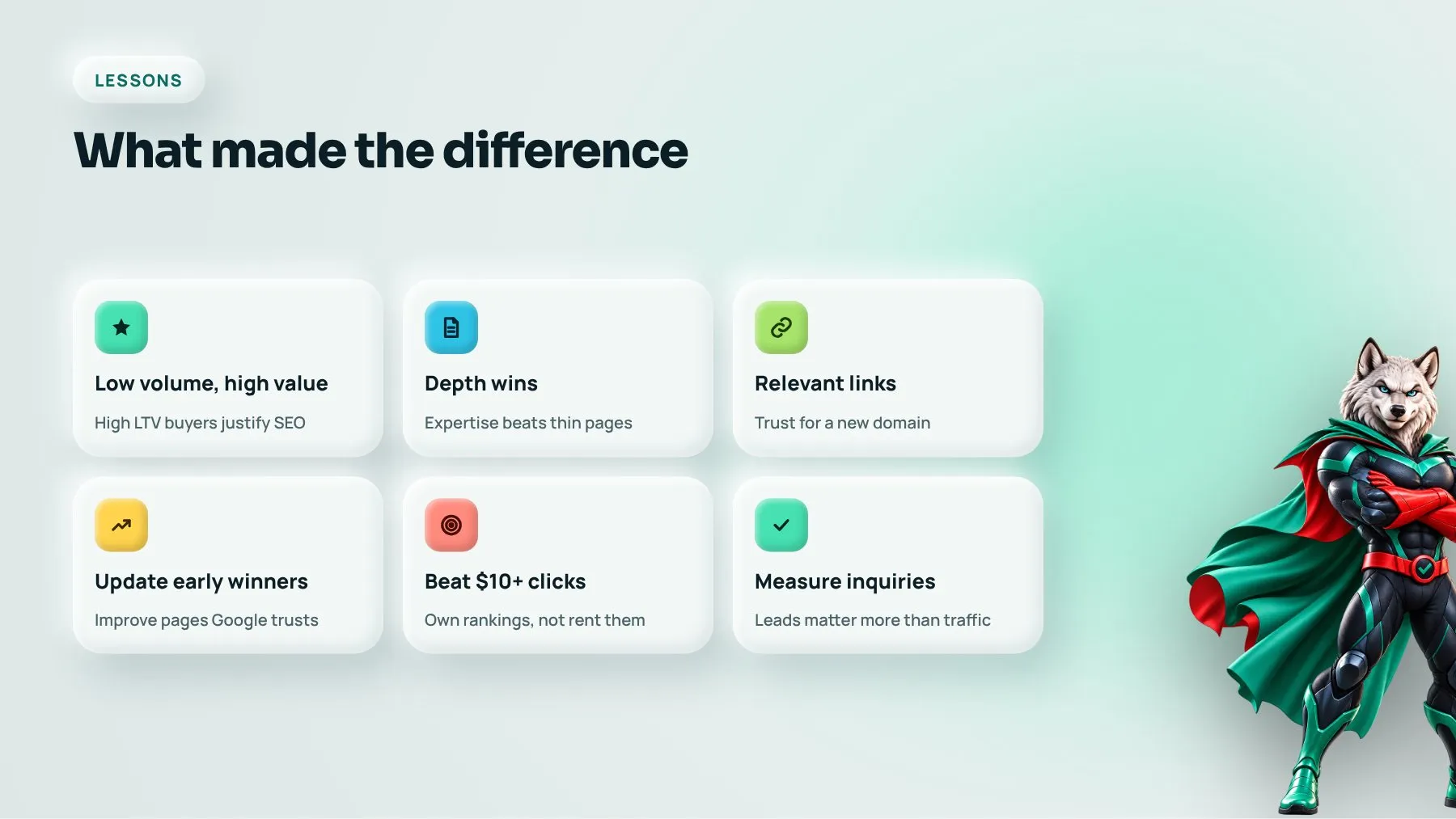
What made the difference: lessons for manufacturers and B2B firms
Low search volume does not mean low value
When every customer has a high lifetime value, a few hundred well-targeted visitors can be worth more than thousands of casual ones.
Depth wins in technical niches
A thorough pillar backed by focused cluster articles shows expertise that thin pages cannot.
New domains need authority from relevant links
Niche-relevant backlinks gave Google the trust signals the new site lacked.
Update what is starting to work
Improving content once it shows early ranking signals turned slow progress into rapid growth.
Organic search can beat expensive clicks
With CPCs above $10, ranking organically for money keywords gives a lasting advantage over paying for every visit.
How to apply this to your business
- Identify your single most valuable keyword and write the definitive page on it.
- Plan supporting articles that answer the follow-up questions buyers ask.
- Link every supporting article to the pillar, and the pillar back to them.
- Pursue backlinks from relevant industry sites, not generic directories.
- Track rankings monthly and expand pages that start appearing in results.
- Measure success by qualified inquiries, not just traffic.
FAQ
Does SEO work for manufacturers with low search volumes?
Yes. In niche B2B markets the searchers are few but highly qualified, and each customer can be worth a lot. Ranking for those specific searches can deliver a steady flow of valuable leads.
How long does a content strategy take on a new domain?
New domains usually need longer, often several months, before content gains traction, because Google has no history to rely on. Backlinks and steady content improvements shorten that period.
Should I use Google Ads instead of SEO in a niche market?
Ads can produce leads quickly, but when clicks cost over $10 they become expensive at scale. SEO takes longer to build but gives lasting visibility without paying for every click. Many B2B firms use both.
Want search to fill your order book? See our SEO services, browse industries we work with, or book a strategy call.