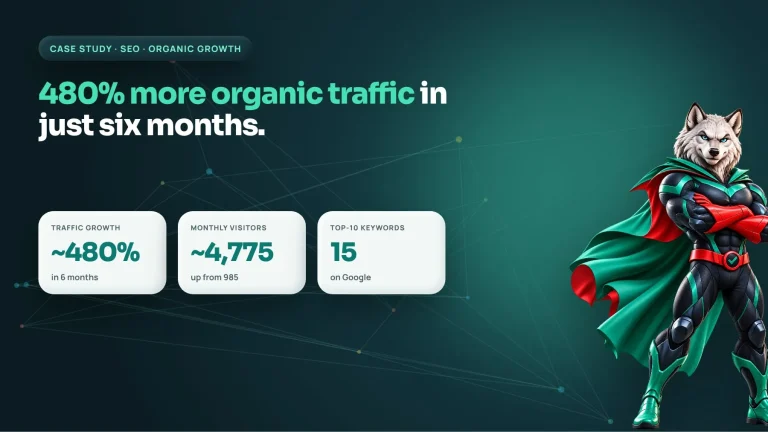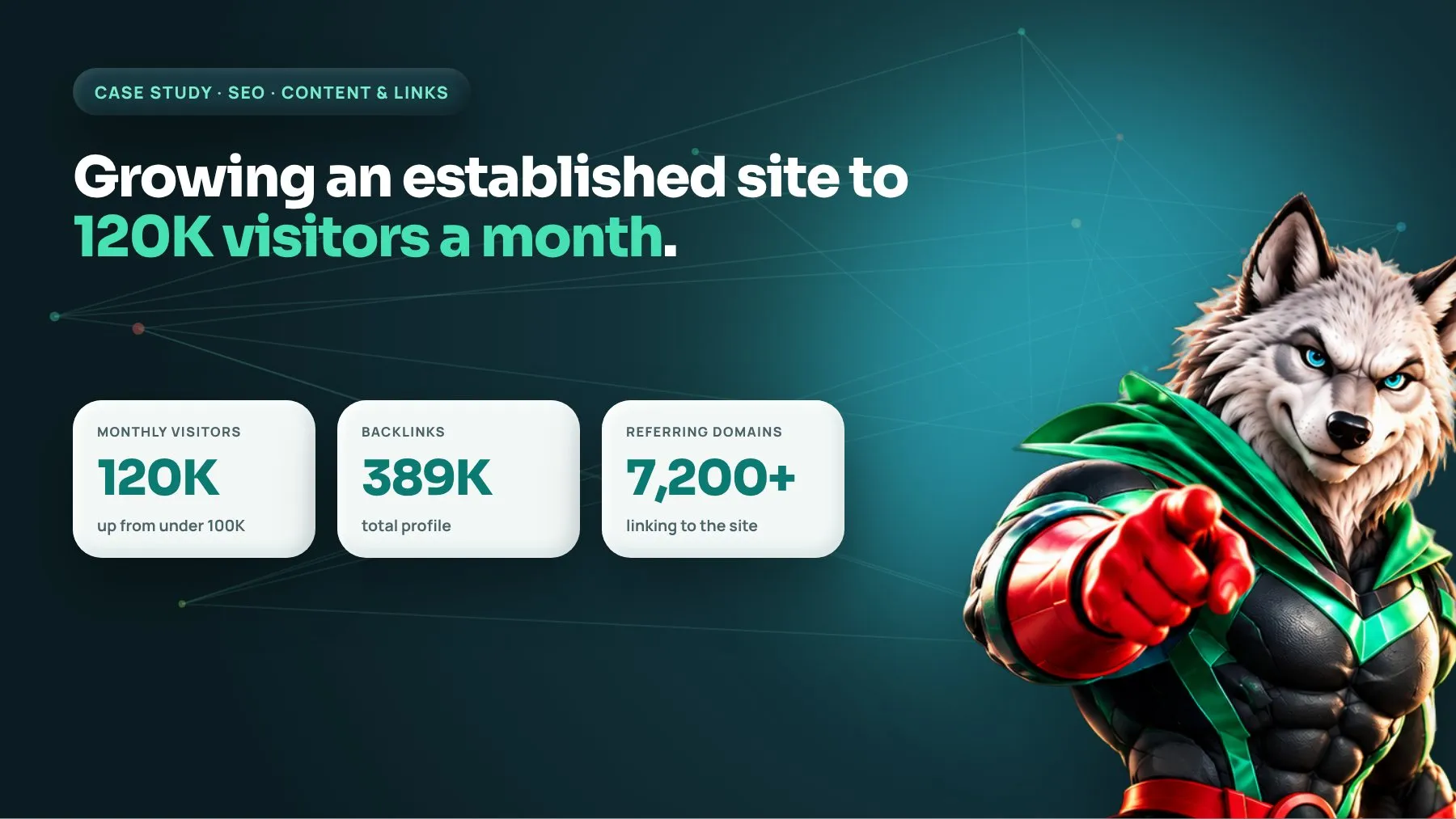
Growing a small website is one thing. Growing one that already attracts close to 100,000 visitors a month is harder, because the easy wins are gone and the remaining keywords are competitive. This client came to us with exactly that situation. Through a combined technical, content and off-page strategy, we took its organic traffic to 120K a month and built a backlink profile of 389K backlinks from over 7,200 referring domains.
At a glance
- Client: Established website with strong existing traffic
- Service: SEO (link audit, on-page, keyword research, content and outreach)
- Key results: Monthly organic traffic grown from a little under 100K to 120K; 389K backlinks from 7,200+ referring domains
The challenge: taking an established site to the next level
Our goal was to grow the client’s traffic through organic search and help it rank for more competitive keywords. When we started, monthly traffic was a little less than 100K. That is a healthy number, but the client wanted more, and growth at that level is a different problem.
Established sites tend to plateau for predictable reasons. Older content goes out of date and slips down the rankings. Link profiles built up over years contain weak or harmful links. Pages compete with each other for the same terms. And the keywords left to win are the ones competitors are also fighting for. Adding more of the same content rarely breaks the plateau. A structured strategy does.
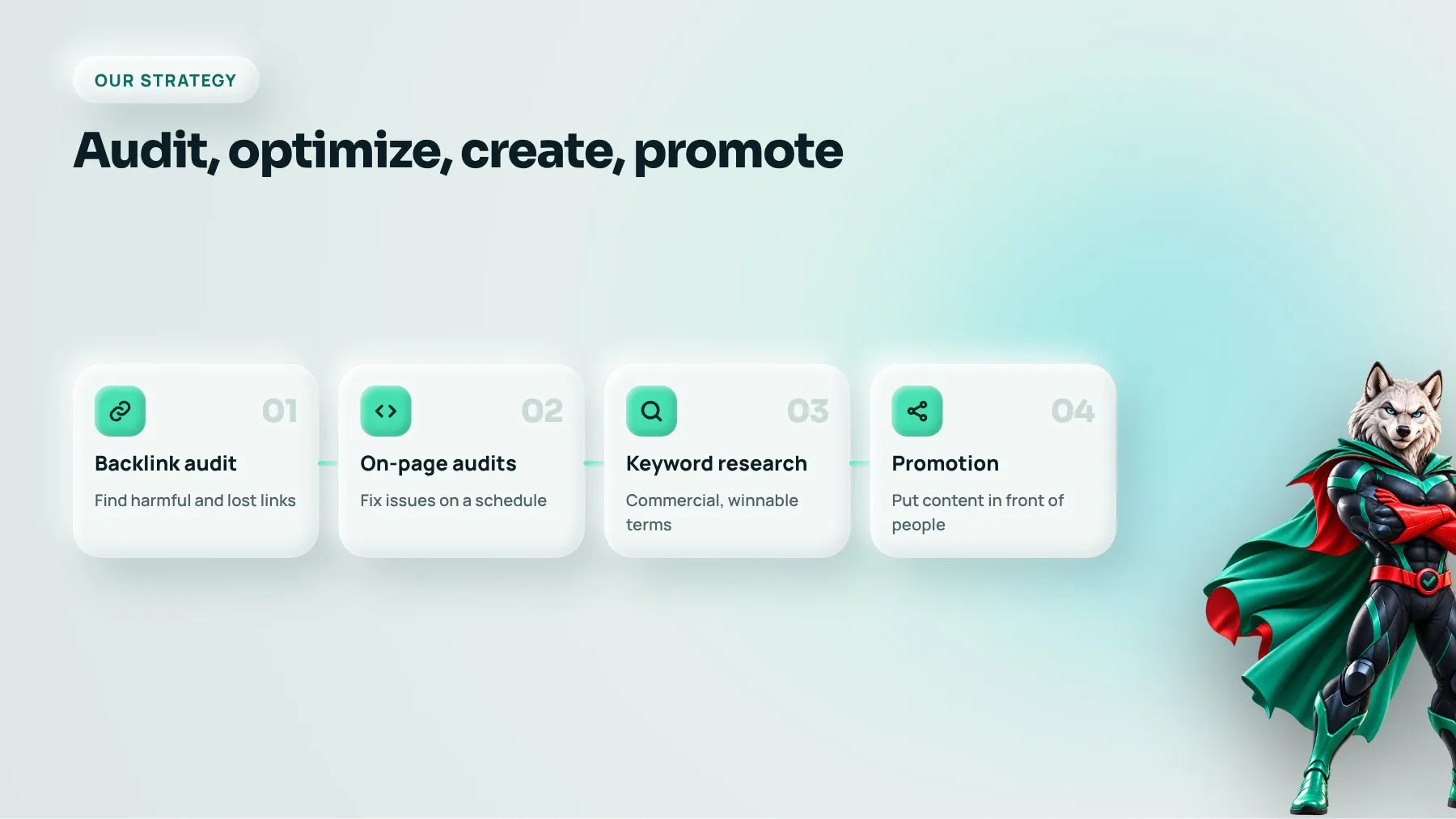
Our strategy: audit, optimize, create, promote
We planned a new SEO strategy around extensive keyword research, on-page optimization, strong content planning and off-page work. We used Semrush throughout for auditing and analysis.
Step 1: Backlink audit
The first thing we checked was the client’s backlinks. The site had links from a few thousand domains, which meant a thorough audit was essential. In a profile that large, there is a real chance that some links are low quality or manipulative and are hurting the site.
We took a snapshot of the backlink profile and reviewed it for:
- Links from spammy, irrelevant or obviously paid sources.
- Unnatural anchor text patterns.
- Lost links from valuable sites that could be reclaimed.
Spotting the harmful links mattered. Cleaning up the profile protects a site from algorithmic devaluation and makes the value of good links count.
Step 2: On-page optimization and regular audits
Even the best content will not rank well if it is not optimized. We ran regular on-page SEO audits to see where the site stood and fix issues as they appeared, including:
- Missing, duplicate or weak title tags and meta descriptions.
- Heading structure that did not reflect the page topic.
- Broken links, redirect chains and orphaned pages.
- Thin pages and pages competing for the same keyword.
On a large site, these issues reappear as new content is published, which is why we audited on a schedule rather than once.
Step 3: Keyword research and competitor analysis
To improve rankings, we needed to target the right set of keywords.
Keyword research. Before writing any post, we researched keywords carefully. We looked for terms with good search volume, high cost per click and low competition. A high cost per click is a useful sign that a keyword has commercial value, because advertisers are willing to pay for it. Low competition made those terms realistic to rank for.
Competitor analysis. We also studied the SEO strategies of the client’s direct competitors: which keywords they ranked for, what content earned those rankings and where they had gaps. This showed us how well competitors ranked for our target keywords and where the client could win.
Step 4: Content planning and publishing
Content was central to the strategy.
Strategic content creation. We developed ideas for blog posts and infographics based on the selected keywords. The aim was content good enough to outrank the existing results and attract backlinks naturally.
User-intent-focused content. Each piece was written to match what the searcher actually wanted, whether that was a definition, a step-by-step guide, a comparison or a list of options. Matching intent kept readers on the page longer and gave Google clear signals that the content answered the query.
Content upgrades. We updated existing content to make it relevant to the present day, with new information, strategies and examples. We tracked every upgrade in one place so nothing was missed and results could be measured. On an established site, refreshing pages that already have authority is often the fastest route to growth.
Internal links. We added internal links throughout the site. They help new content get discovered and indexed quickly, keep visitors on the site for longer and pass authority from strong pages to the ones that need it.
Step 5: Brand mentions and link acquisition
Next we focused on off-page SEO: earning more brand mentions and backlinks. We also put real effort into branded links, which serve two purposes at once. They improve SEO, and they build awareness of the brand itself.
Step 6: Content promotion and distribution
The step most marketers neglect is promotion. Good content does not find its audience on its own. We built a content distribution strategy to put each piece in front of the right people, through outreach, social channels and communities where the audience already spends time. Promotion is also what turns strong content into earned links.
The results: 120K monthly visitors and a stronger link profile
- Monthly organic traffic grew to 120K, from a little under 100K.
- The backlink profile grew to 389K backlinks from over 7,200 referring domains.
- Most of these links were dofollow, which strengthened the site’s off-page SEO.
For a site that was already large, moving from just under 100K to 120K monthly visitors is significant. It means more readers, more leads and more authority, which in turn makes the next round of growth easier.
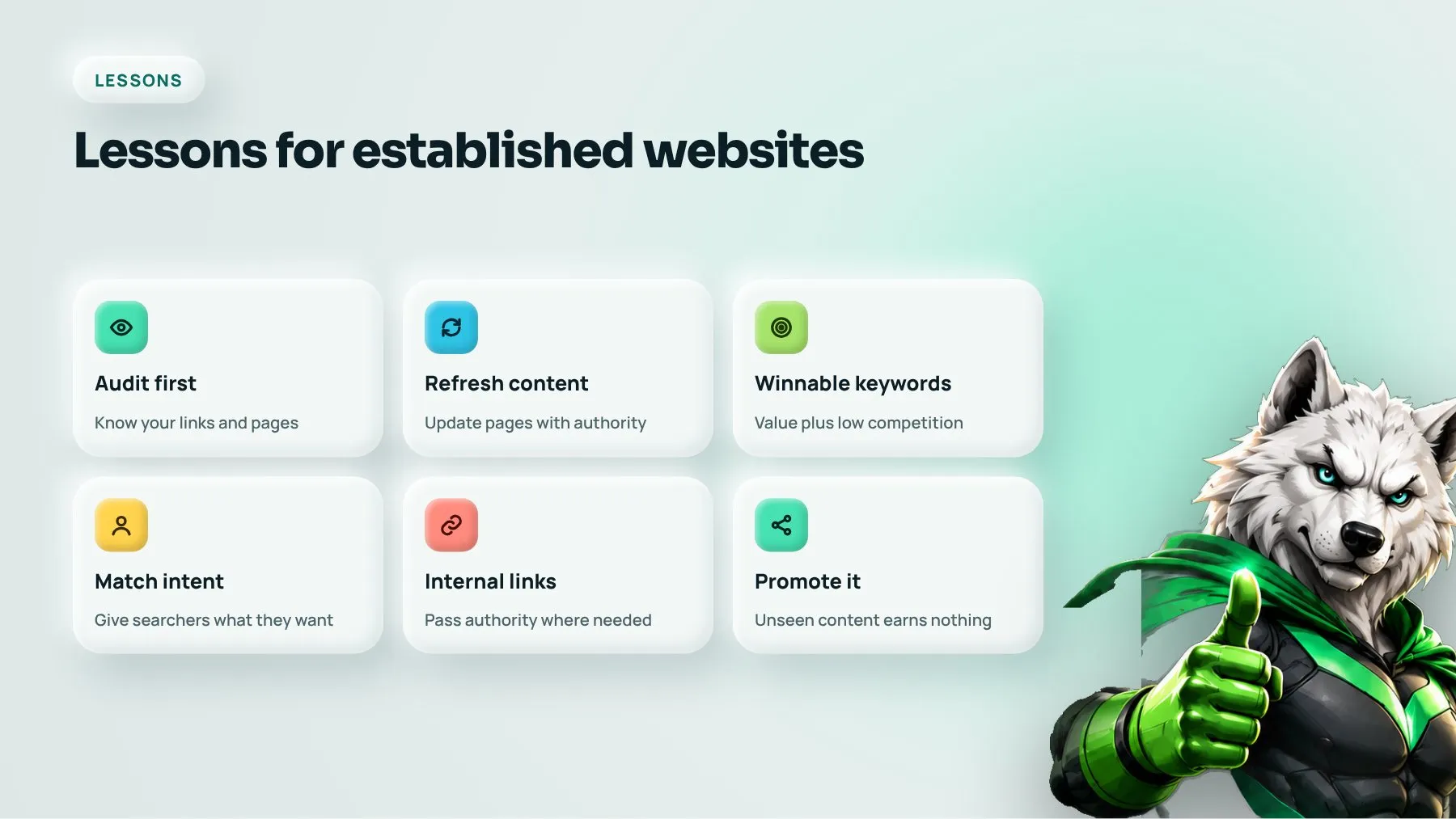
Lessons for established websites
1. Audit before you build
Understand your current links and on-page health before adding more of anything.
2. Refresh what already ranks
Updating existing content with authority is often faster than publishing new pages.
3. Pick keywords with commercial value you can realistically win
Cost per click is a useful proxy for value; competition tells you what is achievable.
4. Promotion is part of SEO
Content that nobody sees does not earn links or rankings.
How to apply this to your website
- Export your backlink profile and review it for harmful or lost links.
- Schedule on-page audits monthly, not once a year.
- List your top 20 pages by past traffic and plan updates for any that have declined.
- Add internal links from strong pages to the pages you want to rank.
- Plan a promotion route for every new piece before you publish it.
FAQ
Why does traffic plateau on large websites?
Content ages, competitors catch up and internal issues build up over time. Breaking a plateau usually means auditing and refreshing existing assets, not just publishing more.
Should we remove bad backlinks?
Most low-quality links are simply ignored by Google. A disavow file is worth considering when there are clearly manipulative links, especially if you have had a manual action or a past link-buying history.
How often should content be updated?
Review important pages at least once or twice a year, and sooner for topics that change quickly. Prioritize pages that are losing traffic or rankings.
Ready to take your site to the next level? See our SEO services, explore generative engine optimization or book a strategy call.