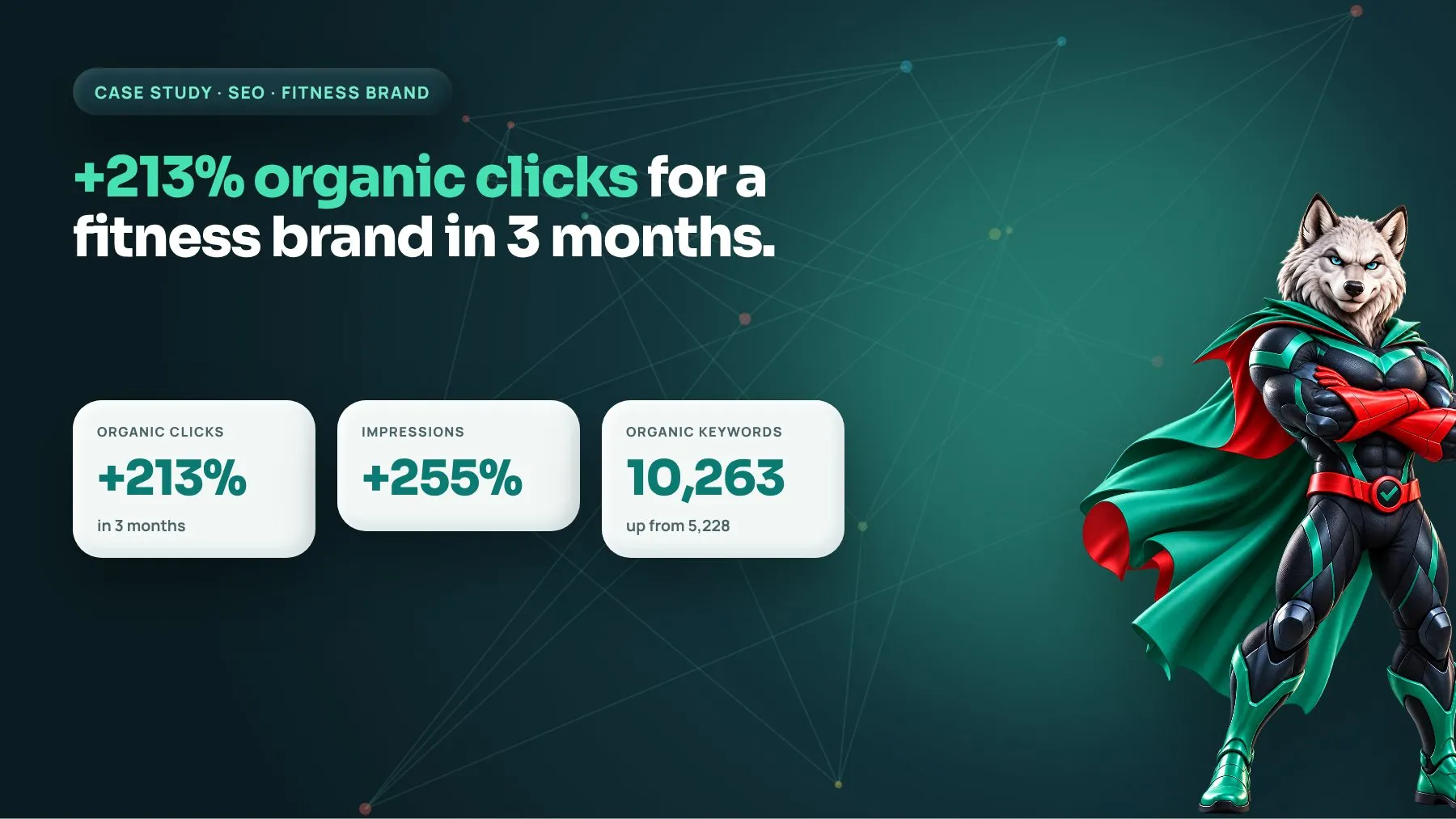
Our client is a fitness brand that serves customers both online and offline, covering workouts, mental wellness, healthcare, nutrition and medical care. In three months, a combination of new blog content, technical clean-up and smarter internal linking grew organic clicks by 213% and nearly doubled the number of keywords the site ranks for, from 5,228 to 10,263.
At a glance
- Client: Fitness brand with online and offline services (workouts, mental wellness, healthcare, nutrition, medical care)
- Service: SEO and content marketing
- Timeframe: 3 months
- Key results: Organic clicks +213%; impressions +255%; organic sessions +177%; new users +213%; organic keywords from 5,228 to 10,263 (+96.31%); keyword coverage +154%
The challenge: low visibility in a crowded health and fitness niche
Fitness and wellness is one of the most competitive spaces in search. Large publishers, app companies, gyms and influencers all produce content on the same topics, and health-related searches are held to a higher standard by Google because the advice can affect people’s wellbeing. To compete, a site needs both technical health and content that clearly demonstrates expertise.
The client was struggling on three fronts:
- Low visibility and rankings for the searches their customers were making.
- Difficulty growing traffic in a niche where competitors publish constantly.
- Low overall website traffic, which limited how many people discovered their programs and services.
For a brand selling programs and services, organic search is a long-term customer acquisition channel. Every person who finds a helpful article on nutrition or mental wellness is a potential member or client who did not cost a click. Weak visibility meant relying more heavily on paid channels.
The objectives we agreed were to increase organic clicks, improve rankings, increase keyword coverage, and grow sessions and new users.
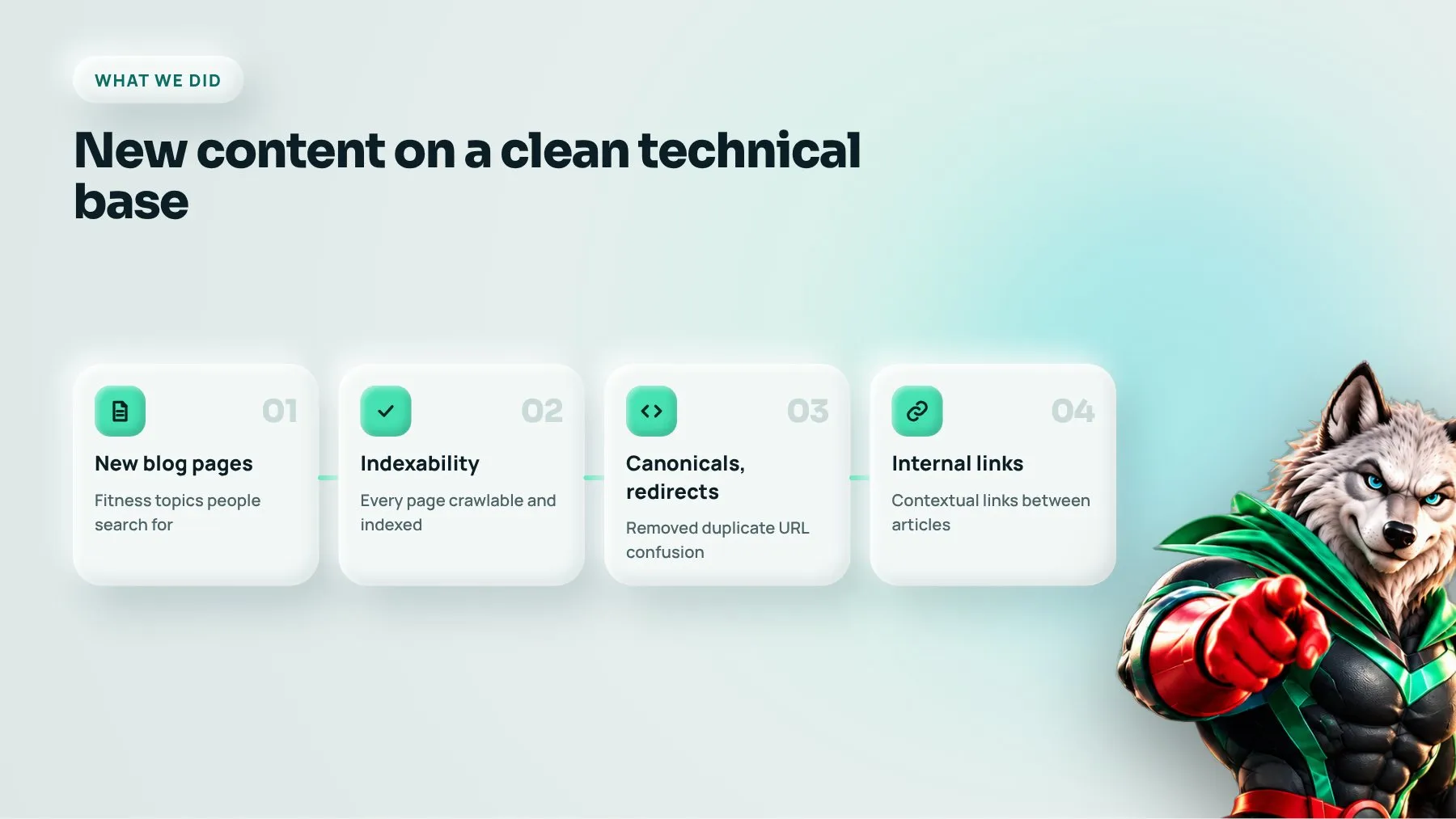
What we did: new content on a technically clean foundation
Our solution combined content growth with a series of technical fixes. Publishing more content on a site with indexing and linking problems wastes effort, so we did both together.
Creating new blog pages
We identified topics across the brand’s areas (workouts, wellness, nutrition and health) where people were searching and where the site had no good answer. Each new blog page targeted a clear search intent with a focused primary topic, useful structure and practical advice. Because this is a health-related niche, content was written to show genuine expertise: clear explanations, accurate claims and no exaggerated promises.
Checking indexability
A page that is not indexed cannot rank. We reviewed which pages Google had and had not indexed, and looked for the usual culprits: stray noindex tags, robots.txt rules blocking important sections, pages missing from the XML sitemap, and orphan pages with no internal links pointing to them. Fixing these makes sure new and existing content can actually be found.
Fixing broken links
Broken internal links waste crawl attention and frustrate readers. We crawled the site, found links pointing to missing pages, and either updated them to the right destination or removed them.
301 redirection
Where old URLs had been removed or replaced, we set up permanent 301 redirects to the most relevant live page. This keeps any authority those URLs earned and sends visitors somewhere useful instead of an error page.
Self-canonicalization
Blogs often generate duplicate versions of the same page through tracking parameters, category paths or pagination. We added self-referencing canonical tags so each page tells Google, “this is the original version of me.” It is a small fix that removes a lot of ambiguity about which URL should rank.
Optimizing titles and meta descriptions
Title tags and meta descriptions are what searchers see in the results. We rewrote them to include the main keyword naturally, match the intent of the search, and give a clear reason to click. Better titles improve rankings and click-through rate at the same time.
Contextual links and other internal links
Finally, we strengthened internal linking. Contextual links sit within the body of an article and point to related content using descriptive anchor text, for example linking from a nutrition guide to a related article on meal planning. We also improved other internal links in navigation and related-post areas. Good internal linking helps Google discover new pages faster, understand how topics relate, and pass authority from strong pages to newer ones.
The results: 213% more organic clicks in 3 months
- Organic clicks increased by 213%
- Impressions improved by 255%
- Organic sessions increased by 177%
- New users increased by 213%
- Organic keywords improved from 5,228 to 10,263, an increase of 96.31%
- Keyword coverage increased by 154%
These numbers tell a connected story. Impressions grew fastest because the site was appearing in many more searches; the jump in ranking keywords from 5,228 to 10,263 shows where those new appearances came from. Clicks and new users followed, meaning the extra visibility was turning into real visitors, most of them people who had not found the brand before. For a business that sells memberships and services, new users from organic search are new prospects reached without paying per click.
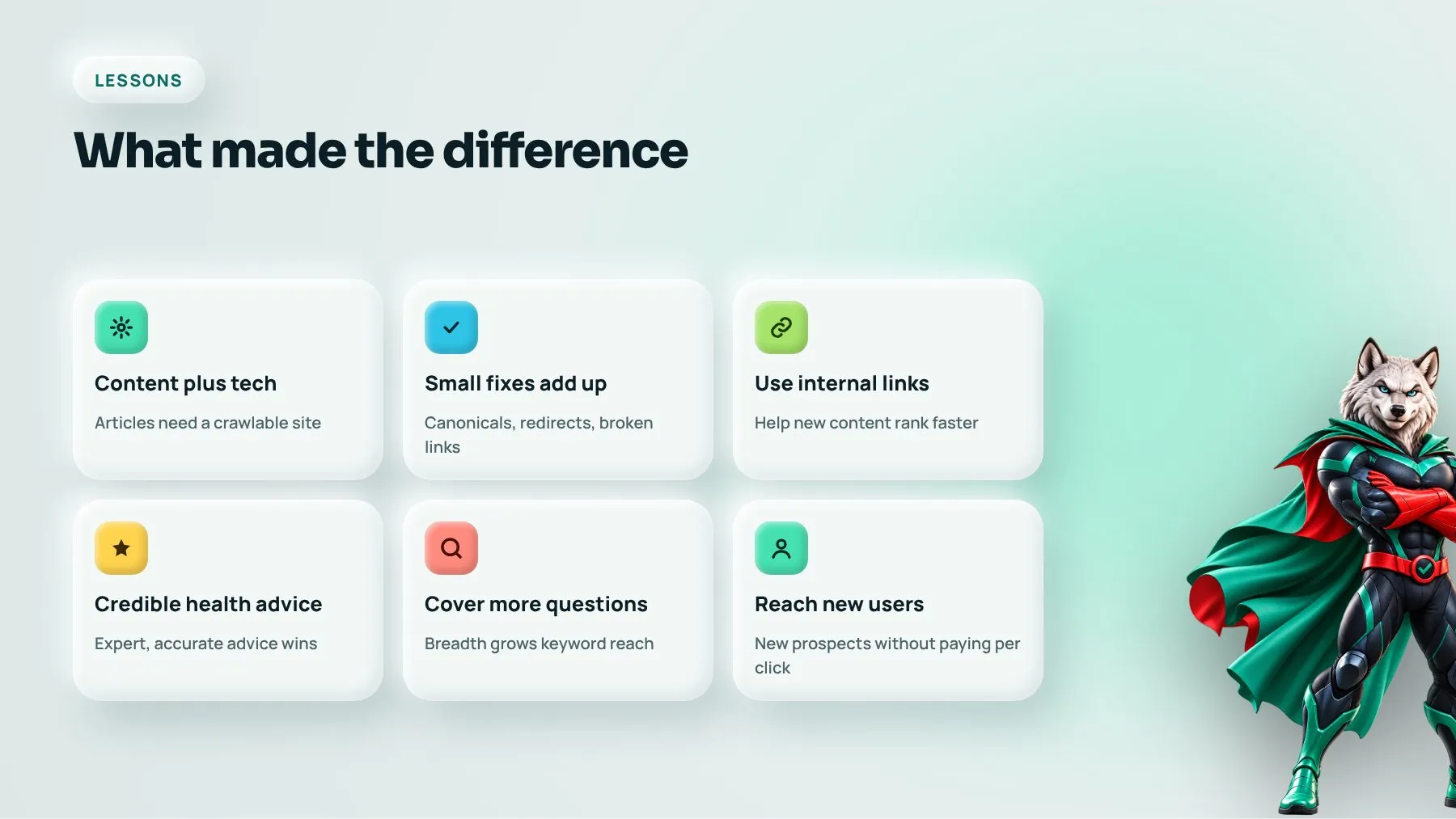
What made the difference: lessons for fitness and wellness brands
- Content and technical SEO work best together. New articles only pay off when they can be crawled, indexed and linked.
- Small fixes add up. Canonicals, redirects and broken links are not glamorous, but they remove friction that holds back the whole site.
- Internal links are an underused lever. Linking related articles helps new content rank faster.
- Health content needs credibility. Accurate, expert-led advice matters more in this niche than in most.
- Breadth builds traffic. Covering more of the questions your audience asks increases the number of searches you can appear for.
How to apply this to your business
- Check Google Search Console for pages that are excluded from the index and find out why.
- Crawl your site and fix broken internal links.
- Add self-referencing canonical tags to every indexable page.
- Rewrite titles and meta descriptions on your most-viewed pages.
- List the questions your customers ask and plan articles that answer them.
- Link every new article to and from at least a few related pages.
FAQ
How quickly can a blog see results from SEO?
Technical fixes and better titles can show an effect within weeks, as this three-month result shows. New content usually takes longer to reach its full potential, often three to six months or more depending on competition.
Is blogging still worth it for fitness brands with AI search?
Yes, if the content is genuinely useful. AI answers and search features draw on trustworthy, well-structured pages, so expert content can earn visibility in AI Overviews as well as standard results.
How many blog posts do we need to publish?
There is no magic number. Quality and topical coverage matter more than volume: aim to answer your audience’s main questions thoroughly, then keep filling gaps.
Want your content to bring in new customers? See our SEO services, explore more case studies, or book a strategy call.