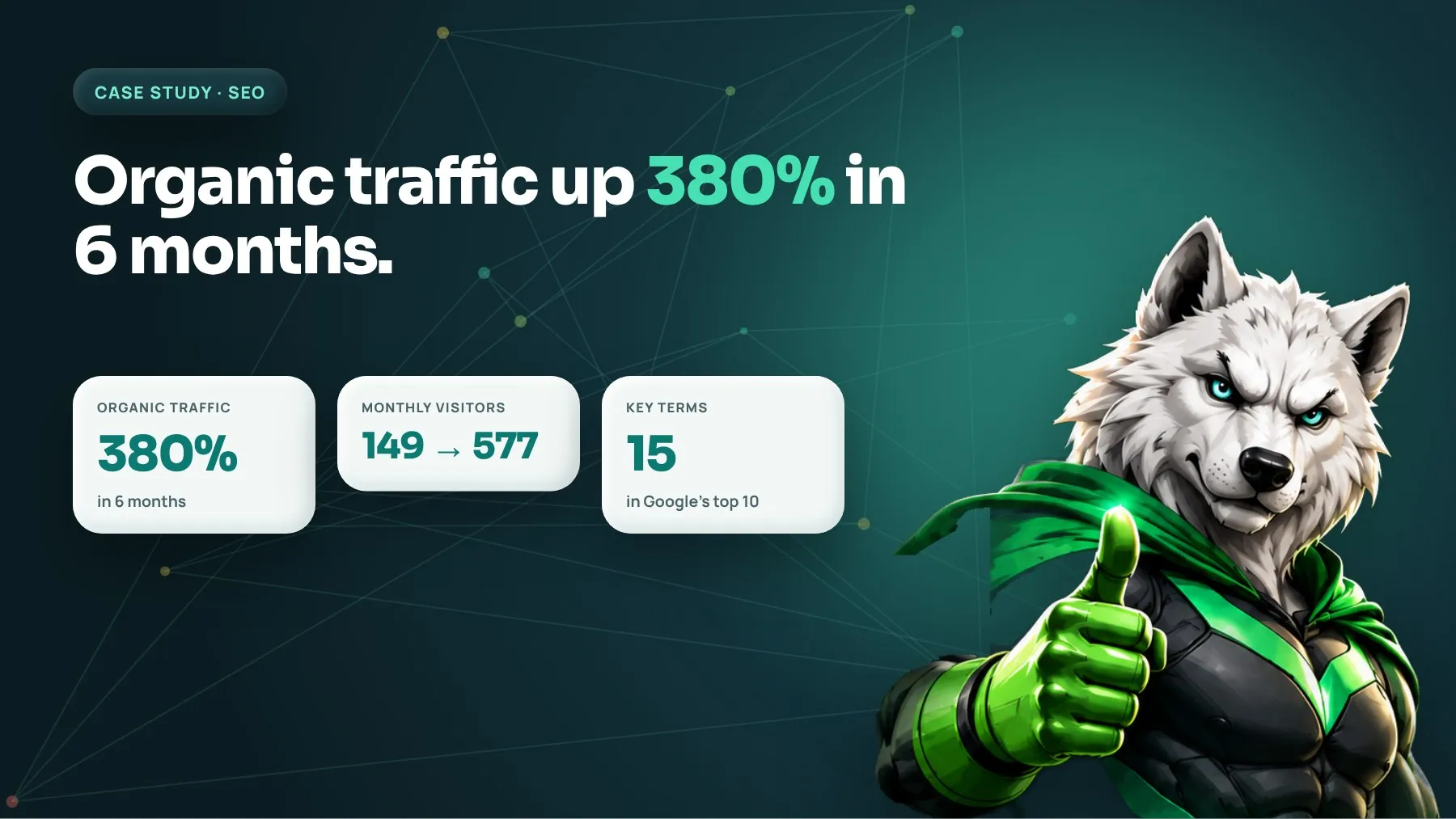
Before working with us, this client’s website was not performing as expected: its key terms were nowhere near the first page of Google, and duplicate content was dragging rankings down. In six months, focused keyword research, valuable blog content and a clean-up of on-site content took organic traffic up by almost 380%, from 149 to almost 577 monthly visitors, with 15 key terms ranking in Google’s top 10.
At a glance
- Client: Business whose key terms were not ranking on page one of Google
- Service: SEO (keyword research, content and on-page optimization)
- Timeframe: 6 months
- Key results: Organic traffic up almost 380%; from 149 to almost 577 monthly visitors; 15 key terms in Google’s top 10
The challenge: invisible on page one, held back by duplicate content
The client’s ambition was clear. They wanted to be seen above the fold in organic results and to dominate the first three positions in Google for the terms that describe their business. At the start, none of their key terms were ranking on the first page.
That gap matters commercially. Most searchers never go past the first page, and the top few results take a large share of the clicks. A business on page two or three is effectively invisible to people who are actively looking for what it sells, so it either loses those customers to competitors or has to pay for every visit through ads.
Two problems stood in the way:
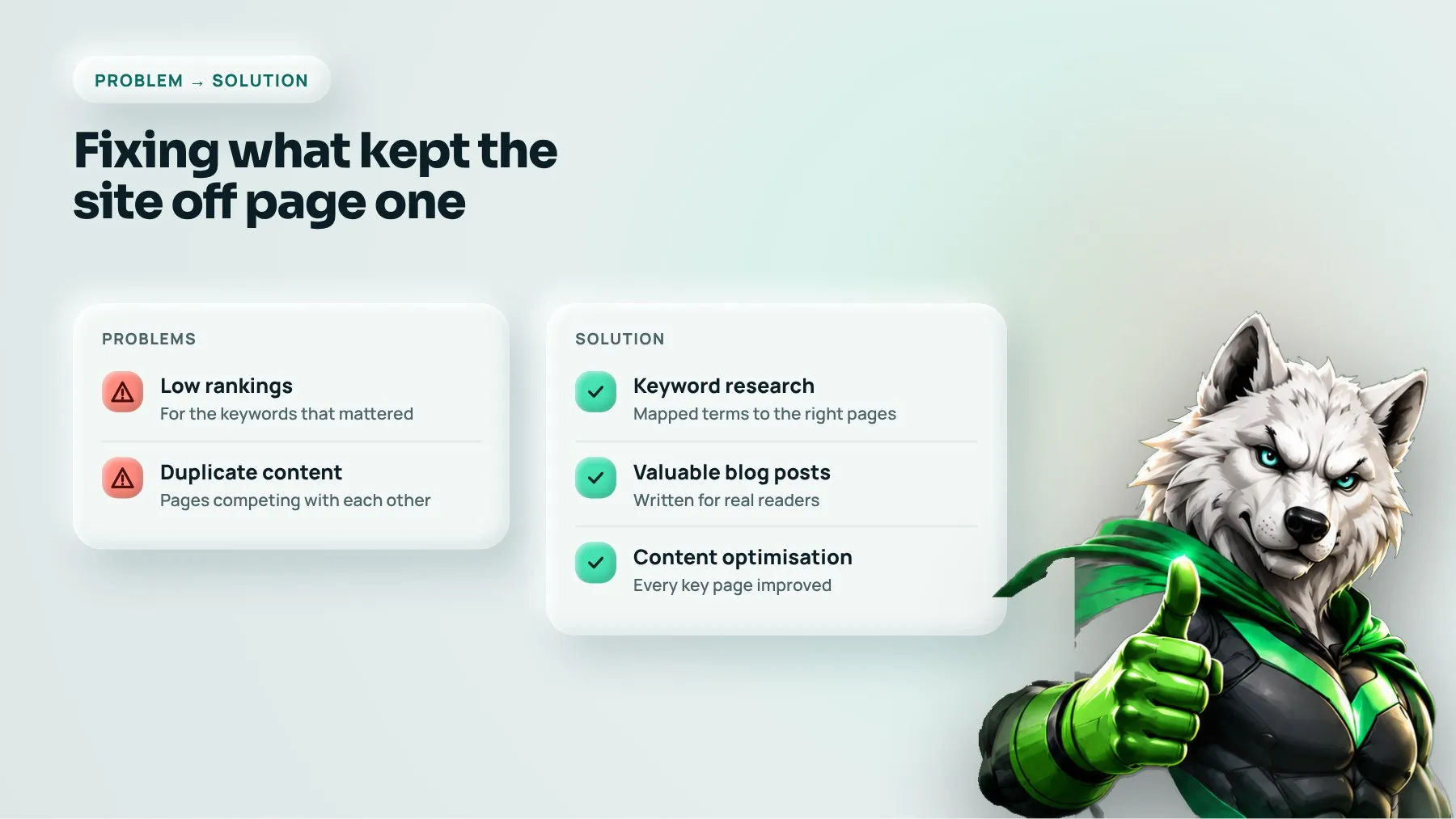
- Low rankings for the keywords that matter. The site was not clearly targeting the searches its customers made.
- Duplicate content. Several pages carried the same or very similar text. When that happens, Google has to guess which version to show, often shows none of them well, and the site’s authority is split across competing pages.
What we did: research, valuable content and a content clean-up
The solution had three parts. They are simple to list, but each one was done with care.
Keyword research built around buyer intent
We started by finding the terms the client’s customers actually use, then sorting them by intent. Commercial and transactional searches, where someone is close to buying or enquiring, were mapped to service pages. Informational questions, where someone is still learning, were earmarked for blog content.
Each important keyword was assigned to exactly one page. That single decision does a lot of the work against duplicate content, because it stops two pages from chasing the same search and competing with each other (a problem known as keyword cannibalization).
Blog posts that add value for readers
Next, we published blog posts designed to be useful to the client’s audience, not just to carry keywords. Good blog content answers the questions people ask before they buy, demonstrates expertise, and gives other sites a reason to reference it. It also widens the range of searches a site can appear for, bringing in visitors earlier in their decision process.
Each post linked to the relevant service pages, so readers had a clear next step and authority flowed toward the pages that generate business.
Website content optimization and duplicate content fixes
The third part was improving what was already on the site. We reviewed every important page and resolved the duplication: merging pages that covered the same topic, rewriting near-identical copy so each page had a distinct purpose, and making sure the right version was the one Google indexed. Where pages were combined, redirects pointed the old URL to the surviving page.
We then optimized the content itself: title tags and meta descriptions targeting each page’s assigned keyword, clear headings, copy that matched what searchers wanted, and internal links connecting related pages.
The results: from 149 to almost 577 monthly visitors
- Website traffic up by almost 380%
- From 149 monthly visitors to almost 577 monthly visitors
- 15 key terms ranking in the top 10 of Google’s results
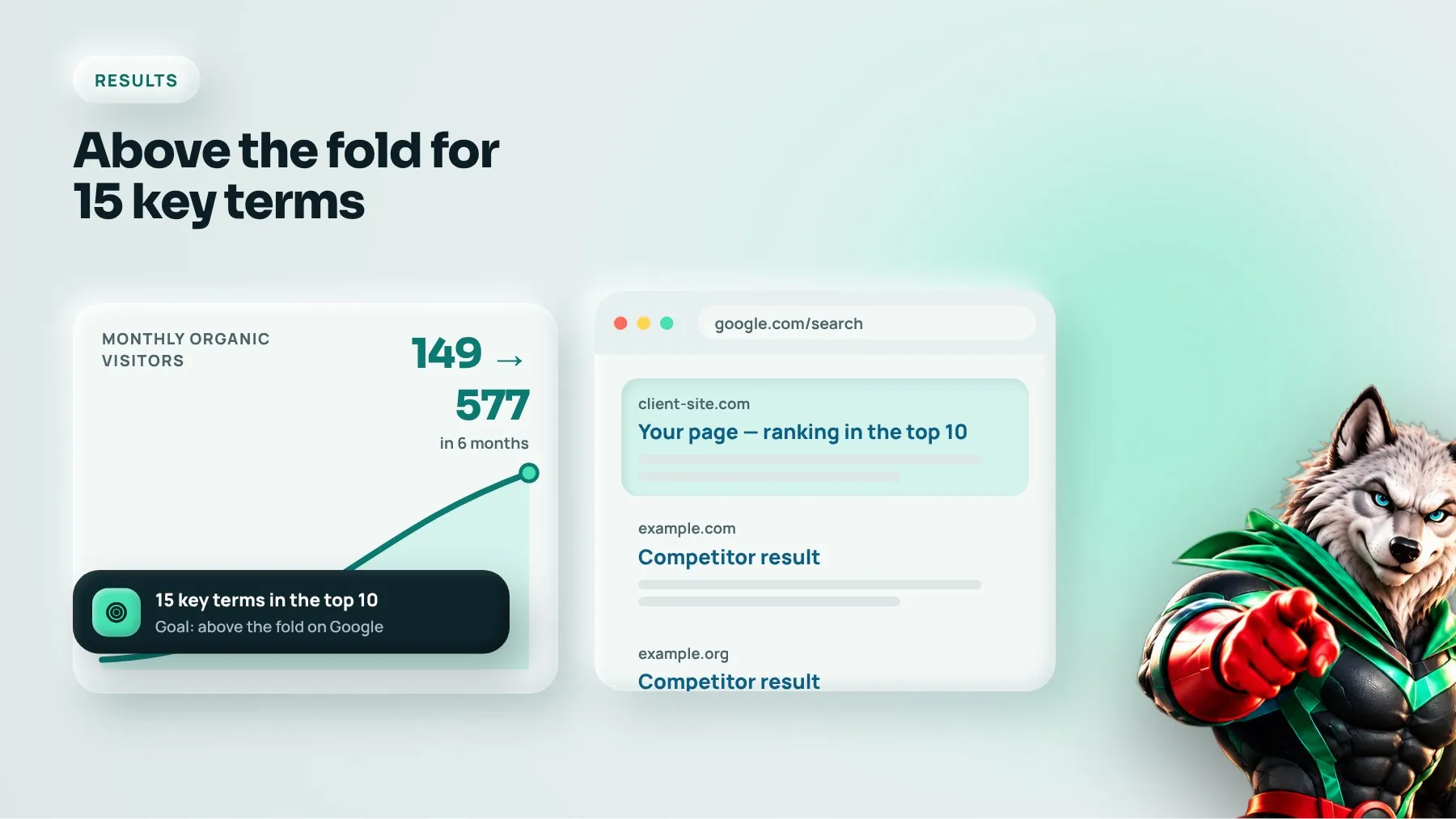
The visitor numbers may look modest in absolute terms, but they represent close to four times the starting traffic in six months, and they come from people searching for what the business offers. For many specialist and service businesses, a few hundred well-targeted visitors a month is enough to produce a steady flow of enquiries.
The ranking result matters just as much. Moving from no first-page rankings to 15 key terms in the top 10 means the business now appears where its customers are looking, and it creates the platform for pushing those terms into the top three positions the client wanted.
What made the difference: lessons for growing businesses
- Fix duplicate content early. It quietly suppresses rankings, and resolving it can unlock gains from work you have already done.
- One keyword, one page. Clear keyword mapping prevents your own pages from competing with each other.
- Content should serve readers first. Helpful blog posts earn rankings, links and trust that thin, keyword-stuffed posts never do.
- Connect content to commercial pages. Internal links turn blog readers into enquiries.
- Targeted traffic beats big numbers. A few hundred of the right visitors can be worth more than thousands of the wrong ones.
How to apply this to your business
- List your most important keywords and check which page ranks for each one.
- Look for pages with very similar content and merge or rewrite them.
- Map every target keyword to a single page.
- Plan blog posts around the questions customers ask before buying.
- Link each blog post to the relevant service page.
- Track rankings and organic visitors monthly so you can see the trend.
FAQ
How long does SEO take to show results?
Most businesses start to see movement within three to six months, as this case shows, with stronger results building over the following months. Competition, site history and the amount of work needed all affect the timeline.
How do I know if my website has duplicate content?
Crawling tools and Google Search Console can flag duplicate titles and pages. A simple check is to search Google for a sentence from your site in quotes and see how many of your own pages appear.
Do I need a blog to rank on Google?
Not always, but it helps most businesses. A blog lets you answer the questions customers search for, which widens your visibility and supports your main service pages.
Want your key terms on page one? See our SEO services, browse more case studies, or book a strategy call.