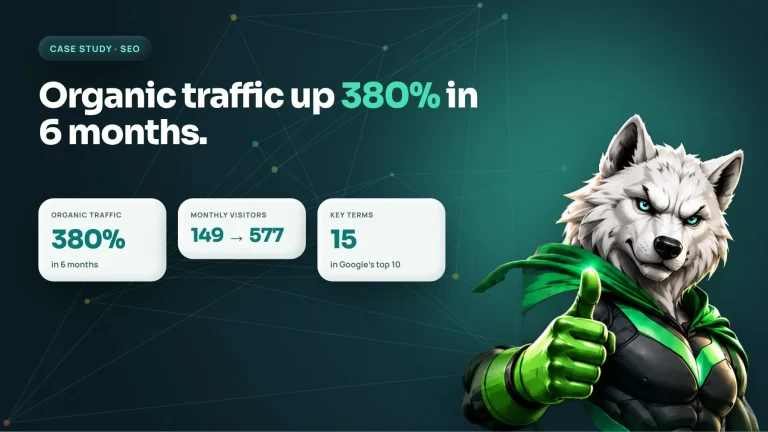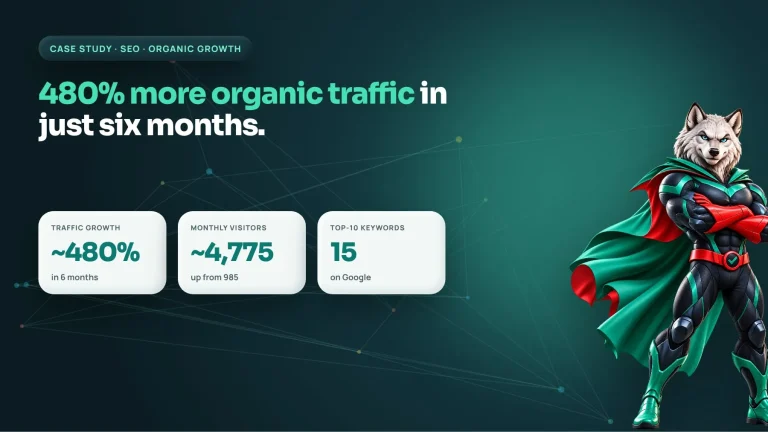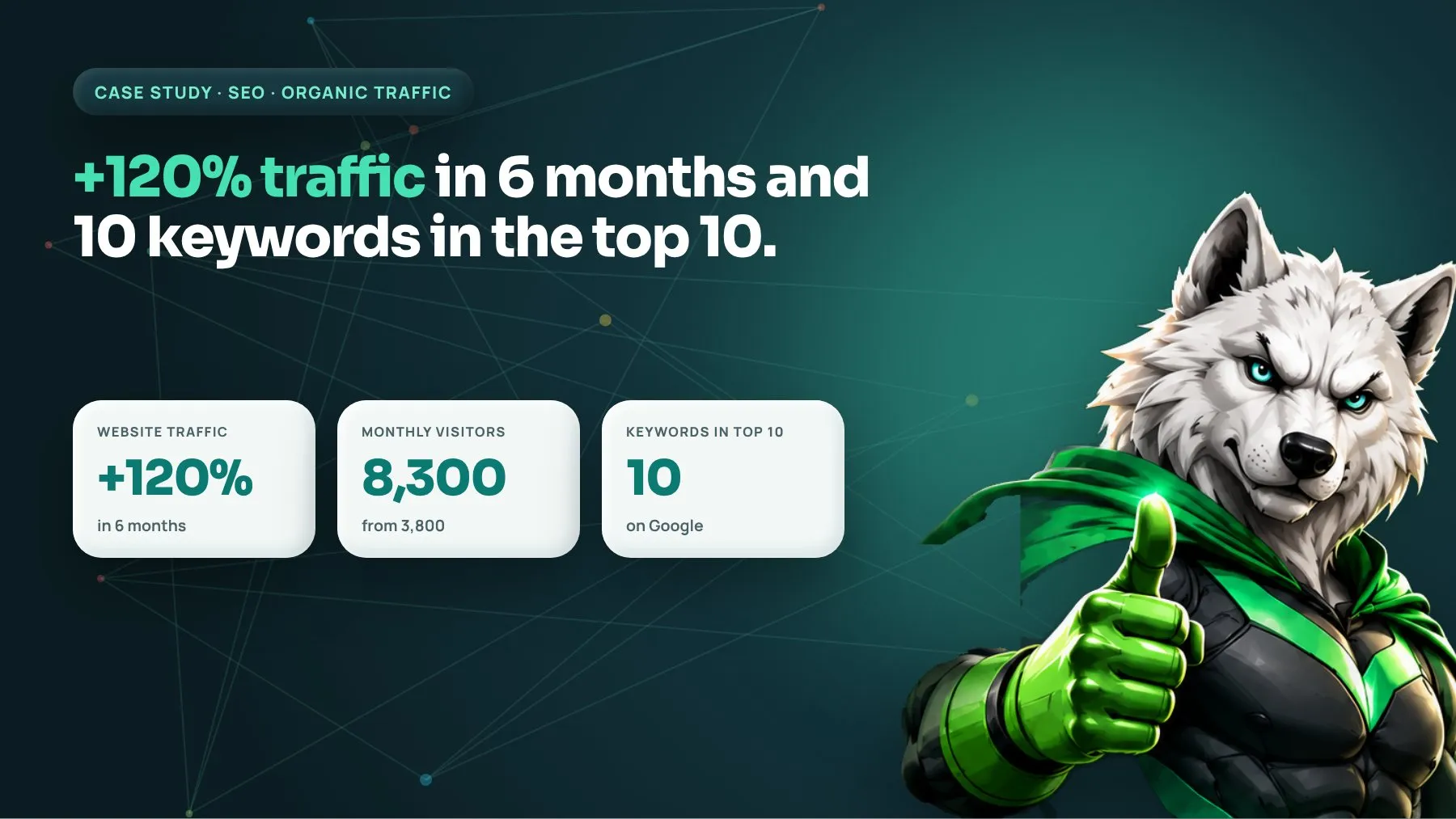
This client’s website was not pulling its weight. Its most important search terms were missing from the first page of Google, the site was slow, and traffic was well below what the business needed. Within six months of working with us, monthly visitors grew by almost 120%, from 3,800 to almost 8,300, and 10 key terms were ranking in Google’s top 10.
At a glance
- Client: Business website with underperforming organic search
- Service: SEO (keyword research and website content optimization)
- Timeframe: 6 months
- Key results: traffic up almost 120%, from 3,800 to almost 8,300 monthly visitors; 10 keywords ranking in the top 10
The challenge: invisible for the searches that matter
Before approaching us, the client’s website traffic was not performing as expected. The key terms for its business were not ranking on the first page of Google, and the client wanted to be above the fold in organic results and to compete for the first three positions.
The audit showed four connected problems:
- Low rankings for most target keywords
- No top 10 positions for the terms most relevant to the business
- Google page speed issues
- Long load times
Why it matters commercially: the large majority of clicks go to results on the first page, and the top few positions take the biggest share. A business ranking on page two for its core services is, in practical terms, invisible to most buyers. Slow pages compound the problem. Speed is part of how Google assesses page experience, and visitors who wait too long leave before they read anything, which wastes the traffic you do earn.
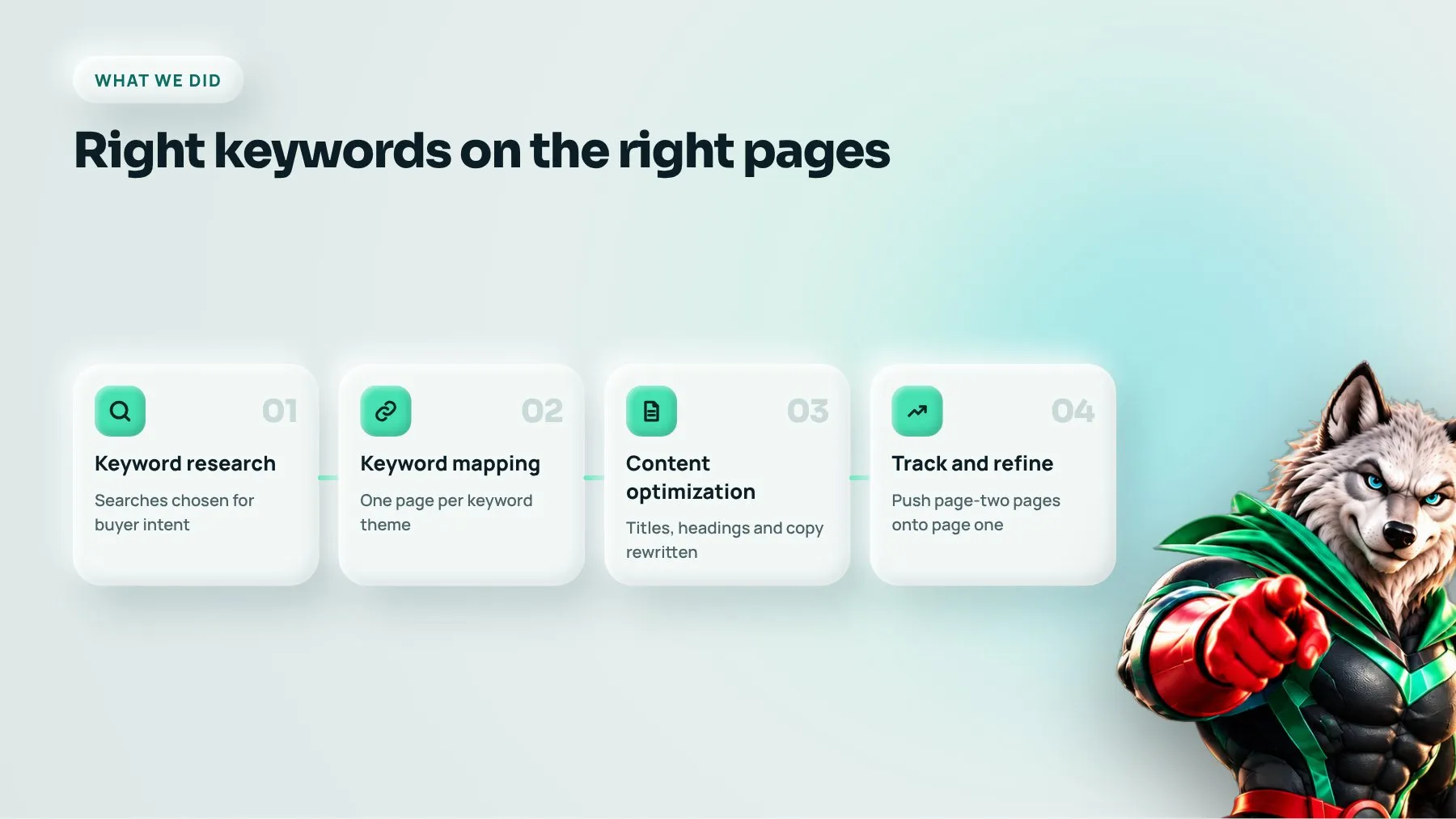
What we did: the right keywords on the right pages
The solution focused on two areas: keyword research and website content optimization. Both sound basic, but done properly they are where most sites leave the most opportunity on the table.
Keyword research grounded in buyer intent
We started by finding the searches the client’s customers actually use, not the terms the business uses internally. That meant looking at search volume, ranking difficulty and, most importantly, intent. A keyword is only worth chasing if the person searching it is likely to become a customer.
We grouped keywords into themes and mapped each theme to a single page on the site. This avoids keyword cannibalization, where several pages compete for the same term and none ranks well. Where a valuable theme had no suitable page, we flagged it for new content. We also looked at what was already ranking on page one for each target term, to understand what Google considered the best answer and how far the client’s pages were from it.
Website content optimization, page by page
With the keyword map in place, we optimized the content of each target page:
- Title tags and meta descriptions rewritten to include the primary keyword naturally and to earn the click from the results page.
- Headings restructured so each page has one clear H1 and logical subheadings that cover the questions searchers ask.
- Body copy expanded and sharpened to answer the query fully, cover related terms, and give buyers the detail they need to act.
- Internal links added between related pages with descriptive anchor text, so authority flows to the pages that need to rank and visitors can find the next step.
- Page experience improved alongside the content work, because the page speed and load-time issues identified in the audit undermine both rankings and conversions.
Measuring and iterating
SEO is not a one-off edit. We tracked rankings for the target terms and traffic in analytics, and refined pages that moved toward page one but stalled. Pages that climbed into positions 11–20 were often the quickest wins, because a modest improvement in relevance can push them onto page one.
The results
- Traffic up almost 120%, from 3,800 monthly visitors to almost 8,300 monthly visitors
- Top 10 rankings in Google’s search results
- 10 keywords ranking in the top 10
What this means for the business: more than doubling monthly visitors in six months gives the client a much larger pool of potential customers every month, without paying for each click. Because the growth came from keywords chosen for intent, this is traffic from people looking for what the business offers. And with 10 key terms now on page one, the client has a foundation to push for the top three positions it originally targeted.
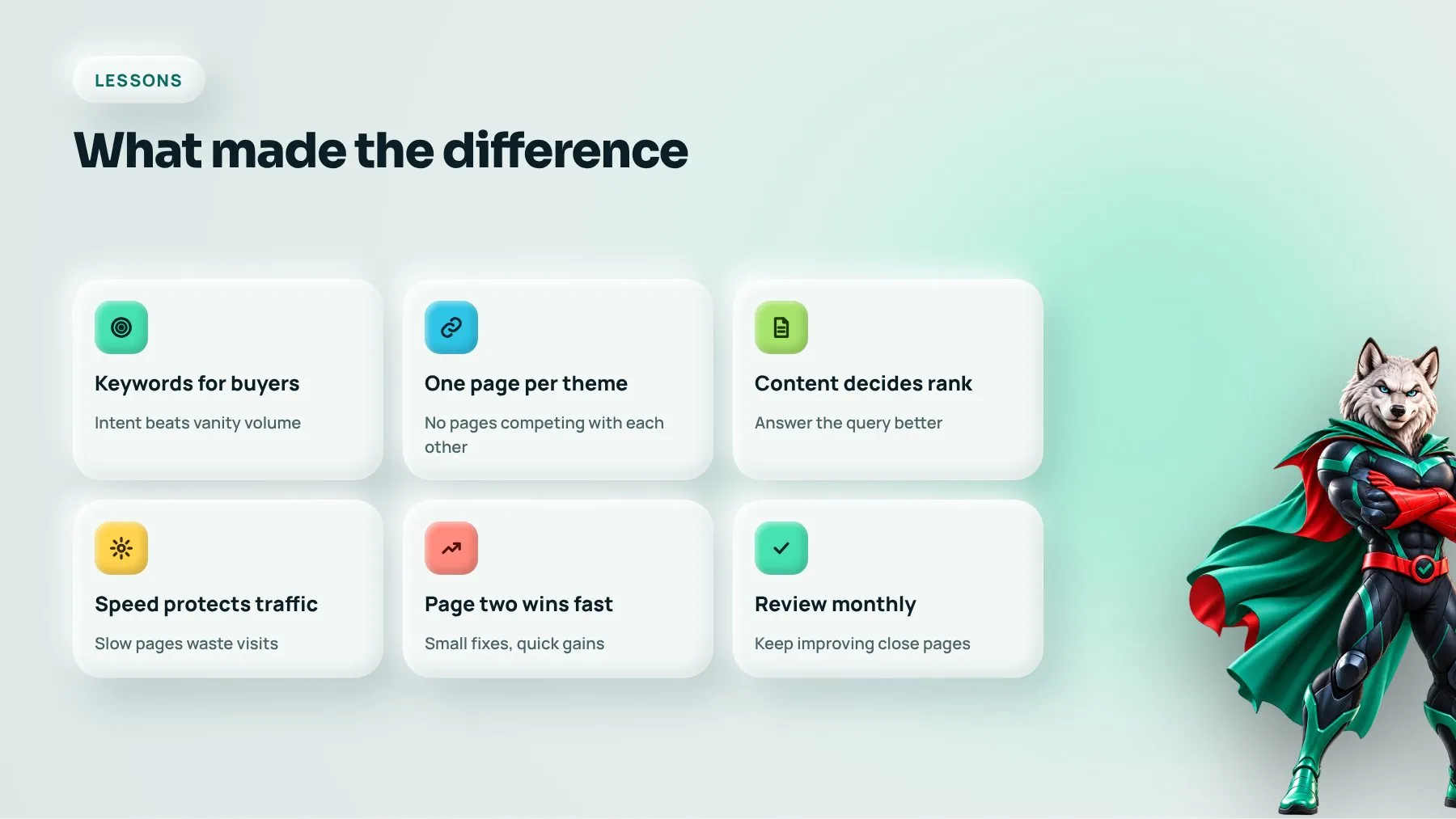
What made the difference: lessons for business owners
- Choose keywords for buyers, not for vanity. High-volume terms with weak intent rarely pay back the effort.
- One page per keyword theme. Clear mapping avoids pages competing with each other and confusing Google.
- Content quality decides rankings. Pages that answer the query better than competitors earn their position.
- Speed and experience protect your traffic. Slow pages waste the visits you have worked to win.
- Pages on page two are your fastest wins. Small improvements there often produce the quickest gains.
How to apply this to your business
- List the 10–20 searches your best customers use to find businesses like yours.
- Check where you rank today for each one in Google Search Console.
- Assign each keyword theme to one page and fix any overlap.
- Rewrite titles, headings and copy to answer the search better than the current top results.
- Test your key pages for speed and mobile performance and fix the biggest issues.
- Review rankings and traffic monthly and keep improving pages that are close to page one.
FAQ
Is a 120% traffic increase in 6 months typical?
It depends on the starting point. Sites with clear on-page and content gaps often see faster gains than sites that are already well optimized. SEO results usually start to show in 3–6 months, and the strongest growth tends to build over 6–12 months.
Do I need new content or can you optimize what I have?
Often both. Existing pages can usually be improved quickly, which is where early wins come from. Where there is no page for a valuable search, new content is the only way to compete.
How do you decide which keywords to target?
We weigh intent, search volume and competition, then prioritize terms where your business is a genuinely strong answer. Commercial intent comes first, because traffic only matters if it can turn into enquiries or sales.
Want your website ranking for the searches your customers use? See our SEO services or book a strategy call.