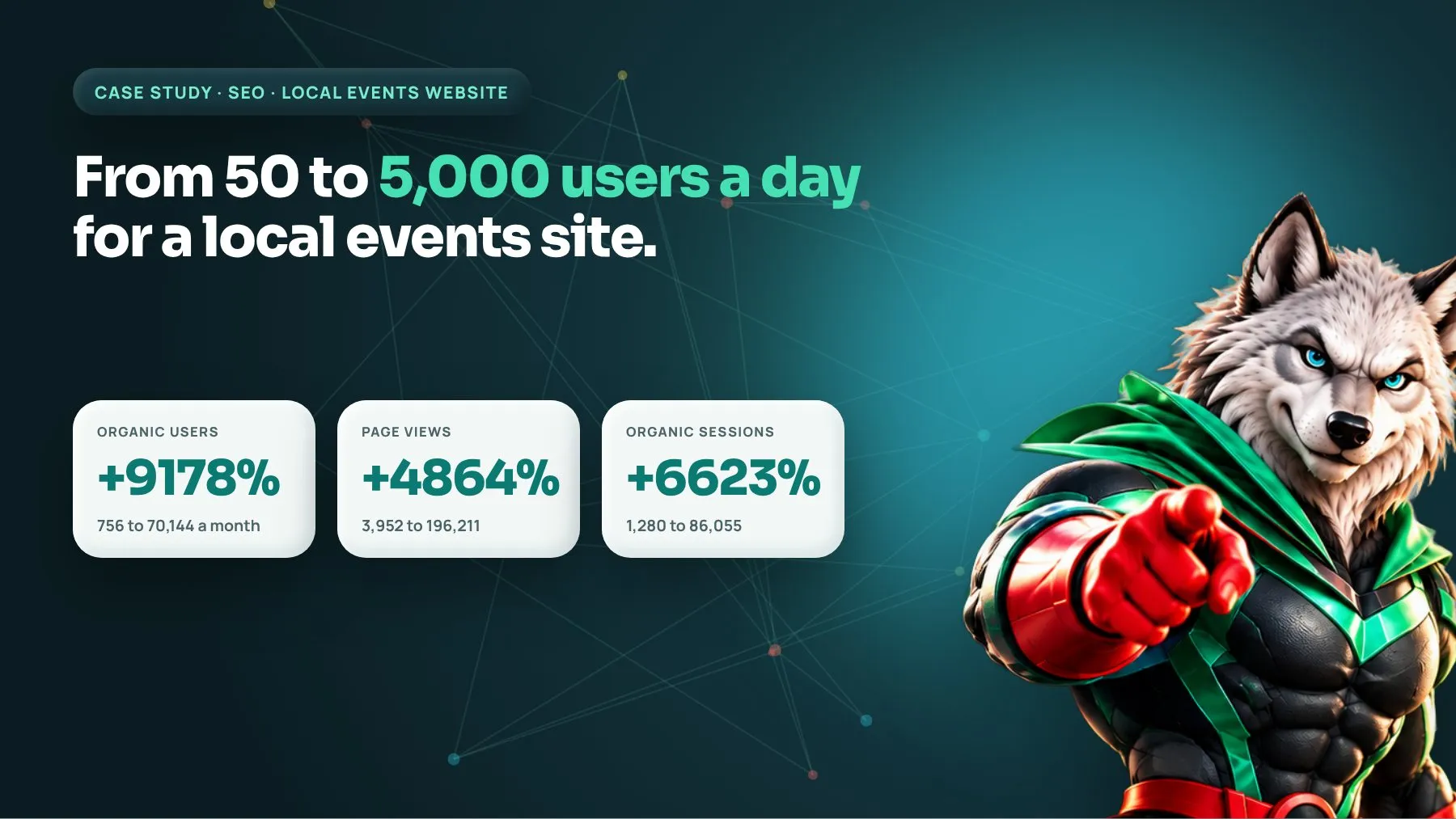
The client ran a three-year-old website covering local things to do and events. It had content and an audience in mind, but almost nobody was finding it through Google. After a full SEO audit and a new keyword and content strategy, organic users grew from 756 to 70,144 a month, a 9178% year-on-year increase, taking the site from roughly 50 users a day to around 5,000.
At a glance
- Client: Local things-to-do and events website, three years old
- Service: SEO (technical audit, keyword research and content strategy)
- Timeframe: Year-on-year comparison
- Key results: Organic users from 756 to 70,144 a month (+9178%); page views from 3,952 to 196,211 (+4864%); organic sessions from 1,280 to 86,055 (+6623%)
The challenge: a three-year-old site Google was ignoring
A local events and activities site lives or dies on search. People rarely type a listings website’s name into their browser; they search for “things to do this weekend,” “events near me,” or a specific festival or venue. If the site does not appear for those searches, it has no audience, and without an audience it cannot earn from advertising, partnerships or listings.
Three years is long enough for a site to have built some authority. When traffic is still tiny after that long, the cause is usually not one big problem but several smaller ones stacking up: pages that are hard for Google to crawl, content aimed at the wrong searches, slow load times, errors, and a structure that hides the best pages. Each of these trims a little visibility. Together they can keep a site almost invisible.
So rather than jumping straight to “write more content,” we started by finding out exactly what was holding the site back.
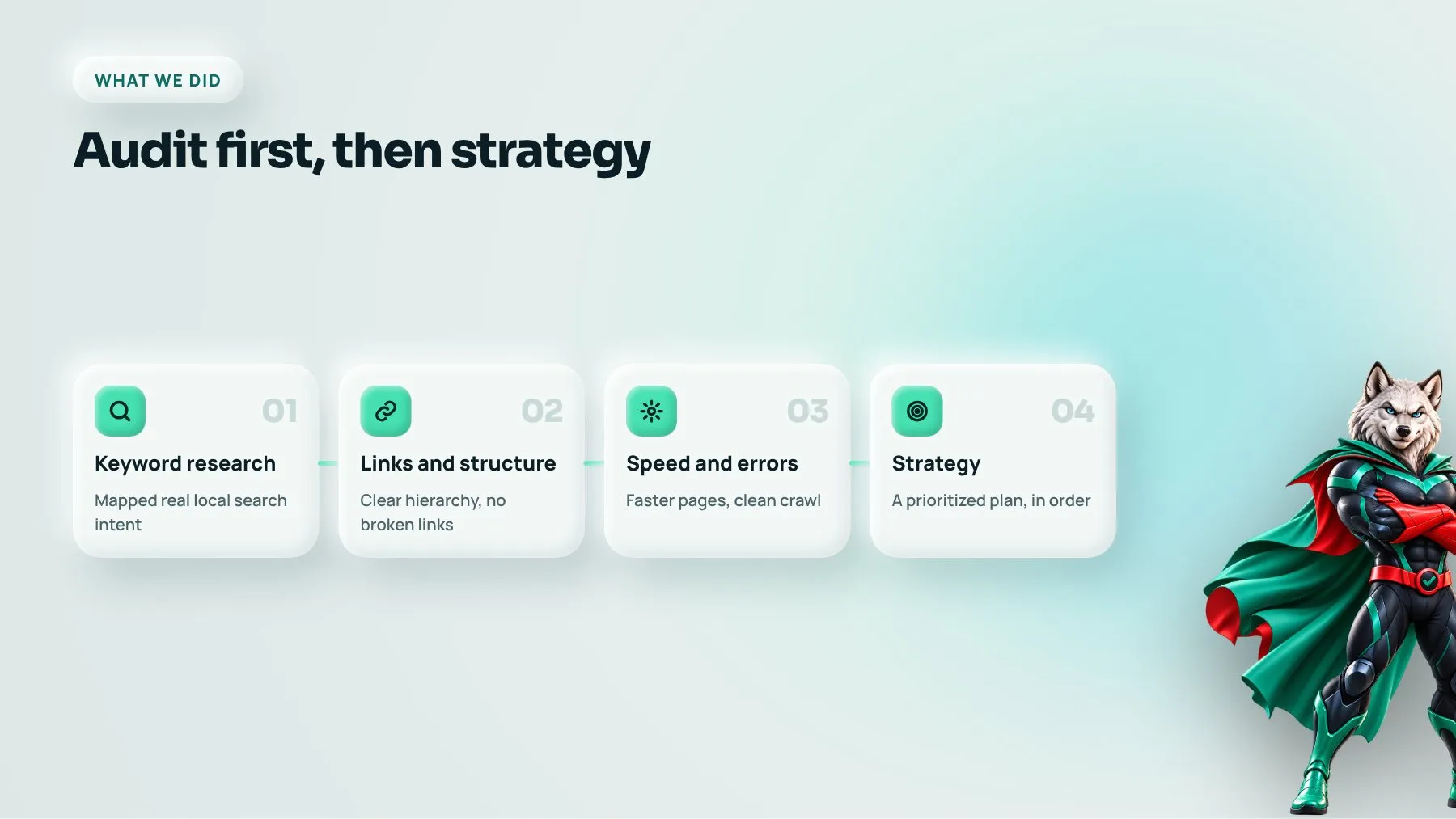
What we did: audit first, then strategy
Our work covered eight areas. The first seven were diagnostic. The eighth turned the findings into a plan.
Keyword research around real local intent
Events and activities searches are highly varied and often seasonal. People search by place, by date, by type of activity, by audience (families, couples, free things to do) and by specific named events. We mapped these patterns to find the searches the site could realistically win and that matched what it already offered. That told us which existing pages to strengthen and which new pages were worth creating.
Link check
We reviewed the site’s backlink profile and its internal links. Externally, we looked at which links were helping, which were worthless, and where there were natural opportunities with local organizations and venues. Internally, we looked for broken links and for important pages that had very few links pointing to them, because Google tends to treat poorly linked pages as unimportant.
Structure audit
For a listings site, structure is everything. We looked at how categories, locations and individual event pages were organized and linked. A clear hierarchy (for example, area pages linking to activity-type pages linking to individual listings) helps both visitors and search engines understand the site and spreads authority to the pages that need it.
Performance check and speed analysis
Events sites are often heavy with images, maps and embedded widgets, which slow pages down. We measured load times and Core Web Vitals and identified the biggest culprits, such as oversized images, render-blocking scripts and unnecessary third-party code. Faster pages improve rankings at the margin and, more importantly, keep mobile visitors from leaving before the page loads.
Targeting analysis
We checked whether each important page was clearly aimed at one search intent. Common problems on sites like this are several pages competing for the same search, or pages whose titles and headings do not match what people actually type. Fixing targeting means one strong page per intent, with titles, headings and copy that make that intent obvious.
Error check
Crawl errors, broken pages, redirect chains, duplicate content from filters or date parameters, and pages accidentally blocked from indexing are all common on events sites, where content expires constantly. We cleaned these up so Google could spend its time on pages that mattered.
Idea and strategy
Finally, we pulled everything together into a prioritized plan: technical fixes first, then improvements to the pages with the most potential, then new content aimed at the keyword gaps we had found. Prioritization is what turns an audit into results; a list of 200 issues is useless without knowing which ten to fix first.
The results: from 50 users a day to around 5,000
Comparing year on year:
- Organic users: from 756 to 70,144 a month, a 9178% increase.
- Page views: from 3,952 to 196,211, a 4864% increase.
- Organic sessions: from 1,280 to 86,055, a 6623% increase.
For the business, this is the difference between a side project and a real media asset. Tens of thousands of monthly visitors with local intent are valuable to venues, event organizers and advertisers. Page views rising alongside users shows visitors were not just landing and leaving; they were moving through the site and finding more to read.
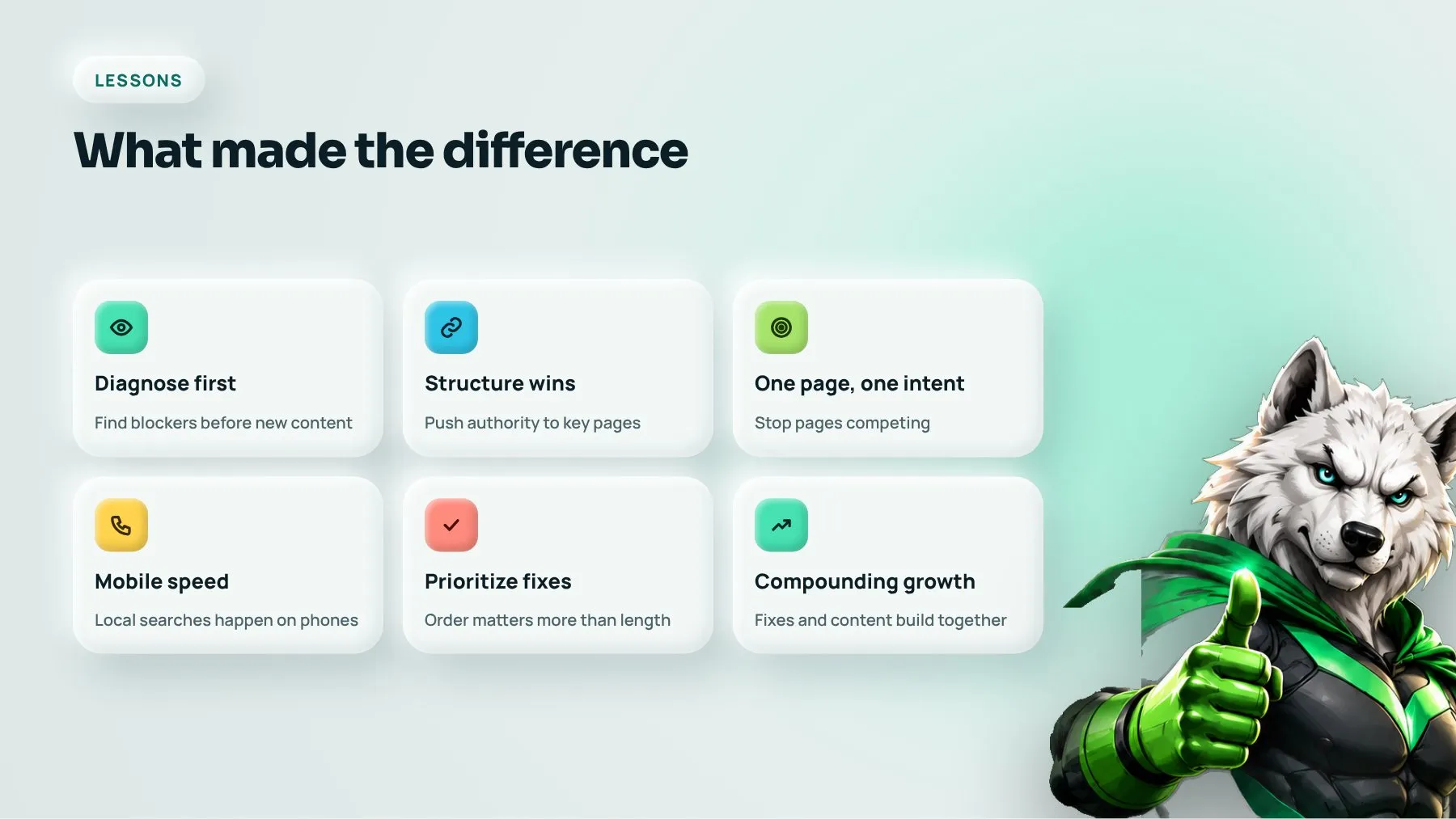
What made the difference: lessons for content and listings websites
1. Diagnose before you create
More content would not have fixed crawl errors, slow pages or poor structure. Finding the blockers first meant every later effort counted.
2. Structure is a ranking factor you control
A clear hierarchy of locations, categories and listings helps search engines understand the site and pushes authority to the right pages.
3. Match each page to one intent
When pages are clearly targeted, they stop competing with each other and start ranking.
4. Speed matters most on mobile
Local searches happen on phones, often on the move. A slow page loses the visitor before the content has a chance.
5. Prioritize ruthlessly
The value of an audit is in the order of the fixes, not the length of the list.
How to apply this to your website
- Check Google Search Console for crawl errors, indexing issues and pages excluded from the index.
- Map your main pages to the searches they should win, and fix any overlaps.
- Review your site structure: can every important page be reached in a few clicks?
- Test your key pages for speed on mobile and fix the heaviest assets first.
- Find important pages with few internal links and link to them from relevant content.
- Turn your findings into a ranked plan and work through it in order.
FAQ
How long does SEO take to show results?
SEO results usually start to show within three to six months, with bigger gains building over the following months. Technical fixes can produce quicker movement when they unblock pages Google was already struggling to reach.
Do I need a full audit if my site is already live?
Yes, especially if traffic has stalled. An established site often has hidden issues such as errors, duplicate pages or weak structure that limit everything else you do. An audit tells you what to fix first.
Can SEO work for local and events-based websites?
Very well, because people search for local activities constantly and with clear intent. The key is a strong structure for locations and categories, careful handling of expired content, and pages built around how people actually search.
Want growth like this for your site? See our SEO services, explore more case studies or book a strategy call.